Expertenanalyse zu Martiros Sarians Pumpkin and pepper
Stil: Fauvism · Genre: still life
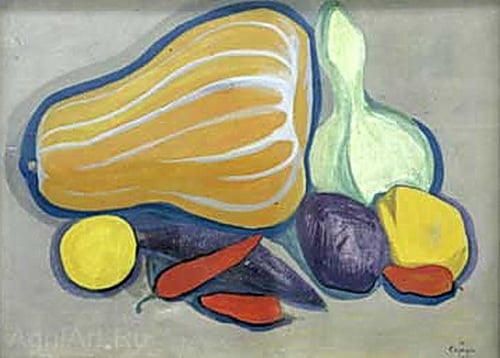
Expert Analysis of "Pumpkin and Pepper" by Martiros Sarian
Style: Fauvism | Genre: Still Life
Martiros Sarian’s "Pumpkin and Pepper" exemplifies the radical colorism at the heart of Fauvism, a movement that prioritized emotional expression over naturalistic representation. As a still life, the work transforms humble, everyday produce—a pumpkin and a pepper—into a vibrant, almost explosive field of non-naturalistic hues. The significance of this painting lies in how it pushes the Fauvist agenda to its extremes:
-
Unrestrained Color as Subject – True to Fauvist principles, Sarian abandons local color. The pumpkin likely appears in saturated oranges, reds, or even purples, while the pepper may be rendered in electric greens, blues, or pinks—tones chosen not to mimic reality but to evoke a visceral, sensory response. The background and tabletop are equally daring, often rendered in clashing, pure pigments that flatten space and emphasize the painting’s two-dimensional surface.
-
Emotional Intensity through Still Life – While Fauvism often focused on landscapes and figures, Sarian’s choice of a still life demonstrates that even inanimate objects can convey powerful emotional charge. The bold contours and energetic brushwork (characteristic of the movement) animate the pumpkin and pepper, transforming them into almost living presences. This elevates the genre from mere depiction to a celebration of color’s innate power.
-
Cultural Synthesis – Sarian, an Armenian artist working within the Fauvist idiom, brought a distinct sensitivity to warm, luminous palettes reminiscent of his homeland’s sun-drenched landscapes. In "Pumpkin and Pepper," the intense hues may also hint at the earthy, fertile abundance of Armenian agriculture, adding a layer of regional identity to the universal Fauvist language.
Ultimately, the artwork’s significance lies in its uncompromising use of color to structure the composition and convey mood. It stands as a testament to how Fauvism—even in a modest still life—can challenge the viewer’s perception and celebrate color as an autonomous, expressive force.
Visuell ähnlich
20 Werke mit ähnlicher Komposition und Farbpalette
Still Life with Pumpkin, Plums, Cherries, Figs and Jug
Theodule Ribot
Still life with Vegetables
Ilya Mashkov
Still Life
Émilie Charmy
The Green Pumpkin
Henri Matisse
Still Life with Fruit
Caravaggio
Autumn landscape
Martiros Sarian
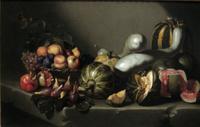
Still Life with Fruit
Caravaggio
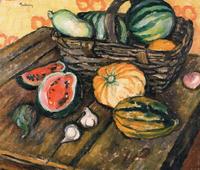
Still Life With Cucumbers
Józef Pankiewicz
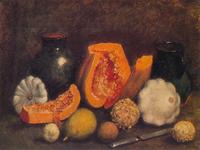
Still life with green jug and the pumpkin
Ilya Mashkov
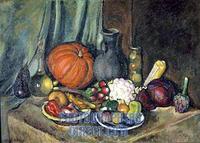
Still life with pumpkin and a pitcher
Ilya Mashkov
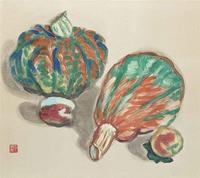
Pumpkin
Umehara Ryuzaburo
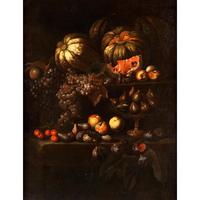
FRÜCHTESTILLLEBEN
Michelangelo Cerquozzi
Pumpkin
Alexander Roitburd
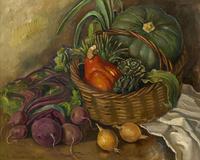
Still Life with Vegetables
Zinaida Serebriakova
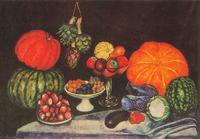
Vegetables. Still life
Ilya Mashkov
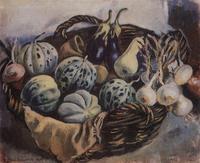
Basket with melons and squash
Zinaida Serebriakova
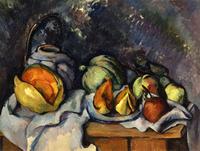
Still Life with Fruit and a Ginger Pot
Paul Cezanne
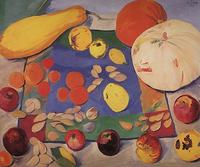
Fruits and vegetables
Martiros Sarian
Still life in a marble niche
Pierre Jean Edmond Castan
Green Squash
Karl Knaths