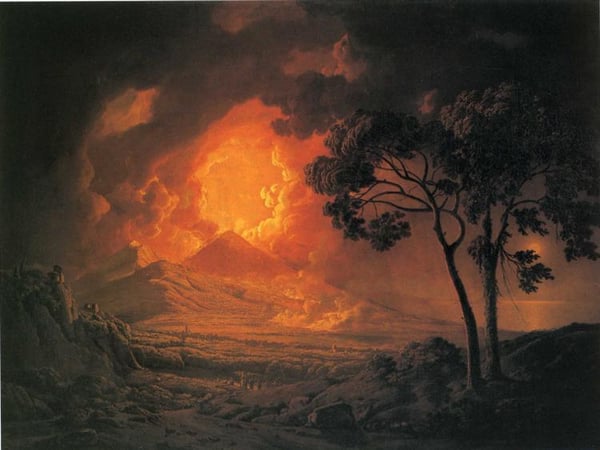
An Eruption of Mount Vesuvius, with the Procession of St. Januariu'-s Head
Dettagli
Analisi esperta di An Eruption of Mount Vesuvius, with the Procession of St. Januariu'-s Head di Joseph Wright
Stile: Romanticism · Genere: landscape
“An Eruption of Mount Vesuvius, with the Procession of St. Januarius’ Head” by Joseph Wright (c. 1774–1776) stands as a quintessential Romantic landscape that fuses two powerful themes: the sublime terror of nature and the enduring solace of faith. Painted during a period when the Grand Tour brought artists to Naples, Wright captures the dramatic eruption of Vesuvius—a favorite subject of the era—but uniquely interweaves it with a religious procession bearing the relic of St. Januarius, the city’s patron saint whose blood is traditionally said to liquefy to avert disaster.
Significance within Romanticism and Landscape
What makes this work exceptional is its masterful juxtaposition of the uncontrollable forces of nature and the human ritual of supplication. In true Romantic fashion, Wright elevates landscape beyond mere scenery: the volcano becomes a fiery, awe-inspiring emblem of the sublime—vast, dangerous, and overwhelming to the senses. The billowing ash and molten lava are rendered with intense chiaroscuro, a hallmark of Wright’s style, where the eruption’s light competes with the flickering torches of the faithful below. This play of artificial and natural light creates a palpable tension between hope and catastrophe.
At the same time, the procession—a small, orderly line of penitents and clergy bearing the saint’s head—anchors the scene in human vulnerability and cultural specificity. Wright, known for his interest in scientific and religious themes, here merges Enlightenment curiosity about geology with Catholic miracle narrative. The painting thus becomes a commentary on the limits of reason and the power of belief, a central Romantic concern. It also reflects 18th-century fascination with Vesuvius as both a natural laboratory and a symbol of divine or demonic wrath.
As a landscape, the work is groundbreaking for its narrative density: the fiery mountain dominates the composition, but the distant bay, city lights, and the winding procession create multiple focal points, guiding the viewer’s eye through a story of peril and prayer. Wright’s ability to capture the momentary flash of eruption against the darkened sky anticipates the emotional intensity of later Romantic painters like Turner. Ultimately, this painting is significant because it fuses two seemingly opposed forces—scientific observation and spiritual devotion—within a single sublime landscape, embodying the Romantic tension between nature’s raw power and humanity’s fragile hope.
Museum / Gallery
Visivamente simili
20 opere con composizione e palette affini
Vesuvius from Portici
Joseph Wright
Eruption of Mauna Loa, November 5, 1889, as seen from Kawaihae
Charles Furneaux
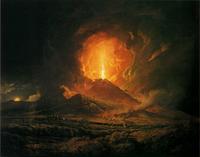
An Eruption of Vesuvius, seen from Portici
Joseph Wright
Eruption du Vésuve, vue depuis l'Atrio del Cavallo
Pierre-Jacques-Antoine Volaire
L’éruption du Vésuve
Pierre-Jacques-Antoine Volaire
L’éruption du Vésuve
Pierre-Jacques Volaire
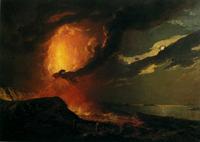
Vesuvius in Eruption, with a View over the Islands in the Bay of Naples
Joseph Wright
The Course of Empire: The Savage State
Thomas Cole
Tropical Scenery
Frederic Edwin Church
The Bay of Naples at moonlight night. Vesuvius
Ivan Aivazovsky
A Wild Scene
Thomas Cole
The Eruption of Vesuvius
Pierre-Jacques Volaire
A Cottage on Fire
Joseph Wright
Mount Vesuvius erupting by night seen from the Atrio del Cavallo with spectators in the foreground, a panoramic view of the city and the Bay of Naples beyond
Pierre-Jacques-Antoine Volaire
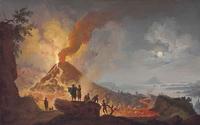
Mount Vesuvius erupting by night seen from the Atrio del Cavallo with spectators in the foreground, a panoramic view of the city and the Bay of Naples beyond
Pierre-Jacques Volaire
Tropical Scenery
Frederic Edwin Church
The Bay of Naples
Ivan Aivazovsky
Mount St Helens erupting at night
Paul Kane
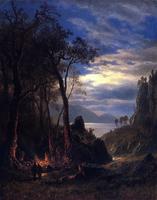
The Campfire
Albert Bierstadt
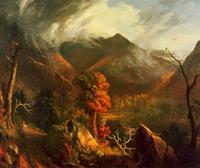
Peace at Sunset (Evening in the White Mountains)
Thomas Cole