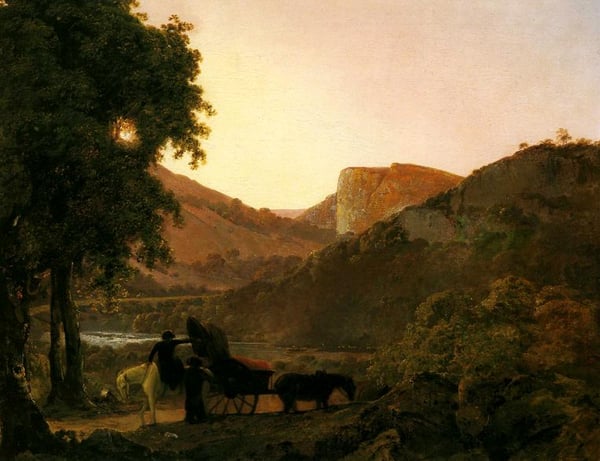
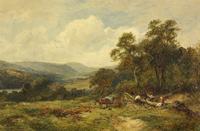
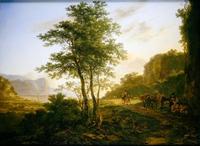
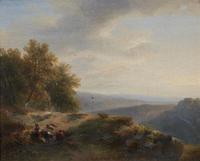
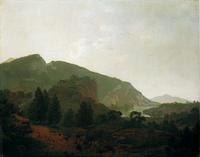
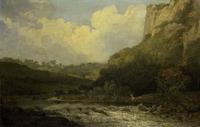
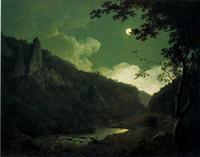
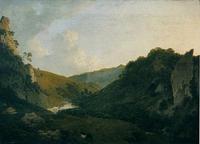
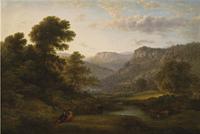
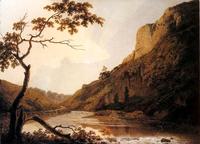
The significance of Joseph Wright's Landscape with Figures and a Tilted Cart, Matlock Hogh Tor in the Distance is rooted in its fusion of Romantic sensibility with an intimate, topographic observation of the British landscape. Painted in the late 18th century, the work exemplifies Romanticism’s shift away from idealized classical scenes toward the raw, emotional power of nature. Wright, renowned for his dramatic chiaroscuro and candlelit interiors, here applies his mastery of light to an outdoor setting: the precarious tilt of the cart and the placement of small figures emphasize human vulnerability against the looming, vertical thrust of Matlock High Tor—a dramatic limestone cliff in Derbyshire. The composition draws the eye from the rustic foreground (with its everyday labor) into the sublime distance, where the tor rises with dark, formidable presence. This interplay of the mundane and the majestic captures the Romantic fascination with the sublime—nature’s ability to awe and humble the viewer. Wright’s choice of a specific, named location also reflects the era’s growing appreciation for Britain’s own rugged scenery, anticipated by the picturesque tradition, while his sensitive handling of atmosphere lends the scene a haunting, almost theatrical mood. The tilted cart, as a transient human intervention, underscores the fleetingness of human endeavors in the face of enduring geological grandeur, making the work a poignant meditation on scale, labor, and the sublime forces of the natural world.