Expert analysis of Joseph Wright’s Self-Portrait
Style: Baroque, Romanticism · Genre: portrait
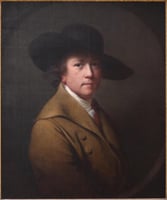
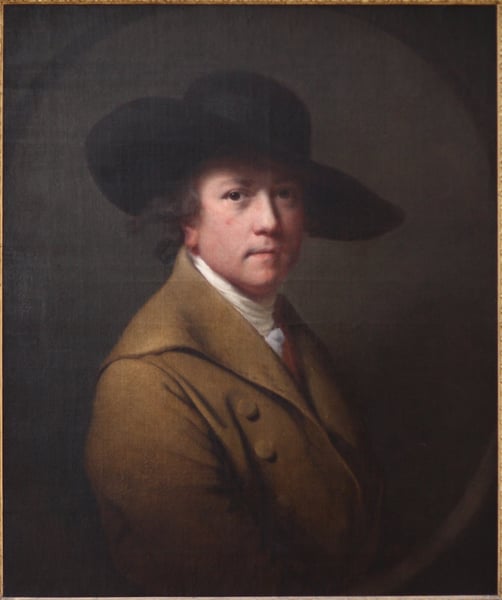
This self-portrait by Joseph Wright of Derby is a remarkable convergence of two major artistic movements—Baroque drama and Romantic introspection—demonstrating Wright’s unique position as a bridge between the 18th-century Enlightenment and the emerging Romantic sensibility.
Baroque Heritage: The painting employs a stark, Caravaggesque chiaroscuro, with a single, strong light source illuminating the artist’s face and hands against a deep, shadowed background. This technique, inherited from the Baroque, heightens the psychological intensity of the portrait, focusing the viewer’s attention on Wright’s penetrating gaze and the subtle modeling of his features. The dramatic contrast of light and dark also creates a sense of immediacy and theatrical presence, typical of Baroque portraiture’s aim to engage the viewer emotionally.
Romantic Innovation: Yet Wright transcends mere Baroque formalism by infusing the portrait with a distinctly Romantic emphasis on individuality and inner life. Unlike the grand, often idealized self-portraits of earlier Baroque masters, Wright presents himself not as a public figure but as a solitary, contemplative thinker. The slight turn of the head, the furrowed brow, and the direct, almost questioning look speak to the Romantic ideal of the artist as a sensitive, introspective genius—someone who explores not only the external world but also the depths of personal consciousness. The loose, painterly brushwork in the hair and clothing further emphasizes spontaneity and emotional authenticity over polished finish.
Significance: As a self-portrait, this work is significant for its fusion of technical mastery with psychological depth. Wright, best known for his dramatic scenes of scientific experiments and industrial landscapes (e.g., An Experiment on a Bird in the Air Pump), here applies the same chiaroscuro to his own likeness, asserting that the artist’s mind and vision are themselves subjects worthy of the same dramatic treatment. The painting thus encapsulates the transition from the Baroque’s external, theatrical grandeur to Romanticism’s internal, reflective subjectivity, marking Wright as a pivotal figure in the evolution of modern portraiture.
Museum / Gallery
Visually similar
20 works with related composition and palette
John Moody
Thomas Hardy
Portrait of Hans Jakob Irminger
Johann Heinrich Wilhelm Tischbein
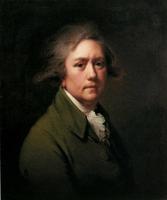
Self-Portrait at the Age of about Fifty
Joseph Wright
Self portrait
Benjamin West
Reverend Oliver Marton, Vicar of Lancaster (1767–1794)
George Romney
Benjamin (Thomas) Mee the Younger (1742–1796)
George Romney
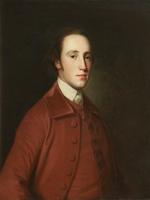
John Satterthwaite
George Romney
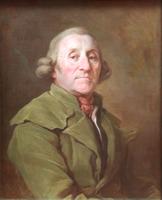
Portrait De Joseph Péru
Joseph Duplessis
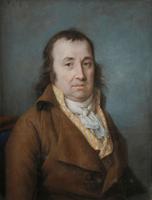
Portrait of Philippe Jacques Knoderer
Marie-Gabrielle Capet
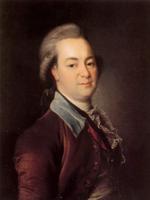
Alexander Khrapovitsky
Dmitry Levitzky
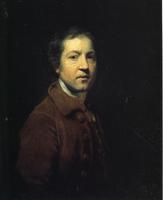
Self-Portrait
Joshua Reynolds
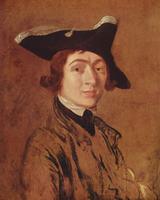
Self portrait
Thomas Gainsborough
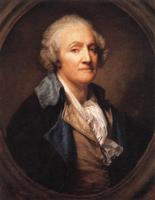
Self-Portrait
Jean-Baptiste Greuze
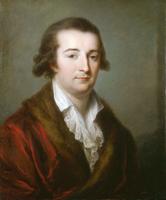
Portrait of Herzogs von Ceri
Angelica Kauffman
John Campbell, 4th Earl of Loudoun
Allan Ramsay
Hugh Holme, Deputy Recorder of Kendal
George Romney
Self-portrait
Johann Friedrich August Tischbein
William Wallis
Charles Turner
Man in a Brown Coat
Joshua Reynolds
Self portrait
Thomas Gainsborough