Expert analysis of Joseph Wright’s Study of the Terrain near Vesuvius
Style: Baroque · Genre: sketch and study
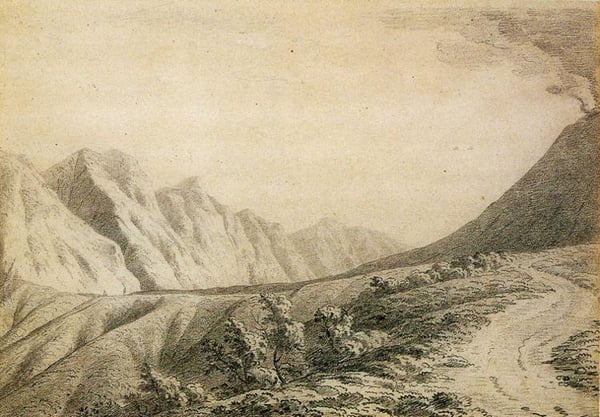
Expert Analysis of "Study of the Terrain near Vesuvius" by Joseph Wright
Joseph Wright’s Study of the Terrain near Vesuvius is a significant work within the Baroque period, notable for its fusion of the era’s dramatic visual language with the emerging scientific curiosity of the Enlightenment. Executed as a sketch and study—a genre often overlooked in Baroque art—this piece demonstrates Wright’s mastery in capturing raw, dynamic natural forces through the Baroque hallmarks of chiaroscuro and intense, painterly energy.
Although a study, the work retains the theatricality typical of Baroque landscapes: the terrain near Vesuvius is rendered with sharp contrasts of light and shadow, suggesting the volcano’s ruinous power and the sublime terror of nature. Wright’s choice to depict a site of geological volatility aligns with the Baroque fascination with movement, unpredictability, and emotional intensity. More importantly, this sketch reveals the artist’s process of direct observation—a departure from idealized, studio-bound compositions. By focusing on a specific, untamed location, Wright bridges the Baroque love of drama with proto-scientific naturalism, making the work a precursor to later Romantic explorations of the sublime.
Within the broader context of Wright’s oeuvre, this study is crucial: it visually documents his engagement with volcanic phenomena (a recurring theme in his finished paintings), and it showcases how a Baroque artist could use a “sketch” not as a mere preliminary, but as a finished statement on nature’s unpredictable spectacle. Its significance lies in its ability to transform a geological study into a baroque meditation on light, earth, and awe.
Visually similar
20 works with related composition and palette
A View of Civitella from the Serpentara next to Olevano
Heinrich Reinhold
Arcadian Landscape with Meadow Forest
Johann Christoph Haffner
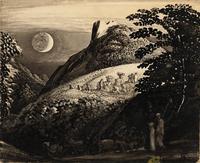
The Harvest Moon. Drawing for ‘A Pastoral Scene’ 1832
Samuel Palmer
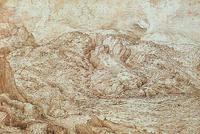
Landscape of the Alps
Pieter Bruegel the Elder
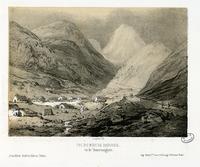
Pic du Midi de Bigorre, vu de Tramesaygues
Maxime Lalanne
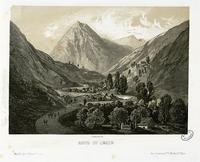
Route du Limaçon
Maxime Lalanne
Italian Landscape, Between Ancona and Sinigaglia
Jan Dirksz Both
Arreau - Vue de la route du col d'Aspin
Maxime Lalanne
After the rain
Konstantin Bogaevsky
Roman Augurs Interpreting the Flight of Birds
Salvator Rosa
A Village in Summerset
Giorgio de Chirico
Jacob Finds Rest in a Rugged Landscape and Dreams of a Ladder
Salvator Rosa
African Landscape
Werner Peiner
View of the Tiber in the Campagna
Jan Dirksz Both
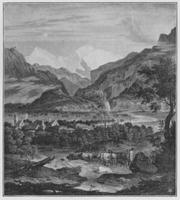
Berner Oberland
Joseph Anton Koch
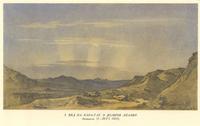
View of Karatau from Apazir valley
Taras Shevchenko
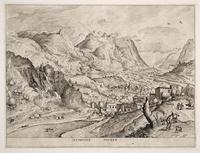
Crafty Bird Catcher
Pieter Bruegel the Elder
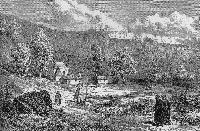
View to Demir Baba Teke
Felix Philipp Kanitz
The valley of the Ovens River
Eugene von Guerard
The road in the Sinai after the storm
Karl Bryullov