Expertenanalyse zu Olexandr Archipenkos Seated Geometric Figure
Stil: Cubism · Genre: sculpture
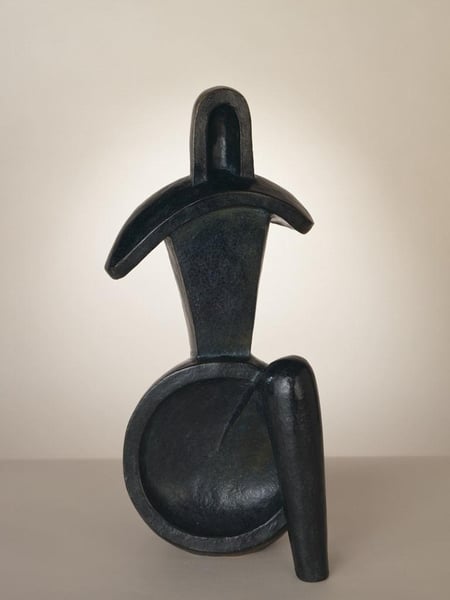
Olexandr Archipenko’s Seated Geometric Figure is a landmark work within the Cubist movement, particularly in its radical redefinition of sculpture. While traditional sculpture relies on mass and volume, Archipenko—following the analytical principles of Cubist painting—reduces the human form into a dynamic arrangement of interlocking, planar, and faceted shapes. The “seated” pose becomes a vehicle for expressing multiple viewpoints simultaneously, a core Cubist ideal. What makes this piece significant is its pioneering use of negative space (voids) as a positive compositional element, creating a fluid interplay of convex and concave forms that challenge the viewer’s perception of solidity and volume. Archipenko’s approach in this sculpture helped liberate early 20th-century sculpture from naturalistic representation, paving the way for abstraction. The geometric simplification here is not merely decorative; it is a rigorous analysis of form, making Seated Geometric Figure a crucial example of how Cubism transformed the sculptural medium itself.
Visuell ähnlich
20 Werke mit ähnlicher Komposition und Farbpalette
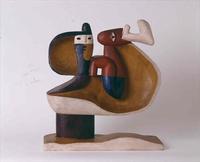
L'enfant est là
Le Corbusier
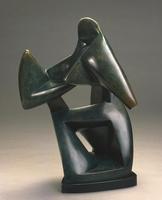
The Boxers (La Lutte)
Olexandr Archipenko
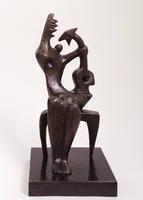
Mother and Child
Henry Moore
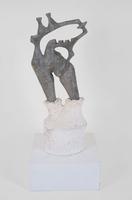
Earth Wader
David Hare
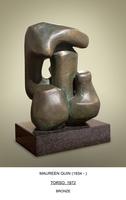
Hester Rupert Art Museum Sculptures 10
MAUREEN QUIN
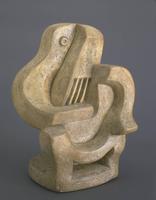
Guitar Player in Armchair
Jacques Lipchitz
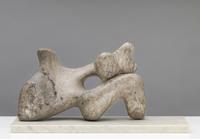
Mother and Child
Barbara Hepworth
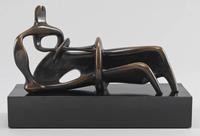
Reclining Figure
Henry Moore
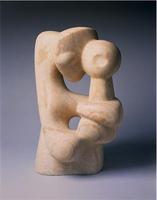
Mother and Child
Noguchi Isamu
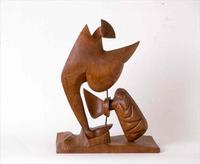
Icône
Le Corbusier
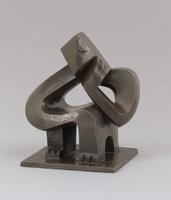
Seated Man
Jacques Lipchitz
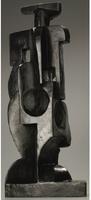
Harlequin
Juan Gris
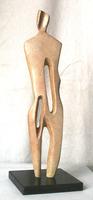
Sc02996
ambrosio paolo
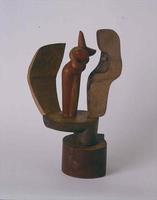
Ozon
Le Corbusier
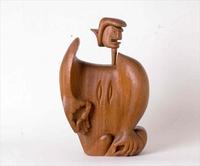
Icône
Le Corbusier
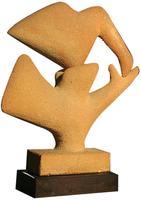
Les deux oiseaux
Etienne Hajdu
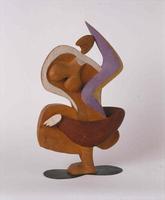
Femme dansant
Le Corbusier
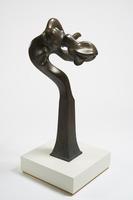
Fish Curve Hybrid
Richard Hunt
«Sprout»
Ludwiga Nesterovich
Дискобол
Євген Каменєв