Expert analysis of Olexandr Archipenko’s Torso
Style: Cubism · Genre: sculpture
Expert Analysis: "Torso" by Olexandr Archipenko
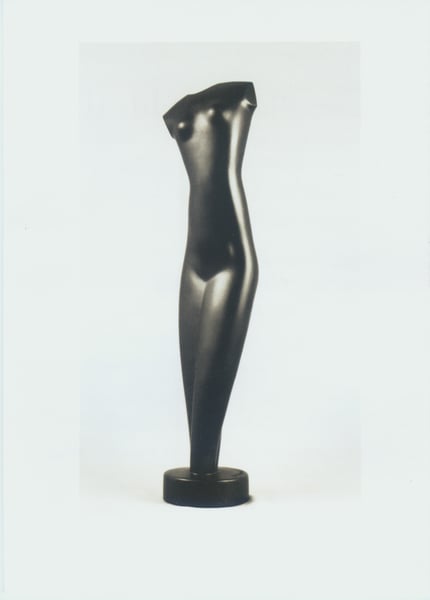
Olexandr Archipenko’s Torso stands as a landmark achievement in early Cubist sculpture, marking a radical departure from traditional figural representation. Executed around 1914–1915, this work exemplifies Archipenko’s pioneering integration of Cubist fragmentation into three-dimensional form—a move that fundamentally redefined the boundaries of sculpture.
Significance within Cubism and its Period
Archipenko was among the first to translate Cubism’s analytical breakdown of space and volume into the sculptural medium. While painters like Picasso and Braque were fracturing form on canvas, Archipenko applied similar principles to solid materials, creating a dynamic interplay of convex and concave planes. In Torso, the human body is not merely simplified but geometrically dissected into interlocking faceted shapes. The work abandons naturalistic proportion, instead emphasizing the rhythmic opposition of masses and voids.
One of Archipenko’s most revolutionary contributions—visible here—is his use of negative space as an active compositional element. Rather than carving a conventional solid silhouette, he hollowed out cavities and pierced the form, allowing space to flow through the sculpture. This technique, often called “sculpting with air,” gives Torso an unprecedented sense of transparency and weightlessness, challenging the traditional notion of sculpture as a dense, inert object. The voids become as expressive as the solid portions, creating a visual tension that animates the figure from all angles.
The subject—a nude torso—was a classical staple, but Archipenko treats it with deliberate asymmetry and discontinuity. The curves of the chest and waist are abstracted into sharp angles and layered planes, echoing the analytical Cubist approach to shifting viewpoints. By reducing the figure to its essential geometric architecture, he creates a synthetic, almost architectural structure that retains a dynamic, organic energy.
Archipenko’s Torso also exemplifies his concept of “sculpto-painting,” blending painted color or varied surface textures with carved form (though the original version may have been polychromed). This further blurred the line between painting and sculpture, a key Cubist ambition.
Why It Matters
Archipenko’s Torso is significant because it liberated sculpture from mass and gravity, anticipating later developments in Constructivism and assemblage. By negating the need for a continuous, closed contour, he opened new possibilities for sculptural expression—influencing generations of modernists who would explore abstraction, transparency, and the role of space as material. In this work, the human figure becomes a dynamic interlocking of form and void, a radical rethinking of the body as pure architectural rhythm. It remains a touchstone for understanding how Cubism shattered not only pictorial space but also the very substance of sculpture.
Visually similar
20 works with related composition and palette
Torso
Leon Underwood
Torso
Olexandr Archipenko
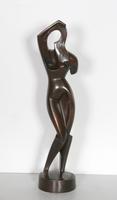
Woman Combing her Hair
Olexandr Archipenko
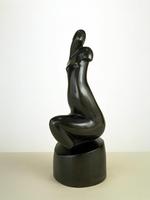
Seated Female Nude (Black Torso)
Olexandr Archipenko

Figura Femenina
Francisco Serra Andrés
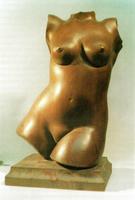
Torso
Francisco Serra Andrés
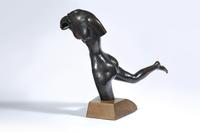
Flux (The Runner)
Leon Underwood
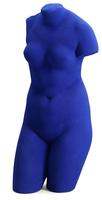
The Venus of Alexandria (Venus Blue)
Yves Klein
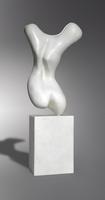
TORSE
Jean Arp

Nike
Paul Wunderlich
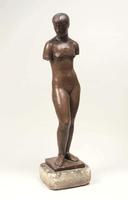
L’Adolescente
Charles Despiau
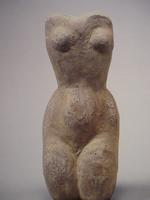
Unknown
Milița Petrașcu
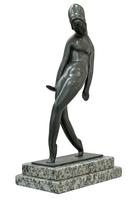
Bailarina
Victor Brecheret
Sc01056a
ambrosio paolo
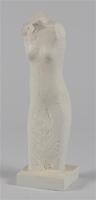
Untitled Female Form
Manuel Neri
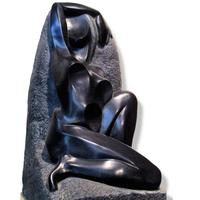
Desnudo de mujer
Kalato
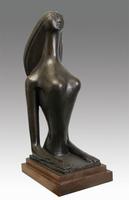
Le Sphinge
Anton Prinner
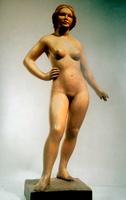
Desnudo Femenino
Francisco Serra Andrés
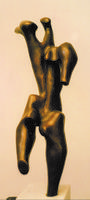
Victor
MAUREEN QUIN
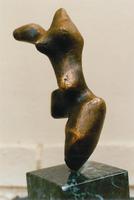
Dancing Torso
MAUREEN QUIN