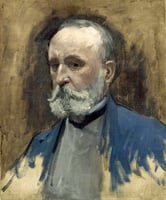
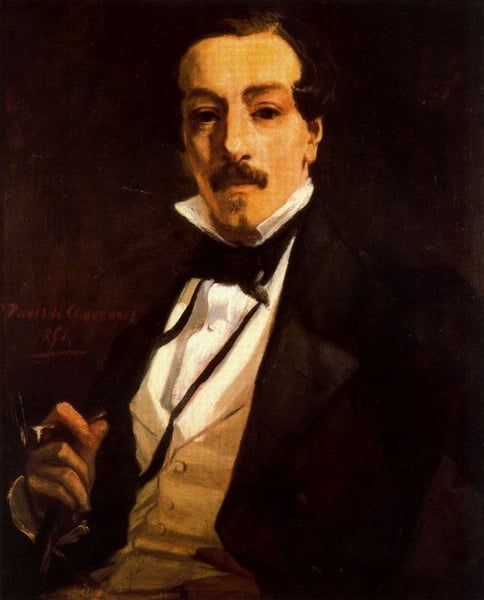
Thomas-Alfred Jones
Analisi esperta di Thomas-Alfred Jones di Pierre Puvis de Chavannes
Stile: Symbolism · Genere: portrait
This portrait of Thomas-Alfred Jones by Pierre Puvis de Chavannes is significant as a masterful embodiment of Symbolist portraiture, a genre Puvis helped redefine through his distinctive synthesis of classical calm and modern introspection.
Style and Period Significance (Symbolism):
Puvis de Chavannes was a pioneering figure in Symbolism, a movement that prioritized inner meaning, mood, and allegory over literal representation. In this portrait, the artist likely subverts the traditional portrait’s emphasis on social status or likeness in favor of an idealized, almost timeless presence. Symbolist portraiture often reduces naturalistic detail to evoke a sense of the sitter’s essence or a universal state of being—here, that is achieved through Puvis’s characteristic simplification of form, muted palette, and restrained, meditative composition.
Genre (Portrait) Innovation:
Unlike the more anecdotal or psychologically probing portraits of his realist contemporaries, Puvis’s portraiture focuses on architectural stillness. His figures often appear detached from immediate context, floating in shallow, non-descript backgrounds that suggest a symbolic or dreamlike realm. For Thomas-Alfred Jones, this likely means the portrait becomes less a record of a specific individual and more a vehicle for exploring notions of quiet dignity, contemplative solitude, or the poise of modern life—themes that would later influence Post-Impressionists like Seurat and Matisse.
Artistic Legacy:
Puvis’s blending of mural-like flatness with refined drawing aligns this portrait with his larger oeuvre, which straddled academic tradition and avant-garde symbolism. By stripping away sentimentality and ornamental excess, he elevated portraiture to a vessel for philosophical reflection. The work thus stands as a key example of how Symbolism used the portrait format to transcend mere likeness, making it a quiet manifesto of the movement’s core ideals: the search for the ideal, the eternal, and the ineffable beneath everyday appearances.
Visivamente simili
20 opere con composizione e palette affini
Self Portrait
Eugene Delacroix
Colonel Barton Howard Jenks
Pierre-Auguste Renoir
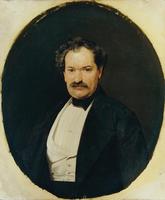
Gentleman In Black Skirt With White Vest
Ferdinand Georg Waldmüller
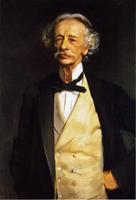
Coventry Patmore
John Singer Sargent
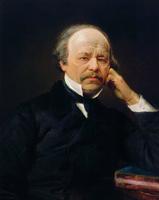
Portrait of the Composer Aleksandr Sergeyvich Dargomyzhsky
Konstantin Makovsky
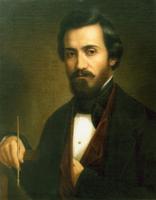
Self-Portrait
Gheorghe Tattarescu
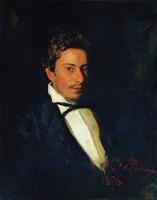
Portrait of V. Repin, musician, brother of the artist
Ilya Repin
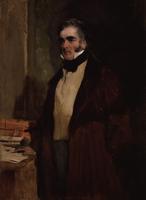
William Lamb, 2nd Viscount Melbourne
Edwin Henry Landseer
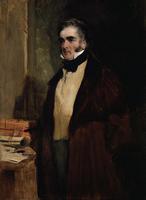
Lord William Lamb
Edwin Henry Landseer
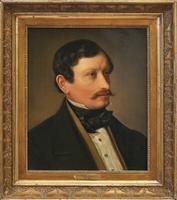
Bildnis des Nikolaus Wesselé
Franz Eybl
David Ramsay Hay, Esq.
George Harvey
Portrait of Yakov Merkulov
Nikolai Ge
Charles Dickens
Ary Scheffer
Frees Emil Horneman
Elisabeth Jerichau-Baumann
Henri Rochefort
Gustave Courbet
Architect Gottlieb Bindesbøll
Ditlev Blunck
Pierre Balsan (1807-1869)
Alexandre Cabanel
Samuel Gilmour
David Scott
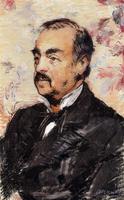
The painter of animals
Edouard Manet
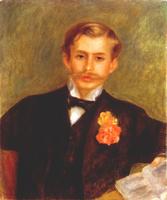
Portrait of Monsieur Germain
Pierre-Auguste Renoir