Expert Analysis of Yosemite Valley Twin Peaks by Albert Bierstadt
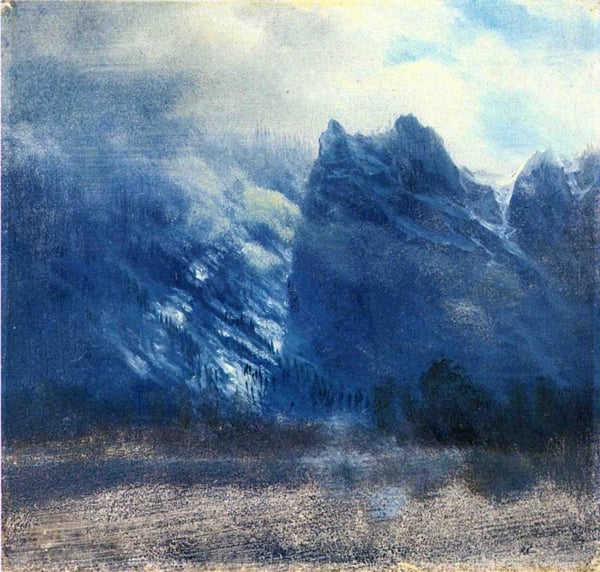
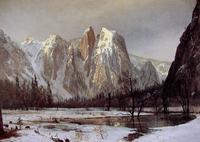
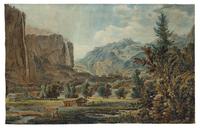
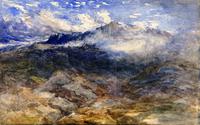
Albert Bierstadt’s Yosemite Valley Twin Peaks exemplifies the Luminist movement through its meticulous attention to atmospheric light and serene, almost sacred naturalism. As a landscape within this style, the work is significant for its fusion of topographical precision with a transcendent, glowing quality—a hallmark of Luminism that elevates the ordinary vista into a meditative experience.
The painting’s significance lies in its embodiment of Luminist principles: soft, diffused light that suffuses the scene, a calm and composed composition, and an emphasis on the sublime beauty of the American wilderness. Bierstadt captures the twin peaks with a clarity that suggests both scientific observation and spiritual reverence, using light to unify the foreground, middle ground, and distant sky. This approach typifies Luminism’s departure from the more dramatic, overtly emotional tones of the broader Hudson River School, instead offering a quiet, radiant stillness that invites contemplation.
Within Bierstadt’s larger oeuvre, this work reinforces his role in romanticizing the American West. Yet by adhering to Luminist conventions—such as the smooth, almost invisible brushwork and the harmonious balance of water, rock, and sky—Yosemite Valley Twin Peaks becomes a key example of how Luminism transformed landscape painting into a vehicle for transcendental idealism. Its significance ultimately rests in how it uses light and atmosphere to convey the unspoiled majesty of nature, a core ambition of both the style and the period.