Expert Analysis of "Flowers and Birches in the Evening" by Kateryna Bilokur
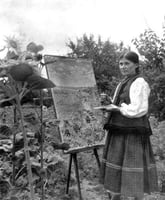
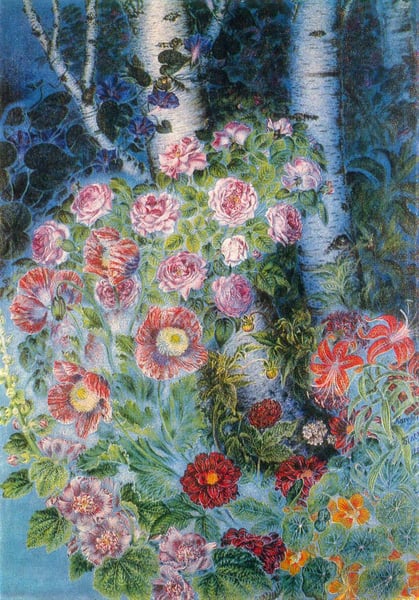
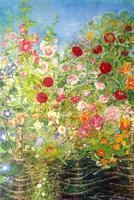
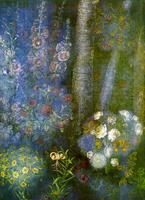
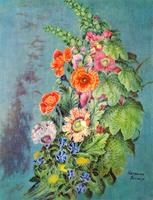
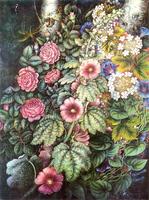
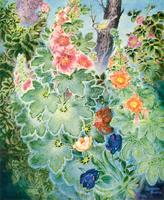
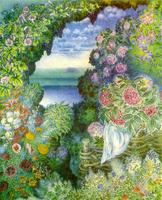
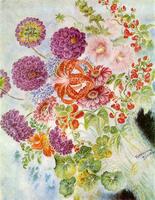
Kateryna Bilokur’s Flowers and Birches in the Evening is a compelling example of Naïve Art (Primitivism) within the flower painting genre. The work derives its significance from the way Bilokur—a self-taught Ukrainian artist—merges the untutored, intuitive vision typical of the naïve style with a meticulous, almost scientific attention to botanical detail. In the broader context of Primitivism, which often celebrates raw expression and a rejection of academic conventions, Bilokur’s painting stands out for its paradox: it is simultaneously childlike in its flattened perspective and exuberant color, yet obsessively precise in its rendering of petals, stems, and the distinctive silver-green birches.
The evening setting introduces a subtle shift in mood, allowing Bilokur to explore soft twilight tones without sacrificing the radiant, saturated hues that define her palette. The juxtaposition of luminous flowers against the darkening silhouettes of birch trunks creates a tension between wild abundance and quiet stillness—a hallmark of her ability to elevate simple rural motifs into transcendent symbols of life and beauty. In the history of Naïve Art, Bilokur’s work is significant because it demonstrates that the style is not merely about lack of training, but about a deeply personal, culturally rooted vision. Here, Ukrainian folk tradition meets modernist primitivism, making Flowers and Birches in the Evening a masterful blend of innocence and sophistication, simplicity and complexity.