This analysis is based solely on the provided structured facts.
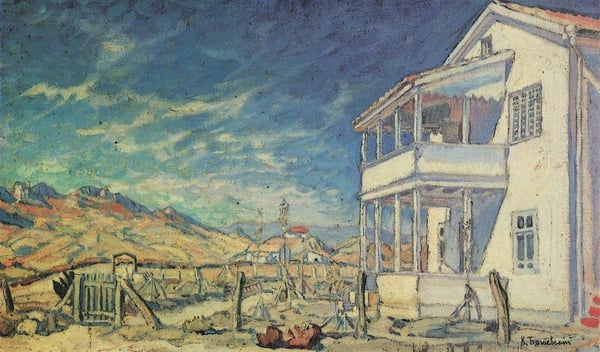
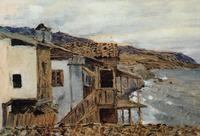
Konstantin Bogaevsky's Koktebel. House of Maximilian Voloshin is a significant work within the Symbolist landscape genre. As a painter of the Russian Silver Age, Bogaevsky transforms a specific, identifiable location—the Crimean home of the poet Maximilian Voloshin in Koktebel—into a symbolic, metaphysical scene. The painting’s importance lies in its ability to merge the tangible with the allegorical: the house is not merely a domestic structure but a threshold between the earthly and the cosmic. Bogaevsky’s characteristic use of muted, earthy tones and a distant, almost theatrical horizon imbues the landscape with a sense of timelessness and melancholy. This work exemplifies Symbolism’s core ambition—to use landscape as a mirror for the soul and as a gateway to hidden, spiritual realities—while simultaneously anchoring that vision in the poetic geography of Koktebel, a site revered by artists and writers of the era. The painting thus stands as a testament to the Symbolist belief that nature, when filtered through an artist’s visionary eye, reveals deeper, mystical truths.