Analisi esperta di Mountain landscape di Konstantin Bogaevsky
Stile: Symbolism · Genere: landscape
Expert Analysis of Mountain landscape by Konstantin Bogaevsky
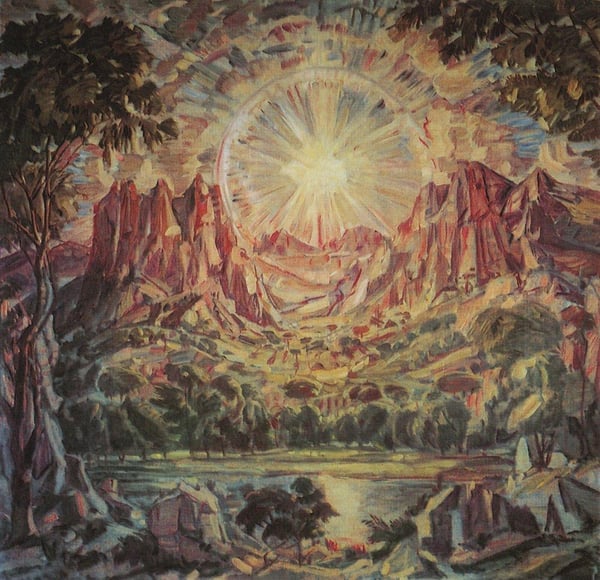
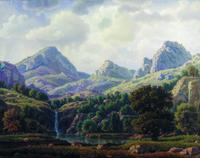
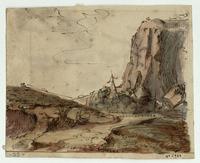
Konstantin Bogaevsky’s Mountain landscape is a compelling example of Symbolist landscape painting, a genre the artist transformed into a vehicle for metaphysical and emotional expression. Within the Symbolist movement—which prioritized inner vision, mood, and allegory over objective representation—this work stands out for its ability to evoke a sense of timeless, almost primeval grandeur.
Significance within Symbolism
-
Spiritual and Mythic Overtones: Bogaevsky’s mountains are not mere geological forms; they function as symbolic thresholds between the earthly and the sublime. The exaggerated scale, stark silhouettes, and often desolate foregrounds typical of his approach suggest a landscape of the soul—a place of solitude, contemplation, or cosmic awe. This aligns with Symbolism’s fascination with the ineffable and the transcendent.
-
Atmosphere over Accuracy: True to Symbolist ideals, Mountain landscape prioritizes evocative atmosphere over topographical precision. Bogaevsky likely employs muted, earthy palettes with dramatic contrasts of light and shadow, creating a dreamlike, almost theatrical quality. Such handling of color and light draws the viewer into a meditative state, reinforcing the work’s symbolic rather than documentary purpose.
-
Bridging Romanticism and Modernism: Bogaevsky’s treatment of the mountain as a sublime, almost mystical entity recalls Romantic landscape traditions, yet his stylization—simplified forms, flattened spaces, and a tendency toward the decorative—points toward early modern sensibilities. This dual inheritance makes the painting significant as a transitional work within Russian Symbolism, demonstrating how the movement adapted Romantic tropes for a more introspective, symbol-laden age.
In sum, Mountain landscape is significant not because it depicts a specific place, but because it embodies Symbolism’s core ambition: to transform the natural world into a mirror of the inner, spiritual life. Bogaevsky’s mountains become archetypes of solitude and eternity, inviting the viewer into a landscape of the imagination.
Visivamente simili
20 opere con composizione e palette affini
The Crimean landscape
Konstantin Bogaevsky
Flow. Fantastic landscape.
Konstantin Bogaevsky
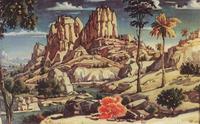
Memories of Mantegna
Konstantin Bogaevsky
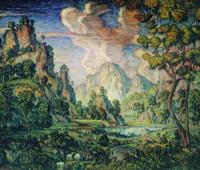
Classical Landscape
Konstantin Bogaevsky
Landscape
Konstantin Bogaevsky
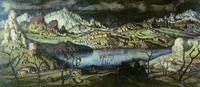
Cimmerian region
Konstantin Bogaevsky

Memories of Mantegna
Konstantin Bogaevsky
Night
Konstantin Bogaevsky
Composition
Konstantin Bogaevsky
Ships
Konstantin Bogaevsky
Romantic landscape (Crimean landscape)
Konstantin Bogaevsky
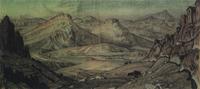
Sketch for a mural 'Crimea'
Konstantin Bogaevsky
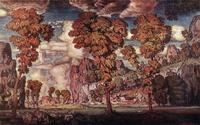
Landscape with rocks. Stary Krym.
Konstantin Bogaevsky
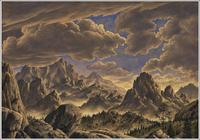
Mountain Landscape
Werner Peiner
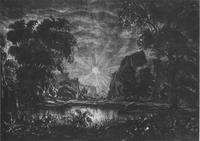
Evening sun
Konstantin Bogaevsky
Mountain landscape
Konstantin Bogaevsky
Romantic landscape
Konstantin Bogaevsky
Town in the valley
Konstantin Bogaevsky
Mount St. George
Konstantin Bogaevsky
Landscape
Marià Fortuny