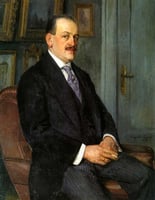
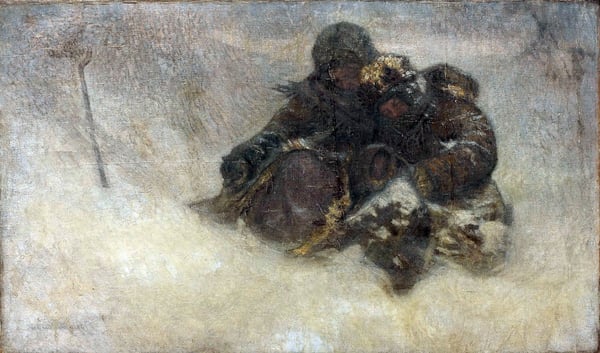
Children in Winter
Nikolay Bogdanov-Belsky sanatçısının Children in Winter eseri hakkında uzman analizi
Tarz: Impressionism · Tür: genre painting
An expert analysis of "Children in Winter" by Nikolay Bogdanov-Belsky must begin with its stylistic and contextual foundations. As an Impressionist genre painting, the work holds significance for its fusion of two distinct artistic priorities: the Impressionist focus on capturing fleeting light and atmospheric effects, and the genre painter’s commitment to depicting everyday life with narrative warmth.
Stylistic Significance within Impressionism
Bogdanov-Belsky employs the hallmark Impressionist techniques of broken color, visible brushstrokes, and an emphasis on natural light. The winter setting—presumably a snowy landscape—offers a unique challenge within Impressionism: rendering the luminosity of snow, the cool blue-violet shadows, and the transient play of sunlight on white surfaces. By choosing a winter scene, the artist extends Impressionism’s typical fascination with outdoor light to a less common seasonal palette, demonstrating how the movement could find beauty in the stark, cold environment of rural Russia rather than the more familiar gardens or seasides of French Impressionism.
Significance within Genre Painting
As a genre painting, “Children in Winter” elevates the everyday experience of peasant children into a subject worthy of serious artistic treatment. Bogdanov-Belsky was known for his sympathetic portrayal of village youth, and this work likely captures a moment of play or simple activity—sledding, gathered around a bonfire, or walking through the snow. The significance lies in the artist’s ability to combine the immediacy of Impressionist perception with the humanist narrative of genre art. The children are not idealized or sentimentalized; instead, they exist within a real, transient moment of light and weather, their figures integrated into the landscape rather than posed artificially. This merging of style and content gives the painting its resonance: it is both a study of atmospheric effect and a quiet tribute to the resilience and joy of childhood in a harsh winter climate.
Broader Artistic Contribution
Within the context of Nikolay Bogdanov-Belsky’s oeuvre, “Children in Winter” exemplifies how Russian artists of the late 19th and early 20th centuries adapted Impressionist principles to native subjects. While many Russian Impressionists focused on urban scenes or portraits, Bogdanov-Belsky consistently turned to the rural landscape and its young inhabitants. This work thus stands as a bridge between Western European Impressionist technique and a distinctly Russian sensibility—one that values sincerity, observation of ordinary life, and a deep connection to the natural world. The painting’s significance is its demonstration that Impressionism, often associated with fleeting pleasure and modernity, could also serve as a vehicle for tender, unpretentious storytelling about children at play in winter.
Görsel olarak benzer
İlişkili kompozisyon ve renk paletine sahip 20 eser

Spies
Nicholas Roerich
Ucieczka Maryny Mniszchówny
Leon Wyczółkowski
Lapon dans la neige
Francois-Auguste Biard
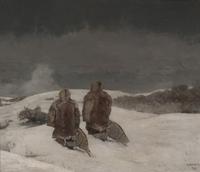
Below Zero
Winslow Homer
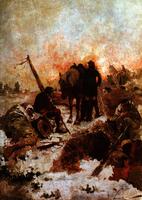
The Pass through the Andes
Arturo Michelena
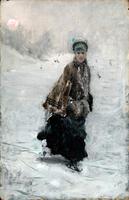
Léontine skating
Giuseppe De Nittis
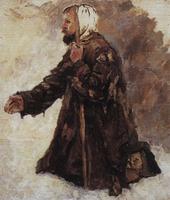
Kneeling beggar
Vasily Surikov
Two Young Women in the Snow
Isaac Israels
A. I. Surikov with fur coat. Study to "Taking the snow town".
Vasily Surikov
Beggar under the snow
Gerolamo Induno
Selling Pretzels (Waiting for Christmas)
Rudolf Schweitzer-Cumpana
Portrait of a Child
Eastman Johnson
Gertruda Komorowska
Leon Wyczółkowski
Transport D'un Blessé
Maximilien Luce
Winter Landscape
Jacek Malczewski
Winter, Portrait of a Child
Eastman Johnson
Sick Maria
Joaquín Sorolla
Russian Troops under Suvorov Crossing the Alps (study)
Vasily Surikov
Illustration to Leo Tolstoy's «Hadji-Murat»
Eugene Lanceray
Portrait of young woman in fur coat with muff
Vasily Surikov