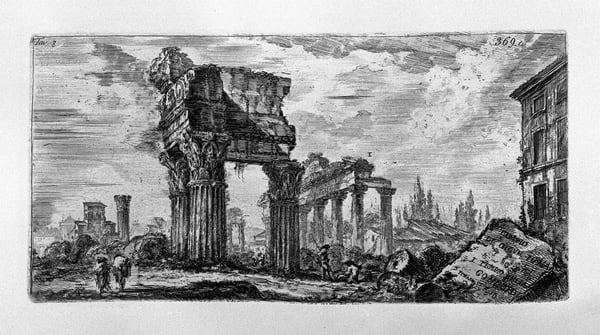
Table text: Following the inscriptions referred to in the previous plate and index tables contained in the work
Analisi esperta di Table text: Following the inscriptions referred to in the previous plate and index tables contained in the work di Giovanni Battista Piranesi
Stile: Neoclassicism · Genere: capriccio
This work by Giovanni Battista Piranesi exemplifies the unique intersection of archaeological scholarship and artistic imagination that defines the most compelling examples of Neoclassical capriccio. Despite its seemingly dry title referencing inscriptions and index tables, this piece is significant for how it transforms documentary material into a visually engaging composition.
Significance within Neoclassicism and the Capriccio Genre:
-
Bridging Documentation and Fantasy: Piranesi was both an architect, an archaeologist, and an artist. Here, he elevates the mundane structure of a table of contents or an epigraphic index into a work of art. The “capriccio” genre allowed him to combine real ancient inscriptions (often painstakingly copied from Roman ruins) with invented architectural fragments, ruins, or imaginative settings. This plate likely presents the inscriptions not as a sterile list, but arranged with dramatic lighting, deep shadows, and a sense of monumental scale—hallmarks of Piranesi’s style.
-
Influence on the Neoclassical Imagination: In the 18th century, Neoclassicism sought to revive the grandeur of antiquity, but it was also a period of intense archaeological discovery. Piranesi’s prints, especially those from series like Antichità Romane, gave viewers a visceral, almost cinematic experience of Rome’s past. Even a textual plate becomes a visual journey: the inscriptions are not merely read but seen as carved into weathered stone, surrounded by crumbling masonry or dramatic chiaroscuro. This approach helped shape the Romantic and Neoclassical fascination with ruins, decay, and the sublime.
-
Epigraphic Importance as Artistic Subject: By foregrounding the “inscriptions referred to in the previous plate,” Piranesi asserts that text itself—its lettering, its wear, its fragmentary state—is a worthy subject for artistic treatment. This reflects the Neoclassical reverence for the written word of antiquity, but it also treats the inscriptions as tactile, material objects, emphasizing their physical presence. Such works were crucial for artists, architects, and scholars who used Piranesi’s prints as both reference and inspiration.
-
Capriccio as Intellectual Play: The capriccio genre allowed Piranesi to rearrange and recontextualize authentic archaeological elements. This table text, while factual in content, is embedded in a composition that might show the inscriptions on fallen columns, in shadowy niches, or amidst overgrown vegetation. The result is a meditation on time, memory, and the act of recording history—a deeply Neoclassical theme that anticipates the Romantic idea of the ruin as a symbol of lost grandeur.
In sum, the significance of this work lies in Piranesi’s ability to fuse the systematic documentation of ancient Rome with the expressive, imaginative power of the capriccio. It is not merely an index but a visual testament to how Neoclassical artists saw the past: as a fragmented, sublime text that required both scholarly rigor and creative vision to bring it to life.
Visivamente simili
20 opere con composizione e palette affini
The Roman antiquities, t. 1, Plate XXXI. Temple of Antonius and Faustina.
Giovanni Battista Piranesi
The Roman antiquities, t. 1, Plate XXXIII. Ruins of the temple of Castor and Pollux.
Giovanni Battista Piranesi
A marble plaque with the inscription: Roman Antiquities outside of Rome, drawn and engraved by Venetian architect Giambattista Piranesi, Part Two
Giovanni Battista Piranesi
Parts of the Forum of Nerva
Giovanni Battista Piranesi
Vedute di Roma
Giovanni Battista Piranesi
A Capriccio of the Roman Forum
Giovanni Paolo Panini
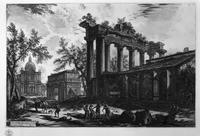
Another view of the ruins of the pronaos of the Temple of Concord
Giovanni Battista Piranesi
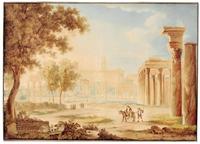
Blick auf das Forum Romanum, das Kapitol und den Bogen des Septimus severus
Franz Kaisermann
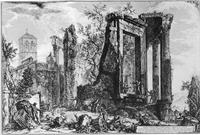
Vedute di Roma
Giovanni Battista Piranesi
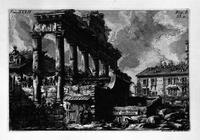
The Roman antiquities, t. 1, Plate XXXII
Giovanni Battista Piranesi
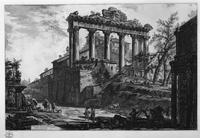
View of the Temple of Concord
Giovanni Battista Piranesi
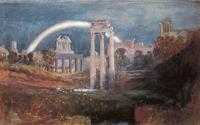
Rome, The Forum with a Rainbow
J.M.W. Turner
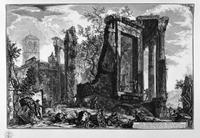
Another view of the Temple of the Sibyl at Tivoli
Giovanni Battista Piranesi
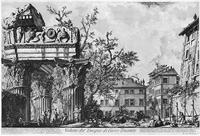
Vedute di Roma
Giovanni Battista Piranesi
The Temple of Saturn
Frederick Lee Bridell
View of Vaccino Campo
Giovanni Battista Piranesi
Vedute di Roma
Giovanni Battista Piranesi
Temple of Castor and Pollux
Giovanni Battista Piranesi
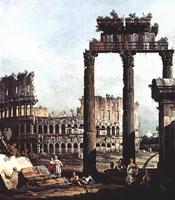
Capriccio with the Colosseum
Bernardo Bellotto
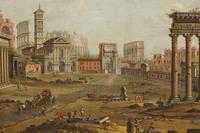
VEDUTA DI CAMPOVACCINO
Antonio Joli