The Corso in Rome
Expert analysis of Giovanni Battista Piranesi’s The Corso in Rome
Style: Neoclassicism · Genre: cityscape
Expert Analysis of "The Corso in Rome" by Giovanni Battista Piranesi
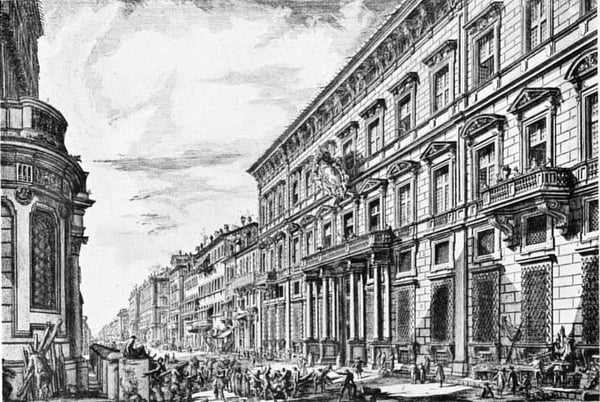
As a work of Neoclassicism in the cityscape genre, Giovanni Battista Piranesi’s The Corso in Rome stands out for its rigorous architectural precision and its role in shaping the public’s perception of ancient and modern Rome. Piranesi, though often associated with his fantastical Carceri (prisons) etchings, was equally masterful in his vedute—realistic, topographical views that combined archaeological accuracy with dramatic composition.
Significance within Neoclassicism and the Cityscape Genre
- Documentary and Artistic Fusion: Piranesi’s depiction of the Corso (the historic main street of Rome) is not a mere record; it elevates a bustling urban scene into a Neoclassical ideal. His careful rendering of Renaissance and Baroque palazzi, the obelisk of Piazza del Popolo in the distance, and the lively street activity reflects the Neoclassical reverence for order, clarity, and antique grandeur.
- Influence on Perception of Rome: In the 18th century, Rome was a key destination for the Grand Tour. Piranesi’s cityscapes, including this one, shaped European imaginations of the Eternal City by balancing meticulous topographical fact with a sense of sublime scale and historical weight. The Corso, as a former ancient Roman street (Via Lata), is presented as a living continuum of antiquity into modernity.
- Technical Mastery: Piranesi’s etching technique—sharp, precise lines contrasted with deep shadows—gives the architecture a monumental, almost tactile presence. The play of light and shadow across the facades and the lively figures in the foreground imbue the scene with a dynamic stillness, a hallmark of his cityscapes.
Why It Matters
This artwork is significant as a prime example of Piranesi’s ability to merge documentary accuracy with Neoclassical ideals of harmony and permanence. It also serves as a visual testament to Rome’s enduring urban fabric, influencing later generations of architects, painters, and travelers who sought to capture the spirit of the city through both fact and artistic vision.
Visually similar
20 works with related composition and palette
Great view of the Curia Innocenziana
Giovanni Battista Piranesi
Vedute di Roma
Giovanni Battista Piranesi
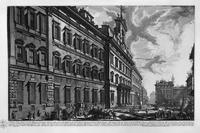
View of the Quirinal Palace on the building for the Offices of `Short and the Holy See
Giovanni Battista Piranesi
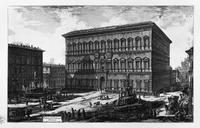
View of the Farnese Palace
Giovanni Battista Piranesi
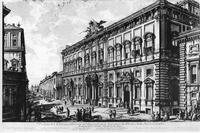
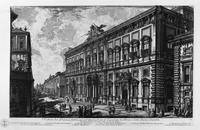
Vedute di Roma
Giovanni Battista Piranesi
The Castle of the Acqua Paola on the Golden Mount
Giovanni Battista Piranesi
Vedute di Roma
Giovanni Battista Piranesi
Vedute di Roma
Giovanni Battista Piranesi
View of the Piazza di Monte Cavallo
Giovanni Battista Piranesi
View on Mount Quirinal Palace of the most excellent of the House Barberini Bernini Cav Architecture
Giovanni Battista Piranesi
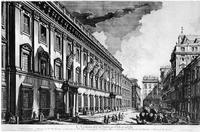
Vedute di Roma
Giovanni Battista Piranesi
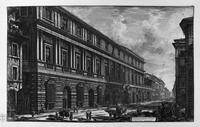
View of Via del Corso, the Palace of the Academy founded by Louis XIV, King of France
Giovanni Battista Piranesi
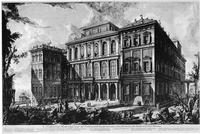
Vedute di Roma
Giovanni Battista Piranesi
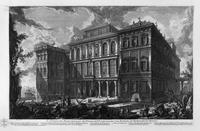
View of the Palace Stopani
Giovanni Battista Piranesi
Inauguration of the XXX Legislature of the Kingdom of Italy
Achille Beltrame
Vedute di Roma
Giovanni Battista Piranesi
The destruction of the tree of liberty in Largo di Palazzo
Saverio della Gatta
Vedute di Roma
Giovanni Battista Piranesi
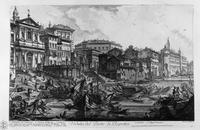
View of the monument erected by the Emperor Titus Vespasian restored for the new aqueducts of anion and Claudia
Giovanni Battista Piranesi
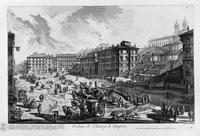
View of the Piazza del Popolo
Giovanni Battista Piranesi