
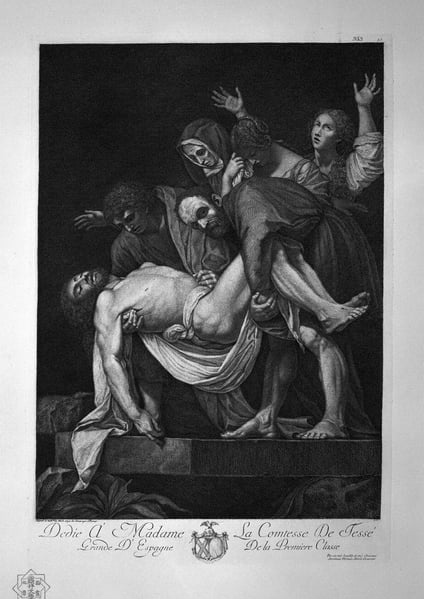
The Deposition of Michelangelo da Caravaggio
Expert analysis of Giovanni Battista Piranesi’s The Deposition of Michelangelo da Caravaggio
Style: Neoclassicism · Genre: religious painting
The artwork "The Deposition of Michelangelo da Caravaggio" by Giovanni Battista Piranesi is a fascinating hybrid within Neoclassicism: a religious painting that pays explicit homage to the Baroque master Caravaggio while reinterpreting the subject through a Neoclassical lens. Although Piranesi is best known for his architectural etchings, this work demonstrates his engagement with narrative painting and the moral gravity central to the Neoclassical movement.
Significance within Neoclassicism and the Religious Genre
- Neoclassical Ideals of Order and Clarity: Unlike Caravaggio’s intensely dramatic, tenebrist original, Piranesi’s version likely organizes the deposition scene with balanced composition, clear spatial planes, and restrained gestures. The focus shifts from raw emotional immediacy to a more intellectual, idealized pathos—a hallmark of Neoclassicism’s debt to classical sculpture and Raphael’s compositional harmony.
- Dialogue with Caravaggio: The title explicitly references Caravaggio’s iconic treatment of the same subject. Piranesi does not merely copy but reinterprets the scene, possibly smoothing the stark chiaroscuro into a more diffused, even light. This signals a conscious departure from Baroque theatricality toward Neoclassical restraint, emphasizing the universal, timeless nature of sacrifice rather than individual suffering.
- Religious Genre in a Neoclassical Mode: Religious paintings in Neoclassicism often served as moral exemplars. Here, the deposition becomes a study in dignified grief—the figures perhaps more sculptural, the composition reminiscent of ancient reliefs. Piranesi’s architectural sensibility may also be evident in a structured, almost pedimental arrangement of mourners, grounding the sacred narrative in a rational, humanistic framework.
Why It Matters
This work is significant for bridging the Baroque religious tradition and Enlightenment-driven Neoclassicism. Piranesi, typically an etcher of ruins, applies his precision to a sacred theme, demonstrating the adaptability of Neoclassical aesthetics. It shows that Neoclassicism could engage with—rather than reject—its immediate predecessors, filtering their emotional power through a cooler, more cerebral lens. The result is a religious painting that prioritizes clarity of form and moral instruction, aligning with the era’s belief in art as a vehicle for universal truth.
Visually similar
20 works with related composition and palette
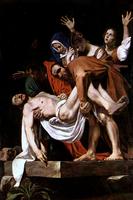
Entombment of Christ
Caravaggio
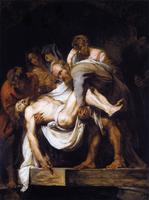
The Entombment
Peter Paul Rubens
The Entombment of Christ
Luca Giordano
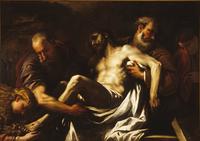
The Entombment of Christ
Luca Giordano
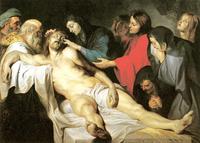
The Lamentation
Peter Paul Rubens
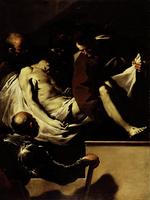
Entombment of Christ
Luca Giordano
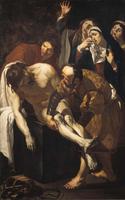
Descent from the Cross Or Lamentation.
Dirck van Baburen
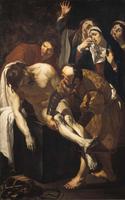
Descent from the cross
Mabuse
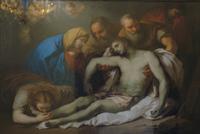
The Lamentation
Alexey Venetsianov
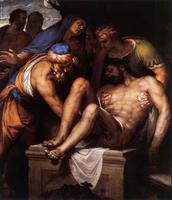
Deposition of Christ
Paolo Veronese
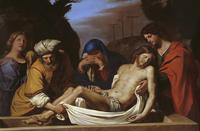
The Entombment of Christ
Guercino
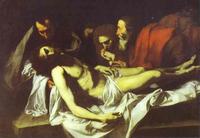
The Deposition
Jusepe de Ribera
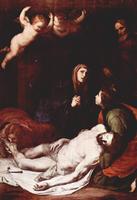
Descent from the Cross
Jusepe de Ribera
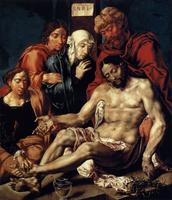
Lamentation of Christ
Maerten van Heemskerck

The entombment
Ludovico Carracci

The Lamentation
Jusepe de Ribera
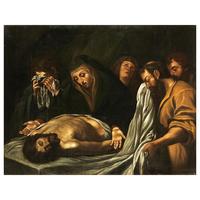
BEWEINUNG CHRISTI
Leonello Spada
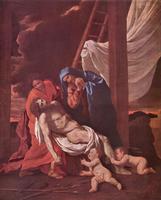
Descent from the Cross
Nicolas Poussin
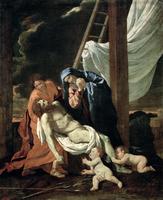
The Deposition
Nicolas Poussin
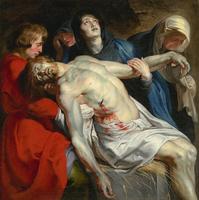
The Entombment
Peter Paul Rubens