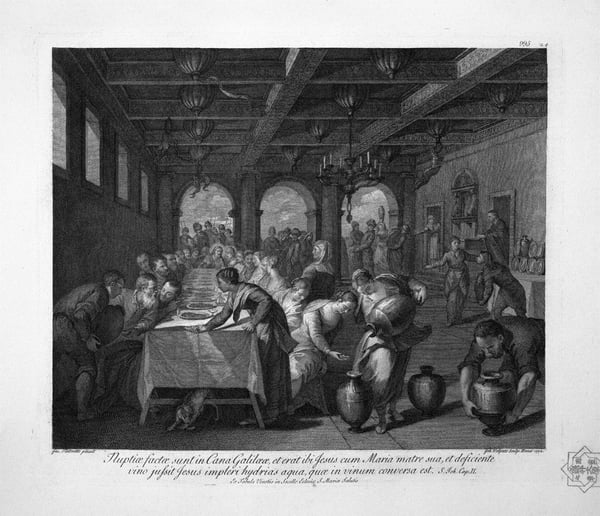
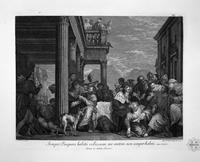
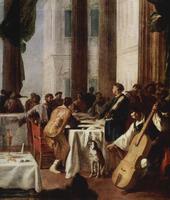
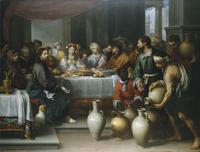
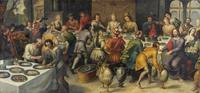
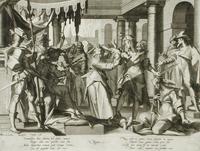
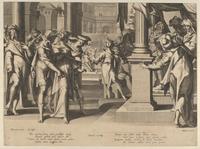
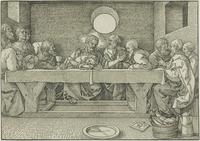
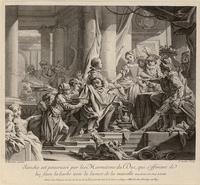
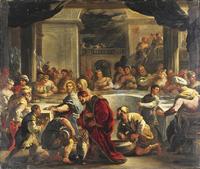
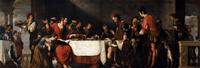
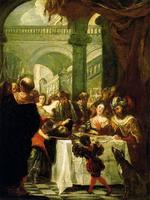
As a work by Giovanni Battista Piranesi—an artist renowned for his architectural etchings of Roman ruins—this religious painting is significant for its fusion of Neoclassical order with biblical narrative. Executed in the Neoclassical style, "The Feast in the House of Simon the Pharisee" demonstrates Piranesi’s deep engagement with classical architecture: the scene is likely framed by grand, geometrically precise columns, arches, or perspective-driven interiors that echo his print work. This application of rigorous spatial composition to a religious subject elevates the painting beyond mere illustration, turning the feast into a stage for clear, rational storytelling. The genre of religious painting here is reinterpreted through a Neoclassical lens—emphasizing harmony, formal balance, and a sense of monumental calm—rather than the emotional drama of Baroque predecessors. Its significance lies in how Piranesi translates his archaeological eye into a sacred scene, blending the timeless authority of classical architecture with the spiritual gravity of the Gospel narrative, thereby expanding the boundaries of Neoclassical religious art.