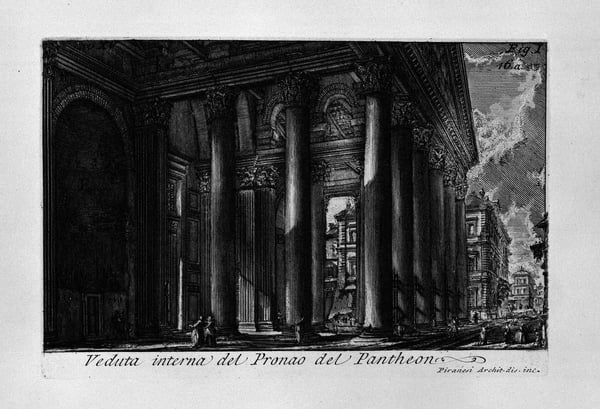
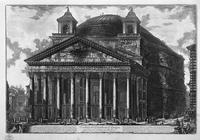
The Roman antiquities, t. 1, Plate XIV. Pantheon.
Details
Expertenanalyse zu Giovanni Battista Piranesis The Roman antiquities, t. 1, Plate XIV. Pantheon.
Stil: Neoclassicism · Genre: cityscape
Expert Analysis of "The Roman antiquities, t. 1, Plate XIV. Pantheon" by Giovanni Battista Piranesi
Giovanni Battista Piranesi’s etching of the Pantheon, part of his monumental series The Roman Antiquities (1756), stands as a paradigm of Neoclassical cityscape and a landmark in archaeological illustration. As a leading figure of 18th-century printmaking, Piranesi combined meticulous topographical accuracy with dramatic compositional flair, elevating architectural documentation into an art form that shaped the Neoclassical imagination.
Significance within Neoclassicism and the Cityscape Genre
-
Archaeological Precision Meets Sublime Vision: Piranesi’s plate is not merely a record but an interpretation. He captures the Pantheon’s iconic portico and rotunda with rigorous linear perspective, yet infuses the scene with a sense of scale and awe. The deep chiaroscuro—contrasting the shadowed columns with the luminous sky—transforms a Roman monument into a theatrical, almost romantic tableau. This fusion of exactitude and emotion anticipates the later Romantic fascination with antiquity’s grandeur and decay.
-
Contribution to Neoclassical Revival: The etching exemplifies how Neoclassicism rejected Baroque excess by returning to Classical sources. Piranesi, however, went beyond simple revival; his work romanticized ancient ruins as embodiments of lost glory. By featuring the Pantheon—the best-preserved major Roman building—he underscored its structural perfection (the oculus, coffered dome) as an ideal model for contemporary architecture. His plates were widely circulated and influenced architects like Robert Adam and Étienne-Louis Boullée.
-
Urban and Historical Narrative: As a cityscape, the print does not isolate the monument but situates it within Rome’s layered fabric. Note the inclusion of modest contemporary dwellings abutting the ancient structure, and the small figures scattered in the piazza. This contrast between eternal monument and ephemeral daily life reinforces Piranesi’s central theme: the dialogue between Rome’s imperial past and its present, decaying beauty. The meticulous rendering of broken entablatures and weathered stone also reflects his interest in the “picturesque” ruin, a key Neoclassical trope.
-
Technical Mastery in Etching: Piranesi’s signature cross-hatching and varied line weights create texture—from the smooth marble of the portico to the rough brickwork of the rotunda. The sky, rendered with rapid, energetic strokes, contrasts with the calm geometry of the Pantheon. This technical bravura makes the plate a masterpiece of the medium, demonstrating how printmaking could rival painting in expressing light and atmosphere.
Why This Work Matters
Piranesi’s Pantheon plate is significant because it encapsulates the dual nature of Neoclassical cityscape: a scientific document of antiquity and a poetically charged vision of Rome’s enduring power. It helped establish a visual language for “antiquarian tourism” and shaped how generations viewed the classical world—not as sterile ruins but as living, monumental presences. In this plate, Piranesi proves that the precise rendering of a building can be as stirring as the most imaginative invention, cementing his role as a pivotal bridge between Enlightenment reason and Romantic emotion.
Visuell ähnlich
20 Werke mit ähnlicher Komposition und Farbpalette
Vedute di Roma
Giovanni Battista Piranesi
Interior view of the pronaos of the Pantheon
Giovanni Battista Piranesi
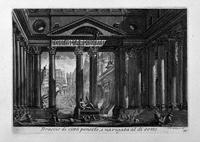
Porches pulled around a hole of the Royal Palace
Giovanni Battista Piranesi
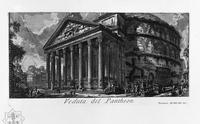
The Roman antiquities, t. 1, Plate XIV. Pantheon.
Giovanni Battista Piranesi
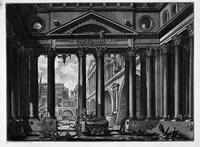
The Roman antiquities, t. 4, Plate II. According to the title. On the bank of a river a great colonnade through which you can see a bridge and monumental buildings of the opposite bank.
Giovanni Battista Piranesi
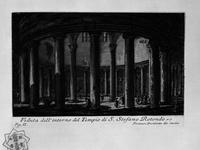
The Roman antiquities, t. 1, Plate XXV. Santo Stefano Rotondo.
Giovanni Battista Piranesi
View of the Pantheon of Agrippa
Giovanni Battista Piranesi
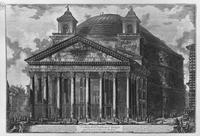
View of the Pantheon of Agrippa
Giovanni Battista Piranesi
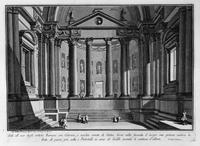
Room use of the ancient Romans with columns and niches adorned with statues
Giovanni Battista Piranesi
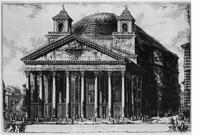
Vedute di Roma
Giovanni Battista Piranesi
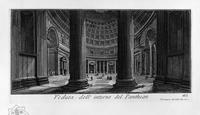
The Roman antiquities, t. 1, Plate XV. Pantheon.
Giovanni Battista Piranesi
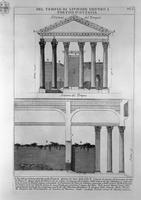
The Roman antiquities, t. 4, Plate XLV. Temple of Juno in the Portico d`Ottavia.
Giovanni Battista Piranesi
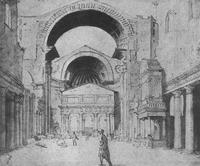
St Peter's Basilica seen from east
Maerten van Heemskerck
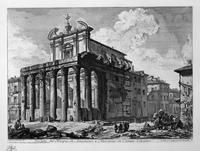
View of the Temple of Antoninus and Faustina in the Campo Vaccino
Giovanni Battista Piranesi
The Temple of Isis de face, with the two wings of his peristillo
Giovanni Battista Piranesi
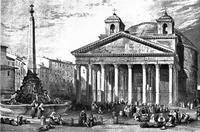
The Pantheon in Rome, drawing by Leitch, engraving by W.B. Cooke
William Leighton Leitch
Vedute di Roma
Giovanni Battista Piranesi
Vestibule of an Ancient Temple
Giovanni Battista Piranesi
A Hermit Praying in the Ruins of a Roman Temple
Hubert Robert
The Roman antiquities, t. 1, Plate XXII. Temple of Cybele.
Giovanni Battista Piranesi