
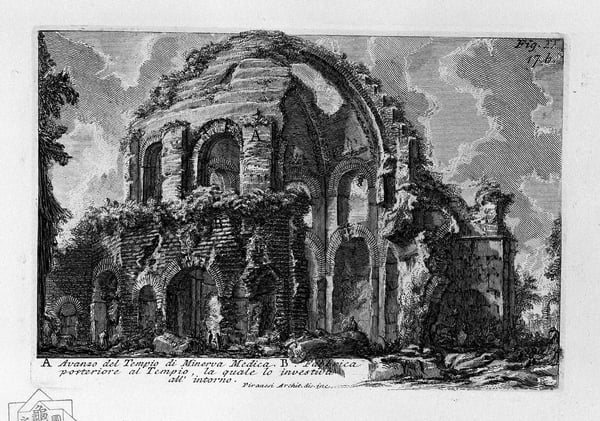
The Roman antiquities, t. 1, Plate XVI. Temple of Minerva Medica.
Ayrıntılar
Giovanni Battista Piranesi sanatçısının The Roman antiquities, t. 1, Plate XVI. Temple of Minerva Medica. eseri hakkında uzman analizi
Tarz: Neoclassicism · Tür: capriccio
Giovanni Battista Piranesi’s The Roman antiquities, t. 1, Plate XVI. Temple of Minerva Medica exemplifies the Neoclassical fascination with antiquity, while its designation as a capriccio reveals the artist’s signature blend of archaeological precision and imaginative reinvention. Piranesi was not merely documenting ruins; he was reconstructing them with dramatic scale and emotional intensity, transforming a dilapidated structure into a monumental vision of ancient Rome’s lost grandeur.
Technical and Stylistic Significance:
Executed as an etching, the plate displays Piranesi’s masterful use of strong chiaroscuro and deep, layered hatching to evoke the texture of aged stone and the vast interior space. The composition draws the eye upward along the towering arches and coffered dome, emphasizing the engineering prowess of Roman builders. Yet Piranesi departs from strict topographical accuracy—the temple is compressed and monumentalized, its surviving fragments rearranged to create a more harmonious and imposing whole. This is the essence of the capriccio: a willful, poetic manipulation of reality to produce an ideal Neoclassical vision.
Historical and Artistic Context:
Published as part of Le Antichità Romane (1756), this plate reflects Piranesi’s lifelong project to celebrate and resurrect the Roman past. At a time when Neoclassicism was championing order and reason drawn from classical models, Piranesi’s work introduced a counter-current of sublime ruin and decay. The Temple of Minerva Medica (actually a nymphaeum of the 4th century AD) becomes a stage for the transience of power and the enduring beauty of ancient craftsmanship. Piranesi’s technique would deeply influence later architects and artists—from Neoclassical designers seeking authentic ancient motifs to Romantic painters who valued the emotional resonance of crumbling monuments.
Significance within Style and Genre:
As a Neoclassical work, the print adheres to the period’s reverence for classical forms and archaeological authenticity. But by classifying it as a capriccio, Piranesi foregrounds the artist’s creative liberty: he merges factual ruin with idealized reconstruction, creating a hybrid that is neither straight documentation nor pure fantasy. This duality makes the plate significant—it not only preserved and popularized Roman architecture for Enlightenment Europe but also anticipated the Romantic spirit by finding drama and melancholy in ancient stones. Piranesi’s Temple of Minerva Medica thus stands as a bridge between empirical study and artistic imagination, cementing his role as a pivotal figure in both Neoclassical scholarship and the emerging taste for the sublime.
Görsel olarak benzer
İlişkili kompozisyon ve renk paletine sahip 20 eser
Vedute di Roma
Giovanni Battista Piranesi
View of the Temple of Minerva Medica
Giovanni Battista Piranesi
Arch of Trajan in Ancona
Giovanni Battista Piranesi
Vedute di Roma
Giovanni Battista Piranesi
The Roman antiquities, t. 1, Plate XVIII. Ruins of the Tempio della Speranza Vecchia.
Giovanni Battista Piranesi
View of the Temple of the Cough said of the Via Tiburtina
Giovanni Battista Piranesi
The Roman antiquities, t. 1, Plate XXXVI. Veduta with ruins of the Peristyle House of Nero.
Giovanni Battista Piranesi
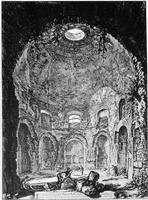
Vedute di Roma
Giovanni Battista Piranesi
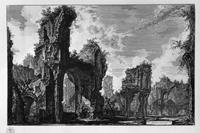
Ruins of Sixtus, or both of the great hall of the Antonine Baths
Giovanni Battista Piranesi
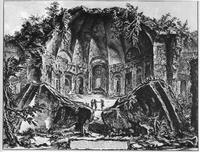
Vedute di Roma
Giovanni Battista Piranesi
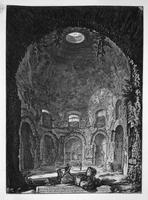
Interior view of the Temple of the Cough
Giovanni Battista Piranesi
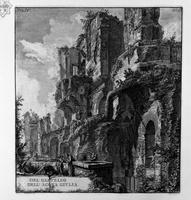
Perspective of the rear
Giovanni Battista Piranesi
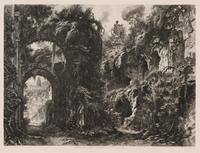
Ruins of the House of Septimius Severus on the Palatine
Cesare Biseo
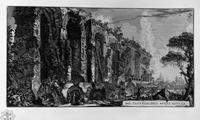
Perspective of the ruins of the aqueduct
Giovanni Battista Piranesi
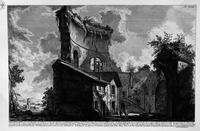
The Roman antiquities, t. 3, Plate XVIII. A view of the same mausoleum.
Giovanni Battista Piranesi
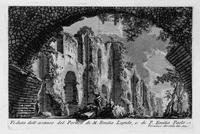
The Roman antiquities, t. 1, Plate XX. Portico of Marcus Aemilius Lepidus and P. Aemilius Paulus.
Giovanni Battista Piranesi
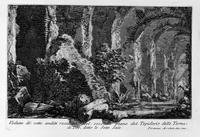
The Roman antiquities, t. 1, Plate XXVII. The Seven Halls.
Giovanni Battista Piranesi
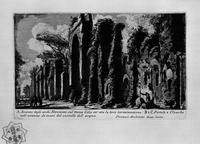
The Roman antiquities, t. 1, Plate XXIV. Nero`s aqueduct.
Giovanni Battista Piranesi
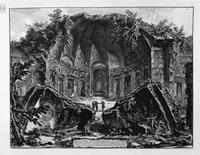
Remains of the Temple of the God Canopus in Hadrian`s Villa at Tivoli
Giovanni Battista Piranesi
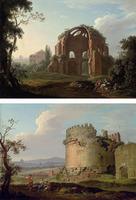
The Temple of Minerva, Rome; and The Tomb of Cecilia Metella on the via Appia
Carlo Labruzzi