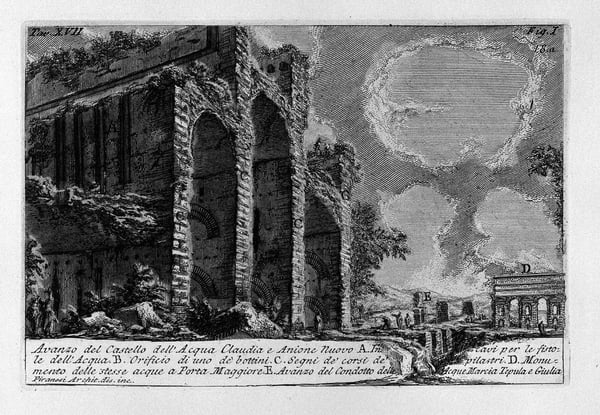
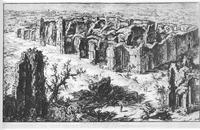
The Roman antiquities, t. 1, Plate XVII. Aqua Claudia.
Details
Expert analysis of Giovanni Battista Piranesi’s The Roman antiquities, t. 1, Plate XVII. Aqua Claudia.
Style: Neoclassicism · Genre: cityscape
Expert Analysis: "The Roman antiquities, t. 1, Plate XVII. Aqua Claudia" by Giovanni Battista Piranesi
Piranesi’s Aqua Claudia is a masterful cityscape that exemplifies Neoclassicism’s reverence for Roman antiquity while simultaneously pushing the boundaries of the style through its dramatic, almost theatrical presentation. As part of his Le Antichità Romane (1756), this etching serves both as a meticulously researched archaeological record and as an emotionally charged artistic vision—a duality that makes it profoundly significant.
Technical and Stylistic Significance Executed in the Neoclassical idiom, Piranesi’s work captures the Aqua Claudia—one of Rome’s grandest imperial aqueducts—with rigorous architectural precision. The aqueduct’s towering arcades, built of massive travertine blocks, are rendered with exacting linear perspective and careful detailing of masonry, reflecting the Neoclassical commitment to rational structure and classical order. Yet Piranesi defies the serene balance typical of the style: his etching emphasizes scale through dramatic foreshortening, deep shadows, and a low viewpoint that makes the ruin loom over the viewer. This technique injects a sense of sublime awe, foreshadowing the Romantic movement while remaining grounded in classical subject matter.
Art-Historical Significance Piranesi’s plate is pivotal for its role in the 18th-century rediscovery of ancient Rome. Unlike earlier, idealized archaeological illustrations, Aqua Claudia presents the aqueduct not just as a pristine monument but as a weathered, partially buried remnant—overgrown vegetation, crumbling edges, and a sense of encroaching decay are depicted with unflinching realism. This honesty about the passage of time was revolutionary: it shifted the Neoclassical view from pure emulation to a more complex dialogue between past glory and present ruin. The etching also influenced architects and designers of the period, from Robert Adam to Étienne-Louis Boullée, who sought to evoke Roman grandeur in their own works.
Genre and Context As a cityscape, the work transcends simple topography. Piranesi populates the foreground with small, generic figures (a common Neoclassical device to indicate scale), but he also includes ancient artifacts—sarcophagi and altars—scattered at the base, linking the aqueduct’s engineering to Rome’s broader funerary and religious culture. This layering of meaning—technology, art, and death—makes the plate a microcosm of Piranesi’s larger project: to reveal Rome as a living museum of layered histories.
Enduring Significance Aqua Claudia remains a cornerstone of Neoclassical printmaking because it balances archaeological authenticity with artistic invention. It demonstrates how Neoclassicism was not merely a static revival, but a dynamic, interpretive force—one that used the ruins of the past to inspire new forms of architectural imagination. Piranesi’s vision of the aqueduct as both a factual record and a poetic ruin cemented his reputation as the great interpreter of ancient Rome, and this plate stands as a testament to his power to make stone seem to breathe.
Visually similar
20 works with related composition and palette
Perspective of the ruins of the aqueduct
Giovanni Battista Piranesi
The Roman antiquities, t. 1, Plate XXXIV
Giovanni Battista Piranesi
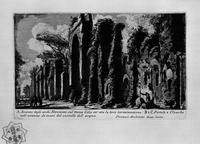
The Roman antiquities, t. 1, Plate XXIV. Nero`s aqueduct.
Giovanni Battista Piranesi
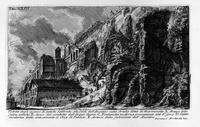
The Roman antiquities, t. 1, Plate XXIII. Aventine Hill.
Giovanni Battista Piranesi
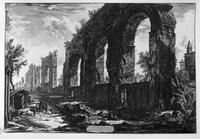
A view of the progress of the Water Castle Julia
Giovanni Battista Piranesi
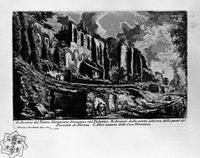
The Roman antiquities, t. 1, Plate XXXV
Giovanni Battista Piranesi
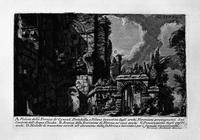
The Roman antiquities, t. 1, Plate XXV. Nero`s aqueduct.
Giovanni Battista Piranesi
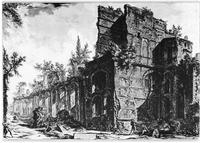
Vedute di Roma
Giovanni Battista Piranesi
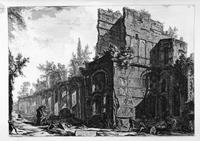
Ruins of one of the chambers` soldiers at one of the leading factories in Hadrian`s Villa in Tivoli His
Giovanni Battista Piranesi
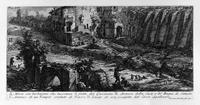
The Roman antiquities, t. 1, Plate XVI
Giovanni Battista Piranesi
Vedute di Roma
Giovanni Battista Piranesi
Ruins of the Antonine Baths
Giovanni Battista Piranesi
The Roman antiquities, t. 1, Plate VIII. Aurelian Walls.
Giovanni Battista Piranesi
The Roman antiquities, t. 1, Plate XXIV. Celio o Oppio. The Seven Halls. Baths of Trajan.
Giovanni Battista Piranesi
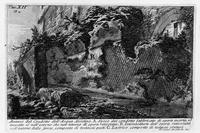
The Roman antiquities, t. 1, Plate XII. Aqua Alsietina.
Giovanni Battista Piranesi
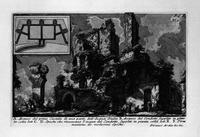
The Roman antiquities, t. 1, Plate XXVI. Aqua Julia.
Giovanni Battista Piranesi
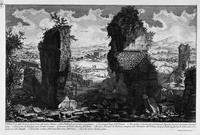
The Roman antiquities, t. 3, Plate VI. View the remains above ground of the ancient Ustrine and relevant to the same factories.
Giovanni Battista Piranesi
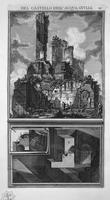
Perspective of one of the sides, and construction details of the five branches of the orifice of the aqueduct
Giovanni Battista Piranesi
Vedute di Roma
Giovanni Battista Piranesi
The Roman antiquities, t. 1, Plate XXXIII. Veduta with ruins of Nero`s Golden House.
Giovanni Battista Piranesi