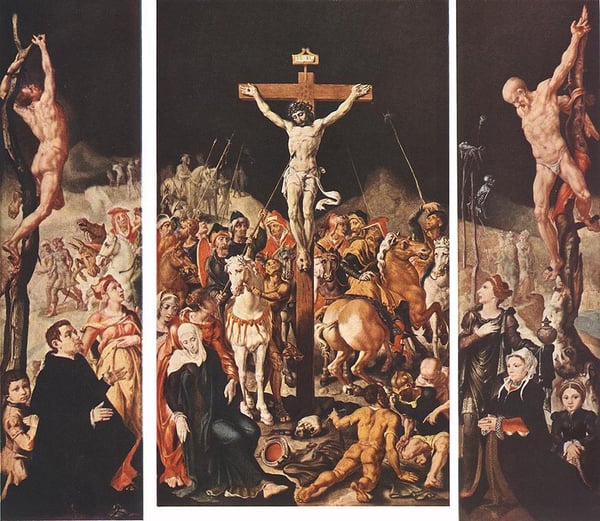
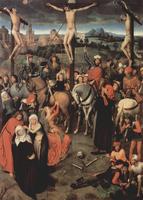
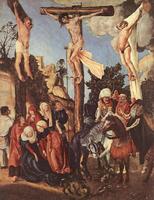
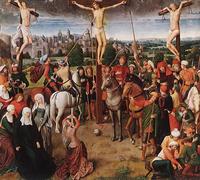
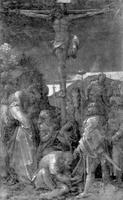
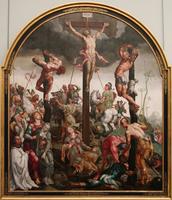
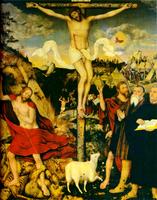
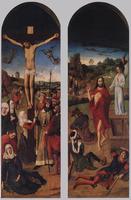
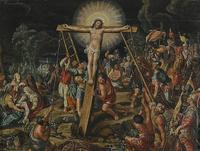
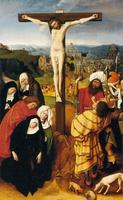
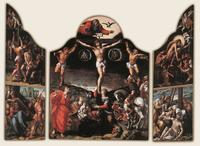
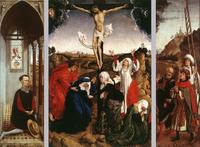
Based solely on the supplied facts, the significance of Maerten van Heemskerck’s Crucifixion (Triptych) lies in its embodiment of the Mannerist style within the religious painting genre. As a work of Mannerism (Late Renaissance), it represents a deliberate shift away from the balanced, naturalistic ideals of the High Renaissance. The triptych format, traditional for altarpieces and devotional panels, is here reimagined through a Mannerist lens, likely prioritizing emotional intensity, complex composition, and a sophisticated, sometimes artificial elegance over classical harmony. The subject—the Crucifixion—was a central theme in Counter-Reformation art, and this piece would have served both as a devotional focus and as an example of Northern Mannerist innovation, bridging Italianate artifice with Northern European attention to detail. Its significance resides in how it uses a conventional religious structure to express the distinctive Mannerist concerns of spatial tension and heightened spirituality.