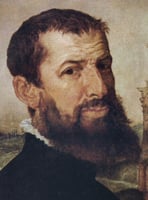
Expertenanalyse zu Maerten van Heemskercks Ecce Homo - right panel
Stil: Mannerism (Late Renaissance) · Genre: religious painting
Expert Analysis: "Ecce Homo - right panel" by Maerten van Heemskerck
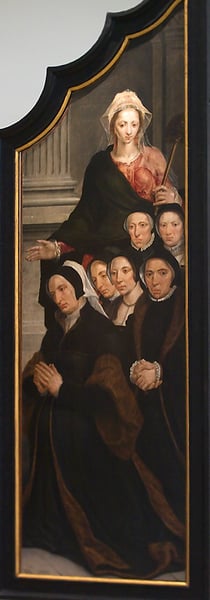
This work is a religious painting executed in the Mannerist style of the Late Renaissance, a period marked by a deliberate departure from the balanced naturalism of the High Renaissance toward heightened artifice, emotional intensity, and compositional complexity. As the right panel of a triptych—a format typical of Northern altarpieces—it would have formed part of a larger narrative sequence, likely depicting the moment Pilate presents the scourged Christ to the crowd ("Ecce Homo," meaning "Behold the Man").
Significance within its Style and Period:
-
Mannerist Distortion and Expression: Van Heemskerck, a Dutch painter who studied in Italy and absorbed the work of Michelangelo and Raphael, became a leading Northern exponent of Mannerism. In this panel, expect to see elongated, sinuous figures, exaggerated contrapposto, and crowded, compressed space—all hallmarks of Mannerist artifice. The right panel might focus on a figure or group that reacts to Christ’s suffering, with twisted postures and sweeping drapery that prioritize decorative elegance over naturalistic proportion. This stylistic choice amplifies the psychological tension of the scene.
-
Religious Narrative with Mannerist Complexity: Unlike the clear, stable compositions of earlier Renaissance works, Mannerist religious paintings like this one employ asymmetry, ambiguous spatial relationships, and sharp color contrasts to evoke spiritual unease. The panel’s position on the right would normally lead the viewer’s eye toward the center or outward, suggesting a dynamic interaction with the other panels. Van Heemskerck’s use of strong diagonals and theatrical gestures heightens the drama of Christ’s public humiliation, turning a static biblical moment into a visually restless, emotionally charged experience.
-
Historical and Stylistic Significance: Van Heemskerck was a key figure in the transition from Northern Renaissance realism to Mannerist abstraction. “Ecce Homo - right panel” exemplifies how Northern artists integrated Italianate maniera (stylish, artificial grace) with the Netherlandish tradition of meticulous detail and emotional pathos. This fusion makes the work stand out: it retains the lifelike textures of hair, skin, and fabric, yet imposes an intellectual, almost surreal order onto the scene. The panel’s existence as part of a larger polyptych also reflects the period’s continued use of altarpieces for devotional narratives, now reimagined through a lens of studied elegance and intense religious feeling.
In summary, this artwork is significant for its embodiment of Mannerist ideals in a religious context: a deliberate, sophisticated manipulation of form to convey spiritual torment and human folly, bridging the naturalism of the past and the theatricality of the Baroque.
Visuell ähnlich
20 Werke mit ähnlicher Komposition und Farbpalette
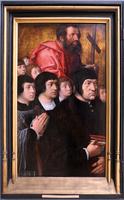
Ecce Homo - left panel
Maerten van Heemskerck
Haneton Triptych (left wing)
Bernard Van Orley
Haneton Triptych (right wing)
Bernard Van Orley
The Artist Painting, Surrounded by His Family
Otto van Veen
Triptych of Jan Des Trompes (rear of wings)
Gerard David
Portraits of donors
Maerten van Heemskerck
Portrait of donor
Maerten van Heemskerck
Wings of a Triptych
Mabuse
Portrait of a Male and Female Donor
Petrus Christus
The Carondelet Diptych: Jean Carondelet (left panel), Virgin and Child (right panel)
Mabuse
Madeleine of Bourgogne presented by St. Mary Magdalene
Jean Hey
Konrad Rehlinger's Children
Bernhard Strigel
Portrait of a family
Cornelis de Vos
Portrait of Richard Streatfeild Family
William Dobson
Triptych of Willem Moreel, right wing, the founder Barbara van Vlaenderbergh, wife of Willem Moreel, the daughters and the St. Barbara
Hans Memling
Portrait of Porzia Imperiale and Her Daughter
Anthony van Dyck
Isabella Of Portugal With St. Elizabeth
Petrus Christus
Portrait of a Woman
Andrea del Sarto
The Fortune-teller
Lucas van Leyden
Portrait of Mary Wotton, Lady Guildenford
Hans Holbein the Younger