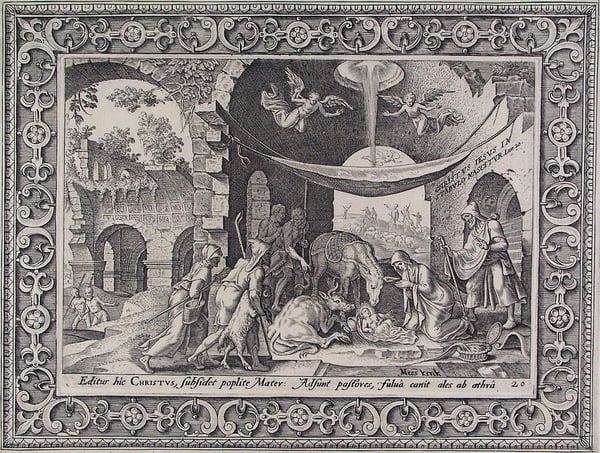
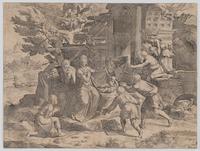
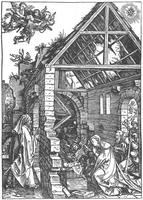
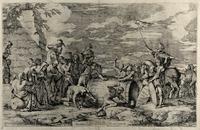
This work, The Adoration of the Shepherds by Maerten van Heemskerck, is a striking example of Northern Mannerism—a style that deliberately twists and heightens the conventions of the High Renaissance. Painted in the mid-16th century, it demonstrates how Heemskerck, after studying in Rome, fused Italianate monumentalism with a distinctly Northern attention to surface detail and emotional intensity.
Significance within Mannerism and the Late Renaissance:
-
Elongated, Contorted Figures: True to Mannerist taste, the shepherds and the Holy Family are depicted with impossibly elongated limbs and twisted postures. The figures do not rest naturally; they spiral and gesture in a way that prioritizes elegant, artificial complexity over classical balance. This creates a sense of spiritual urgency rather than serene adoration.
-
Crowded, Shallow Space: Heemskerck compresses the scene into a tight foreground, pushing the figures virtually into the viewer's space. This anti-perspectival crowding—a hallmark of Mannerism—heightens the dramatic tension and denies the viewer a rational, single vanishing point. Instead, the eye is forced to travel across an intricate web of limbs and glances.
-
Unnatural, Acidic Colors: The palette shifts away from the soft, atmospheric tones of the High Renaissance. Instead, Heemskerck employs sharp, cool blues, jarring yellows, and harsh whites that appear almost metallic. This artificial color scheme is deliberately non-naturalistic, intended to convey a transcendent, otherworldly light flooding the humble stable.
-
Emotional and Theatrical Intensity: The shepherds do not kneel in quiet devotion; they gesticulate wildly, their faces contorted with awe and astonishment. This exaggerated emotional display—typical of Mannerism—turns the biblical narrative into a theatrical spectacle, emphasizing the miraculous nature of the event over humanist calm.
In this painting, Heemskerck rejects the harmonious ideal of the early Renaissance in favor of a challenging, intellectualized composition. The work stands as a critical link between the balanced forms of Italy and the expressive, restless energy that would later define Northern Baroque art.