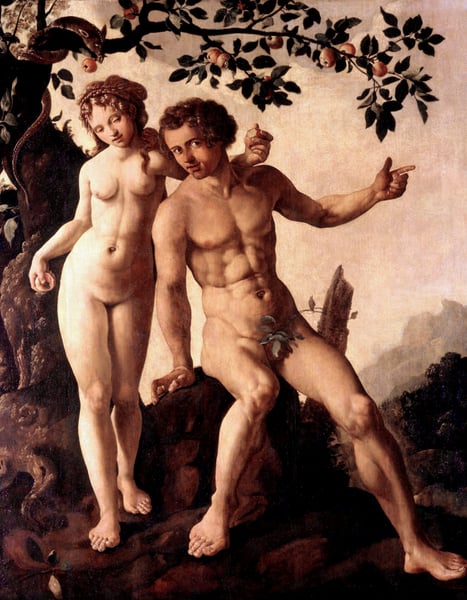
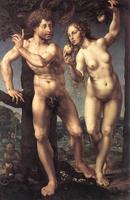
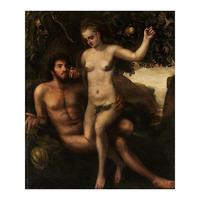
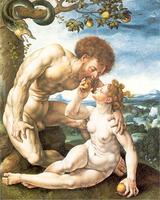
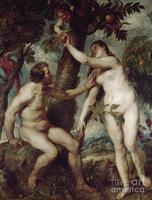
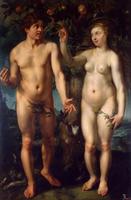
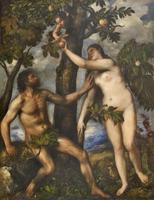
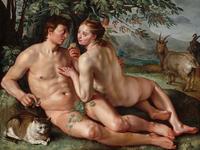
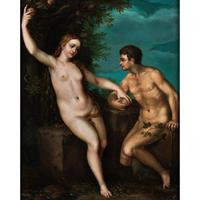
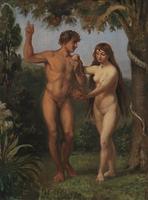
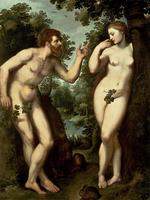
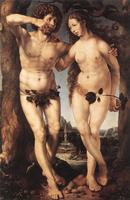
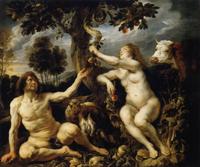
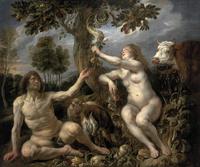
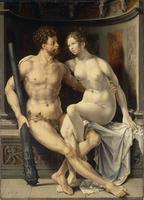
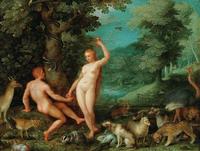
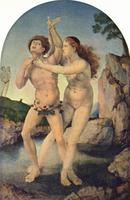
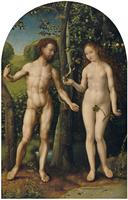
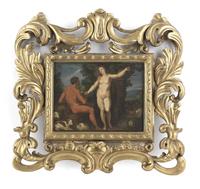
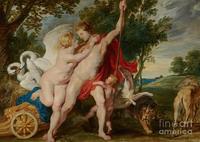
"The Fall" by Maerten van Heemskerck is a significant religious painting that exemplifies the distinctive characteristics of Mannerism within the Late Renaissance. In this work, van Heemskerck moves beyond the balanced naturalism of the High Renaissance, embracing the Mannerist penchant for artificiality, emotional intensity, and complex, crowded compositions. The scene—typically depicting humanity's expulsion from Eden or the moment of original sin—is dramatized through elongated, contorted figures arranged in a dense, spiraling composition that draws the viewer's eye across the canvas. This deliberate distortion and spatial compression heighten the sense of psychological turmoil and moral gravity, key concerns of the genre. Van Heemskerck's use of vibrant, often jarring colors and sharp, angular drapery further underscores the tension and spiritual crisis inherent in the subject. As a Northern Mannerist, he synthesizes Italian Mannerist influences—learned during his travels to Rome—with a characteristically Northern attention to intricate detail and a palpable, almost didactic narrative clarity. The painting's significance lies in how it encapsulates Mannerism's rejection of classical harmony in favor of expressive, intellectual complexity, serving as a powerful example of how religious themes were reinterpreted during this turbulent period of Reformation and Counter-Reformation.