Expert Analysis: "The Triumphal Procession of Bacchus" by Maerten van Heemskerck
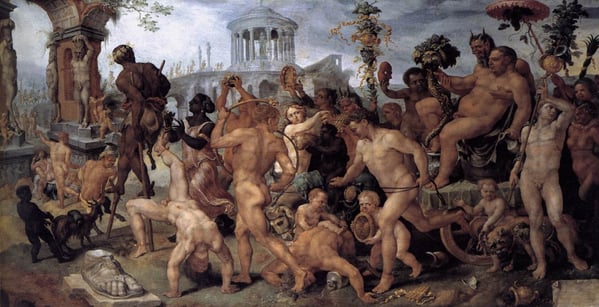
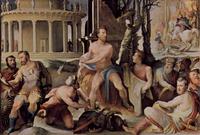
Maerten van Heemskerck’s The Triumphal Procession of Bacchus stands as a defining example of Northern Mannerism, a late Renaissance style that deliberately broke from the balanced naturalism of the High Renaissance. Painted by a Dutch artist who had traveled to Italy and absorbed the work of Michelangelo, Raphael, and antique sculpture, this mythological scene is significant for its fusion of Italianate monumentality with Northern linear precision—a hallmark of Heemskerck’s international Mannerist approach.
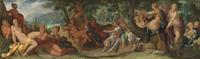
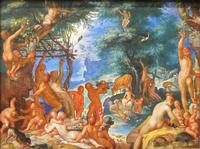
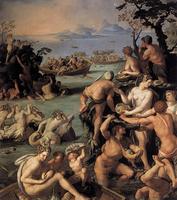
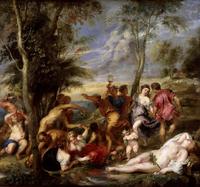
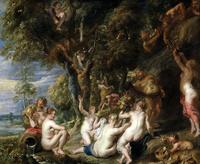
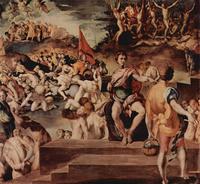
The work’s importance lies in its radical compositional and figural treatment. True to Mannerist principles, the procession is crowded with elongated, sinuous bodies posed in contraposto and exaggerated twists, creating a sense of artificial elegance and restless energy. Bacchus, the god of wine, is typically shown in a chariot, but Heemskerck amplifies the scene into a teeming frieze of satyrs, maenads, and mythological creatures, each figure occupying an uncertain, compressed space. This flattening of depth and play with scale—where foreground and background figures compete for the viewer’s eye—subverts Renaissance perspective and emphasizes decorative complexity over naturalistic illusion.
Culturally, the painting reflects the Mannerist fascination with classical mythology as a vehicle for allegory and sensual exuberance. Heemskerck’s Bacchus is not merely a god of revelry but a symbol of the creative frenzy that Mannerist artists prized—a departure from the serene deities of the earlier Renaissance. The work is also significant for its dissemination of Mannerist visual vocabulary in the Netherlands, bridging the gap between Italian art theory and Northern European painting traditions. Through its dynamic, almost overcrowded composition and its studied artifice, The Triumphal Procession of Bacchus exemplifies Mannerism’s core ambition: to demonstrate artistic virtuosity by surpassing nature through intellect and imagination.