Expert Analysis of "Two Bay Mares And a Grey Pony In a Landscape" by George Stubbs
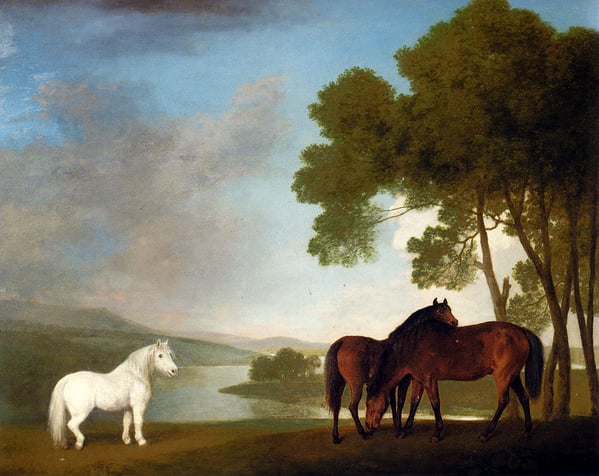
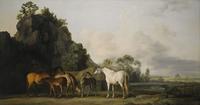
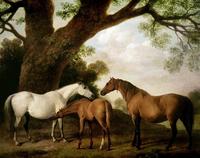
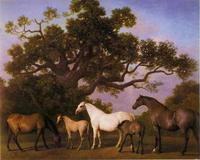
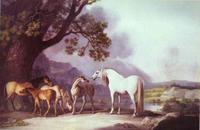
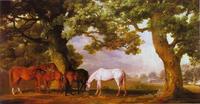
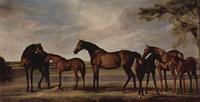
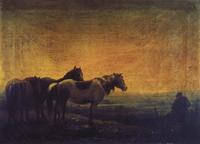
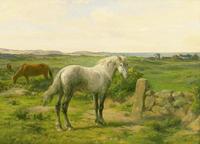
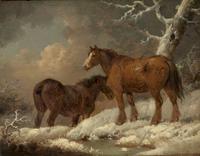
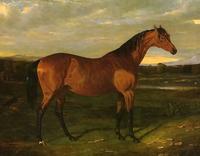
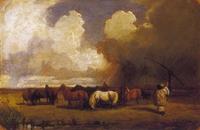
George Stubbs’ "Two Bay Mares And a Grey Pony In a Landscape" exemplifies the Romantic era’s fascination with the natural world, while simultaneously elevating animal painting beyond mere portraiture to a study of vitality and harmony. Created within the Romantic style, the work captures the emotional and sublime qualities of nature—a core tenet of the movement—by placing horses in an open, pastoral setting that evokes both tranquility and the untamed spirit of the animal kingdom.
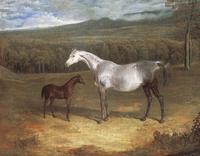
Stubbs’ significance lies in his meticulous anatomical knowledge, which he famously gleaned from dissections, allowing him to render the equine form with unprecedented accuracy and dynamism. Here, the two bay mares and the grey pony are not static symbols; their poised stances, subtle musculature, and alert gazes convey a sense of living energy and individual character. The composition—with the grey pony slightly apart, perhaps suggesting youthful curiosity or herd dynamics—adds narrative depth, a hallmark of Romantic storytelling in art.
Moreover, the landscape itself is not mere backdrop but an integral part of the Romantic ideal: a vast, luminous sky and gently rolling hills mirror the horses’ grace, emphasizing the interconnectedness of all living things. Stubbs’ ability to blend scientific precision with poetic lyricism made him a pivotal figure in animal painting, transforming it into a genre capable of expressing the sublime beauty and raw power of the natural world—a legacy that continues to resonate in both art history and naturalist studies.