Expert Analysis of Spring Day by Pyotr Konchalovsky
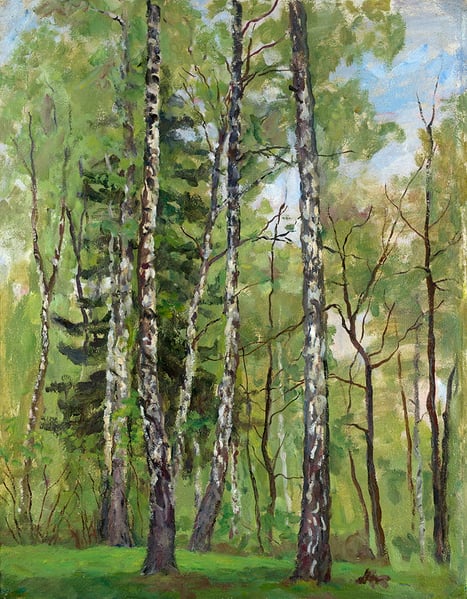
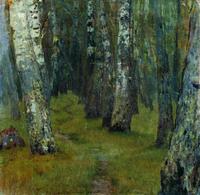
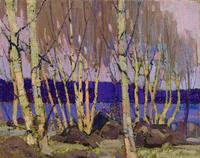
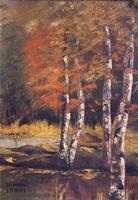
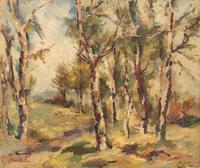
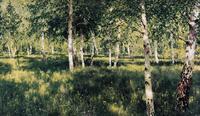
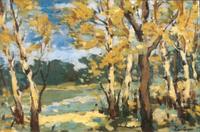
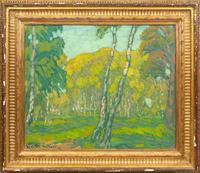
As a realist landscape, Spring Day exemplifies the core tenets of 19th-century Russian Realism: an unembellished, truthful depiction of nature, rooted in direct observation. Konchalovsky, though later associated with avant-garde groups like the Jack of Diamonds, here demonstrates a masterful command of the realist idiom.
Significance within Realism and Konchalovsky’s Oeuvre:
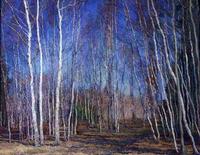
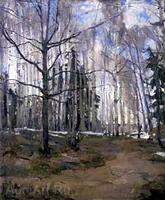
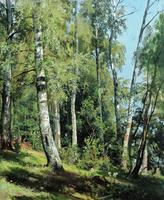
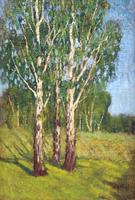
- Capturing the Ephemeral: The painting’s significance lies in its ability to render the transient mood of a spring day—the thawing earth, the tentative light, and the budding renewal of life—without idealization. Konchalovsky focuses on the subtle shifts in color and atmosphere, such as the soft blues of melting snow or the warm ochres of emerging grass, characteristic of Realism’s commitment to portraying nature “as it is.”
- Narrative of the Ordinary: True to the genre, the scene is not a grand vista but likely an intimate, unassuming corner of the Russian countryside. This choice elevates the mundane into an object of deep contemplation, a hallmark of Realist landscape painting.
- Technical Precision: Konchalovsky’s brushwork balances loose, impressionistic touches (for foliage or clouds) with tighter control (for structural elements like trees or buildings), demonstrating the Realist principle of fidelity to observed texture and light.
Spring Day is significant as a document of Konchalovsky’s early grounding in Realism before his later stylistic experiments, and as a poignant, unsentimental celebration of the natural world’s quiet transformations.