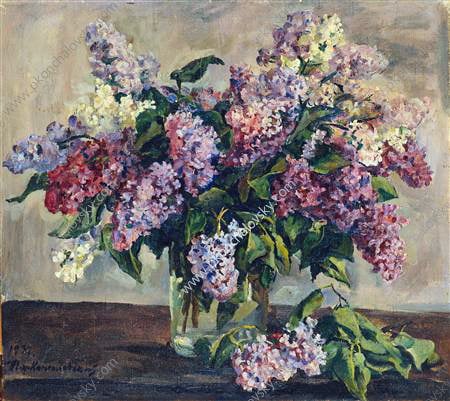
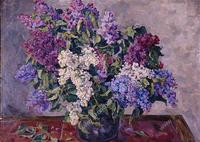
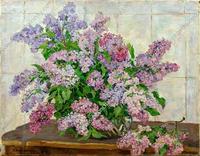
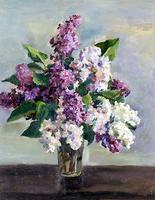
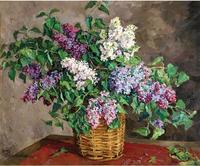
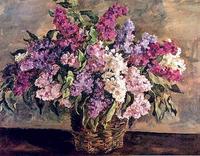
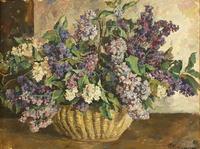
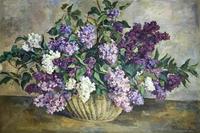
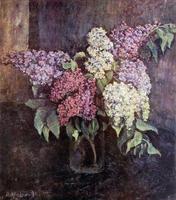
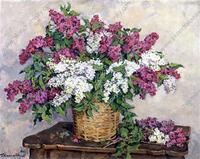
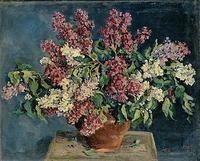
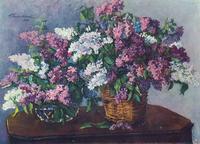
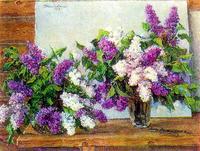
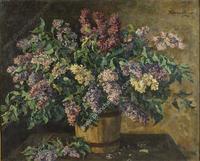
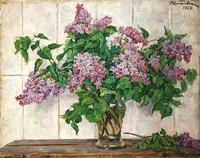
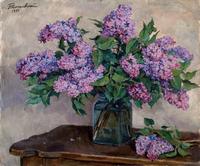
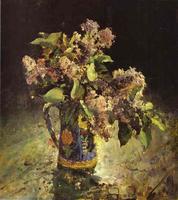
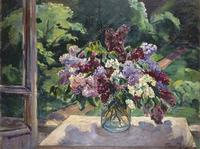
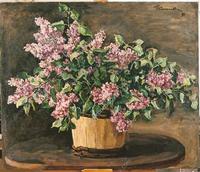
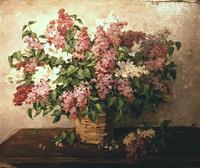
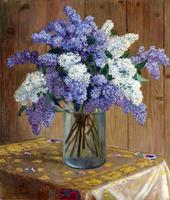
Pyotr Konchalovsky’s "Still Life. Lilacs" is a compelling example of Realist flower painting—a genre that, within the Realist style, shifts focus from idealized abundance to the direct, unembellished observation of nature. The work’s significance lies in its disciplined fidelity to the visual facts of its subject: the lilacs are rendered with meticulous attention to the subtle variations of violet, lavender, and white, capturing the soft, clustered petals in a way that emphasizes both their organic structure and ephemeral freshness.
As a Realist flower piece, it stands apart from more decorative or symbolic traditions by grounding its beauty in empirical accuracy. Konchalovsky’s treatment of light and shadow gives the blossoms a palpable three-dimensionality, anchoring the bouquet in a specific moment and place. This commitment to truthfulness—rather than allegorical or romanticized interpretations—demonstrates how Realist still life elevates the ordinary to the extraordinary through sheer perceptual honesty. The work thus serves as a testament to the enduring power of the Realist approach to find profound beauty in the simple, transitory presence of cut flowers.