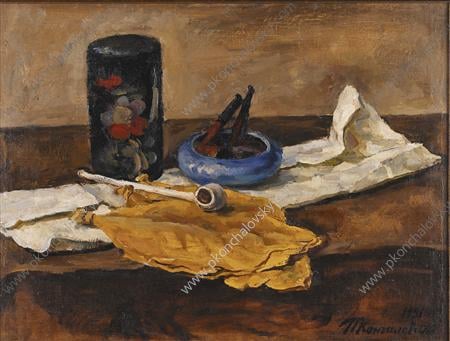
Expert analysis of Pyotr Konchalovsky’s Still Life. Tobacco leaves.
Style: Post-Impressionism · Genre: still life
Expert Analysis: "Still Life. Tobacco leaves." by Pyotr Konchalovsky
Pyotr Konchalovsky’s Still Life. Tobacco leaves. stands as a compelling example of Russian Post-Impressionism, a movement that extended the innovations of French Post-Impressionism (Cézanne, Van Gogh, Gauguin) into a uniquely robust, color-driven aesthetic. The work’s significance lies in how it transforms a humble, everyday subject—tobacco leaves—into a vehicle for exploring form, texture, and chromatic intensity.
Stylistic and Period Context:
Konchalovsky was a leading member of the avant-garde group Jack of Diamonds, which championed a bold, anti-academic approach inspired by Cézanne’s geometric structuring of space and Van Gogh’s expressive color. In this still life, the artist eschews delicate naturalism in favor of a monumental, decorative composition. The tobacco leaves are not rendered with botanical precision; instead, they become near-abstract blocks of green, ochre, and amber, piled with a painterly energy that suggests both weight and decay. The thick impasto and visible brushstrokes (a hallmark of Post-Impressionist technique) add a tactile, almost sculptural quality to the canvas.
Significance within Post-Impressionism:
While French Post-Impressionists often focused on landscapes or figures, Konchalovsky brings the same radical intensity to the still life—a genre traditionally considered a secondary subject. Here, the tobacco leaves serve as a pretext for formal experimentation: the diagonal arrangement of stems and the concentric layering of leaf masses create a dynamic, almost turbulent rhythm. The palette is both earthy and vivid—deep greens contrasted with hot browns and flashes of yellow—evoking the sensory richness of tobacco itself. This work exemplifies how Russian Post-Impressionism fused Western European color theory with a distinctly national, robust materiality. It is not a quiet, contemplative still life but a bold assertion of paint’s physical presence.
Art Historical Importance:
Konchalovsky’s Still Life. Tobacco leaves. is significant because it challenges the viewer to see ordinary objects anew, investing them with the same formal seriousness that Cézanne gave to apples or Van Gogh to sunflowers. It stands as a testament to the expansion of Post-Impressionist principles beyond France, proving that the movement’s emphasis on structure, emotional color, and subjective expression could thrive in a Russian context—and, in Konchalovsky’s hands, produce a still life of startling vitality and structural clarity.
Visually similar
20 works with related composition and palette
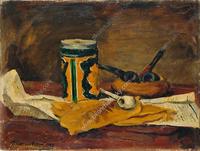
Still Life. Tobacco leaves.
Pyotr Konchalovsky
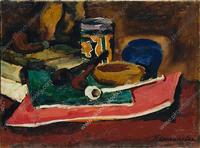
Still Life. Pink notebook and handset.
Pyotr Konchalovsky
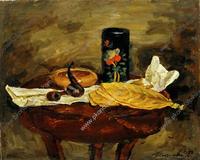
Still Life. Tobacco leaves and black tea caddy.
Pyotr Konchalovsky
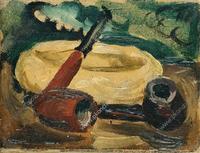
Still Life. Pipes.
Pyotr Konchalovsky
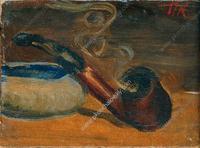
Still Life. Pipe with smoke.
Pyotr Konchalovsky
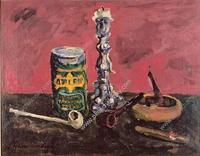
Still Life. Candlestick and the tube on a red background.
Pyotr Konchalovsky
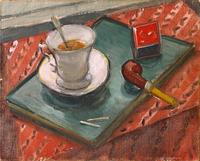
Still Life
Theodor Pallady
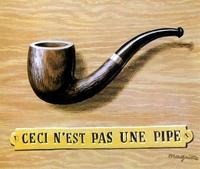
The treachery of images (This is not a pipe)
Rene Magritte
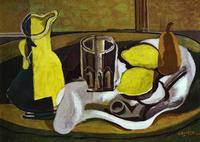
Lemons
Georges Braque
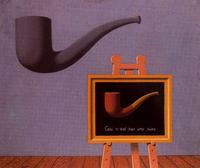
The two mysteries
Rene Magritte
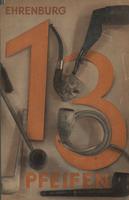
Cover for 13 Pipes
John Heartfield
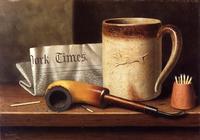
His Mug and His Pipe
William Michael Harnett
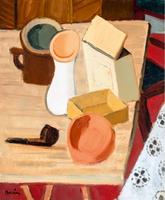
Berény Róbert, Pipás Csendélet
Berény Róbert
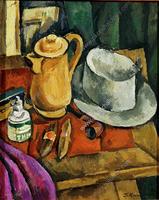
Still Life. Sombrero.
Pyotr Konchalovsky
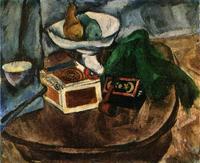
Still Life with a pipe
Pyotr Konchalovsky
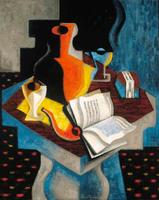
Still Life
Jean Metzinger
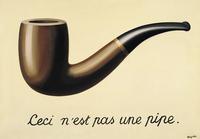
The treachery of images (This is not a pipe)
Rene Magritte
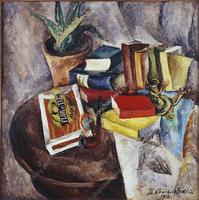
Still Life. Box of cigars.
Pyotr Konchalovsky
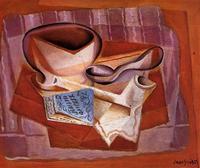
Bowl, Book and Spoon
Juan Gris
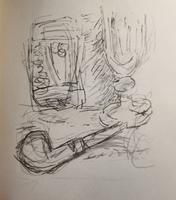
Pipás Csendélet
Bela Czobel