Analisi esperta di Triptych. Bandura-player. di Pyotr Konchalovsky
Stile: Expressionism · Genere: genre painting
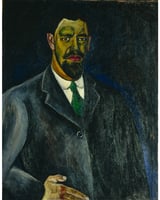
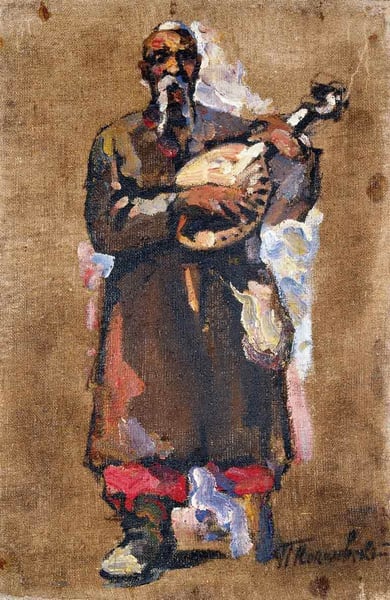
Pyotr Konchalovsky’s Triptych. Bandura-player. stands as a significant example of Russian Expressionism, merging the traditional format of religious altarpieces with a secular, folk-oriented genre scene. The bandura player—a symbol of Ukrainian musical heritage—is elevated through the triptych structure, lending the everyday subject a monumental, almost iconic dignity. As an Expressionist work, Konchalovsky likely employed vivid, non-naturalistic color, energetic brushwork, and deliberate distortion to convey the emotional resonance of folk music and cultural identity, rather than aiming for literal depiction. This fusion of a sacred compositional convention with modern, expressive techniques marks a key moment in early 20th-century Russian art, where avant-garde impulses met national themes. The work’s significance lies in its bold reimagining of genre painting as a vehicle for both psychological intensity and cultural storytelling, characteristic of Konchalovsky’s role within the Jack of Diamonds group and his contribution to Expressionist portraiture and narrative.
Visivamente simili
20 opere con composizione e palette affini
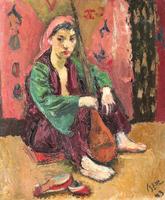
Odalisque with Mandoline
Iosif Iser
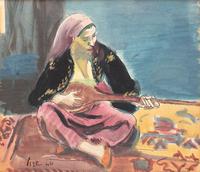
Tatar Woman With Mandoline
Iosif Iser
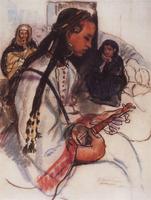
Boy musician
Zinaida Serebriakova
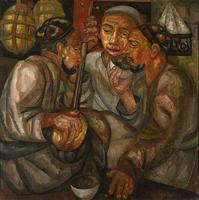
Слушание Беданы
Александр Николаевич Волков
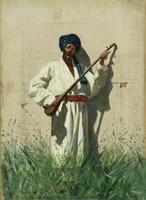
Dutar-player
Vasily Vereshchagin
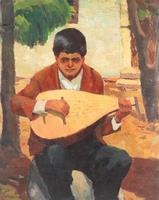
The Cobza Player from Balchik
Francisc Sirato
Portret Van Guus Van Dongen Door
Isaac Israels
Paintings in the Musée Fesch
Paul Leroy
The Musician
Paul Guiragossian
Three Musicians
Kenneth Baker
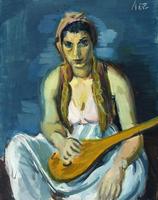
Odalisque with Mandoline
Iosif Iser
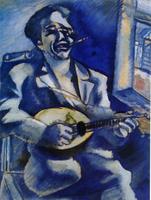
Portrait of Brother David with Mandolin
Marc Chagall
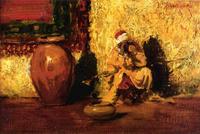
Seated Figure
William Merritt Chase
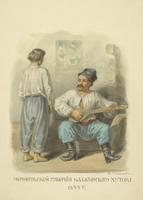
Chernigov region from Kaliatinskiy farm
Fyodor Solntsev
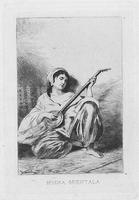
Oriental Music
Theodor Aman
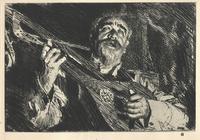
Vicke
Anders Zorn
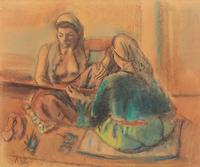
Tatar Women
Iosif Iser
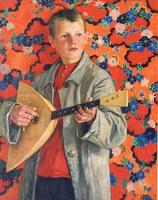
Balalaika Player
Nikolay Bogdanov-Belsky
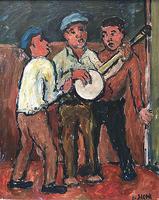
Musicians
Kenneth Baker
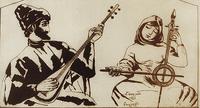
Sayat Nova
Martiros Sarian