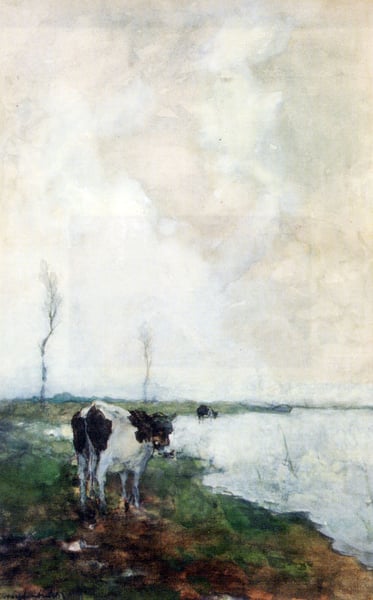
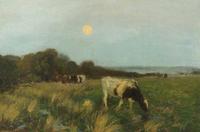
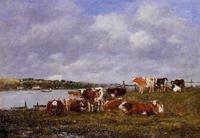
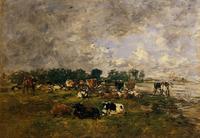
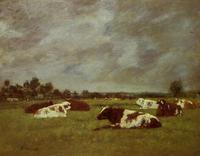
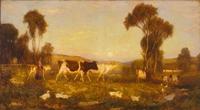
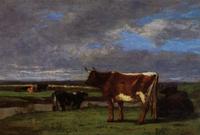
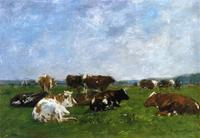
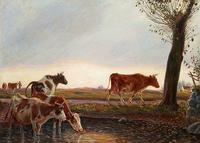
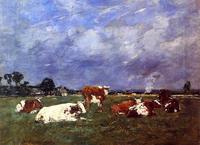
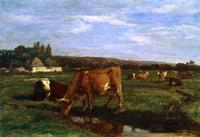
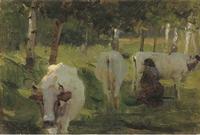
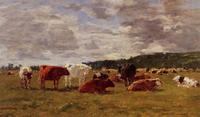
Based solely on the provided facts, the significance of A Cow Standing By The Waterside In A Polder by Johan Hendrik Weissenbruch lies in its uncompromising fidelity to the tenets of Realism within the landscape genre.
The artwork is a quintessential example of how Realist painters rejected idealized or dramatic scenery in favor of the quiet, ordinary beauty of everyday rural life. By choosing a subject as humble as a single cow beside a polder—a low-lying, man-managed tract of land typical of the Dutch countryside—Weissenbruch elevates the mundane to a subject worthy of artistic attention. There is no narrative, no grand event, and no romanticizing of nature; instead, the piece focuses on the direct observation of light, atmosphere, and the simple, solid presence of the animal within the specific geography of a watery polder landscape.
In the context of Realist landscape painting, this work is significant for its democratic vision. It affirms that profound artistic value can be found not in monumental mountains or sublime storms, but in the patient study of a cow standing by the waterside—a scene of profound stillness and unadorned truth.