
Expertenanalyse zu Barnett Newmans Eve
Stil: Color Field Painting · Genre: abstract
Analysis of Barnett Newman’s Eve
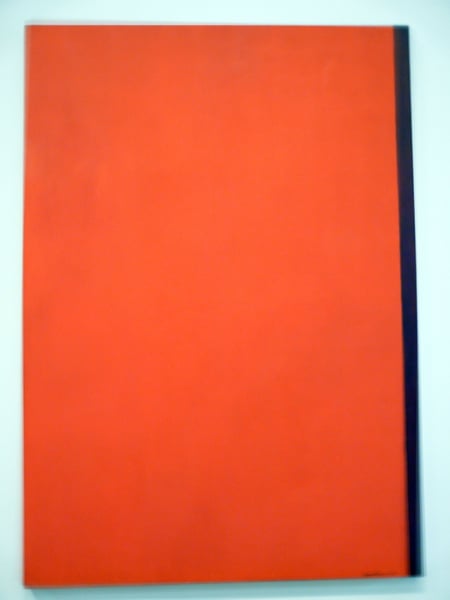
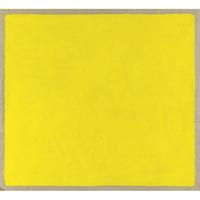
Barnett Newman’s Eve stands as a pivotal work within the Color Field Painting movement—a style that emerged in the mid-20th century as a radical departure from gestural abstraction. Executed in Newman’s characteristic minimalist vocabulary, the painting is a testament to the artist’s belief that abstraction could convey profound spiritual and existential meaning.
At first glance, Eve presents a vast, monolithic field of color—typically a rich, unmodulated hue—bisected by Newman’s signature “zip,” a single vertical band of contrasting color that runs the full height of the canvas. In this work, the zip does not function as a decorative line but as a charged, dividing presence, simultaneously separating and unifying the surrounding field. The title, invoking the biblical first woman, suggests themes of origin, duality, and the moment of creation itself. Newman often conceived of his zips as moments of light or primal energy, and here the vertical stripe can be read as the first division—the separation of form from void, of human consciousness from the undifferentiated sublime.
What makes Eve significant within the Color Field idiom is its extreme reduction of pictorial elements. Newman strips painting to its essential components: pure color and stark geometry. Unlike earlier Abstract Expressionists who relied on dynamic brushwork and gestural marks, Newman achieves monumentality through scale and stillness. The viewer is confronted by an immersive environment of color, where the zip becomes a kind of threshold—inviting contemplation of the sacred and the elemental. This work exemplifies Newman’s ambition to create a “sublime” art, one that bypasses narrative and representation to speak directly to the viewer’s sense of awe.
In the context of Color Field Painting, Eve demonstrates how the movement expanded the possibilities of abstraction by prioritizing optical experience and emotional resonance over pictorial illusion. Newman’s rigorous simplicity here prefigures later minimalist tendencies while retaining a distinctly mythic, humanist dimension. The painting is not merely an arrangement of colors; it is a meditation on existence, rendered with an economy of means that remains profoundly moving.
Museum / Gallery
Visuell ähnlich
20 Werke mit ähnlicher Komposition und Farbpalette
Orange Yellow Painting
Joseph Marioni
China Series A, ”Flamingo”
Doug Ohlson
Instant Loveland
Jules Olitski
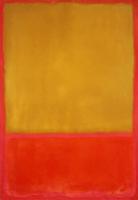
Ochre and Red on Red
Mark Rothko
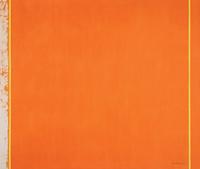
The Third
Barnett Newman
Inseparabili Dittico
Ettore Spalletti
Untitled (Red)
Phil Sims
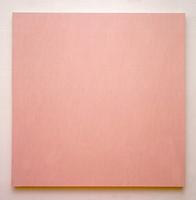
French Painting: Baraban
Marcia Hafif
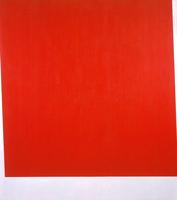
Broadway
Ellsworth Kelly
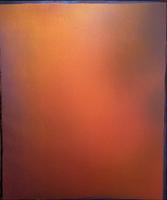
Flame Out
Jules Olitski
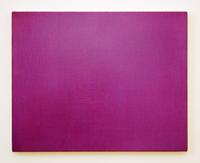
Double Glaze Painting: Cerulean Blue/Ruby Lake
Marcia Hafif
Lavender and Mulberry
Mark Rothko
Painting #02-26
Rudolf de Crignis
Red Painting: Paliogen Maroon
Marcia Hafif
Sarda I
Gotthard Graubner
Green and Tangerine on Red
Mark Rothko
United (Blue, Yellow, Green on Red)
Mark Rothko
Transparent Green Sun-Box
Theodoros Stamos
Painting #03-06
Rudolf de Crignis
Untitled
Mario Schifano