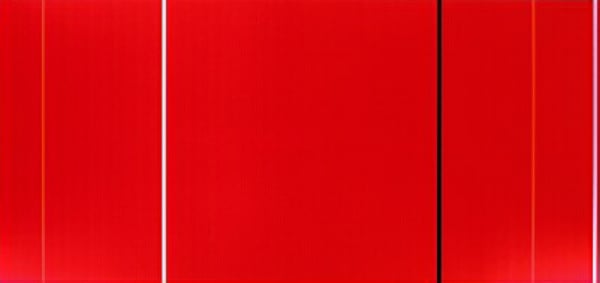
Vir Heroicus Sublimis
Details
Deskundige analyse van Vir Heroicus Sublimis van Barnett Newman
Stijl: Color Field Painting · Genre: abstract
Expert Analysis: "Vir Heroicus Sublimis" (1950–51) by Barnett Newman
Barnett Newman’s Vir Heroicus Sublimis stands as a landmark of Color Field painting and a defining statement of mid-century American abstraction. Executed on an enormous canvas—over eight feet tall by eighteen feet wide—the work envelops the viewer in a field of radiant, unmodulated red. This saturated hue is broken by five vertical "zips": thin, painted bands of varying colors (black, white, and red-brown) that run from the top to the bottom edge of the canvas.
Significance within Color Field Painting and Abstract Expressionism
Newman’s approach radically departs from the gestural, all-over composition of contemporaries like Jackson Pollock. Instead of drawing the eye into a web of energetic marks, Vir Heroicus Sublimis offers a single, huge color experience. The red field is not merely a backdrop; it is the subject. Newman believed that pure color, applied flat and without modulation, could evoke the sublime—a feeling of awe, transcendence, and the infinite. The title, Latin for "Man, Heroic and Sublime," declares the painting’s ambition: to affirm human experience in the face of vastness, a theme Newman often linked to his Jewish heritage and existential thought.
The "zip" is Newman’s signature innovation. Here, it functions both as a spatial divider and as a means of activating the color field. The narrow verticals create a rhythmic pulse across the red expanse, generating tension and release. They do not recede or advance; instead, they exist on the same plane as the red, compelling the viewer to confront the painting as an entire environment. This technique collapses figure-ground relationships, pushing painting toward a purely optical, immersive experience.
Art-Historical Impact
Vir Heroicus Sublimis helped define the Color Field movement, influencing later artists like Mark Rothko and Ellsworth Kelly. Its radical simplicity and monumental scale challenged the notion that abstract painting must be decorative or anecdotal. Newman asserted that abstraction could convey profound emotional and philosophical content—here, the heroic and the sublime—through color, scale, and edge. The work remains a touchstone for understanding how post-war American art shifted from expressionistic gesture to meditative, color-based abstraction, forging a path toward Minimalism and later large-scale installation art.
Museum / Gallery
Visueel vergelijkbaar
20 werken met verwante compositie en kleurenpalet
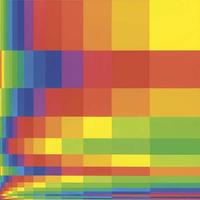
Progression
Richard Paul Lohse
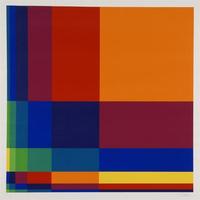
Sechs vertikale systematische Farbreihen mit orangem Quadrat rechts oben
Richard Paul Lohse
Under Color
Kenneth Noland
Cotter
Kenneth Noland
Cross
Edna Andrade
Another Time
Kenneth Noland
Untitled
Guido Molinari
Neun systematische Farbreihen mit horizontaler und vertikaler Verdichtung
Richard Paul Lohse
Transept
Julian Stanczak
Couleur non lumière
Horacio Garcia-Rossi
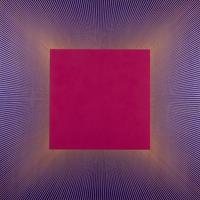
Deep Magenta Square
Richard Anuszkiewicz
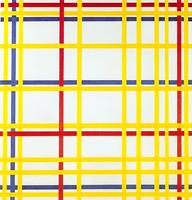
New York City I
Piet Mondrian
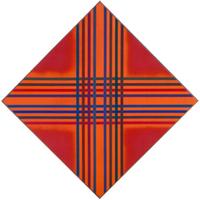
Interlock Color
Kenneth Noland
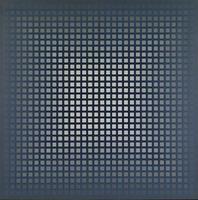
Shimmer
Julian Stanczak
Conservative Green: Minus
Julian Stanczak

Leaves
Kenneth Noland
Grand Treasure
Richard Anuszkiewicz
Condition
Peter Halley
Twice Told
Kenneth Noland
Chromographie x4: Graphisme chromatique sur carrés
Gregorio Vardanega