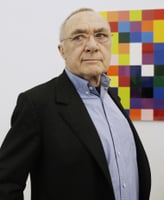
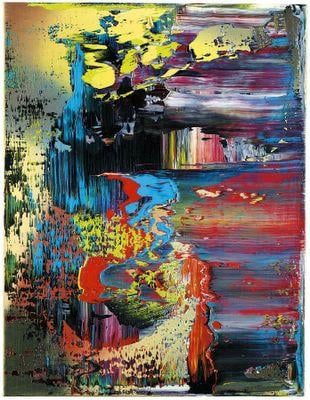
Abstract Picture
Expertenanalyse zu Gerhard Richters Abstract Picture
Stil: Abstract Expressionism · Genre: abstract
Expert Analysis of "Abstract Picture" by Gerhard Richter
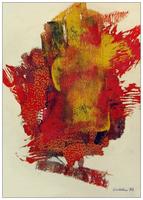
Gerhard Richter's Abstract Picture stands as a pivotal redefinition of Abstract Expressionism, challenging its core tenets while fully embracing the abstract genre. Though the style is categorized as Abstract Expressionism, Richter's approach deliberately subverts the movement's traditional emphasis on spontaneous, heroic gesture. Instead, he introduces a calculated yet unpredictable method: using a homemade squeegee to drag and scrape layers of oil paint across the canvas. This technique creates blurred, interwoven fields of color that appear both constructed and accidental, evoking a photographic sense of motion and uncertainty.
Significance within its Style and Period
-
The Mechanized Gesture vs. Emotional Expressionism
Classic Abstract Expressionists like Pollock or de Kooning celebrated the artist's physical mark-making as a direct conduit for emotion. Richter, however, undermines this with a tool that obscures his own hand. The squeegee imposes a mechanical uniformity, yet the resulting scratches and smears are unique and unrepeatable. This tension between control and chaos—deliberate composition versus random chance—redefines abstraction as a philosophical inquiry into the nature of artistic authorship. -
Blurring Representation and Abstraction
Richter’s abstract works are deeply informed by his parallel career in photorealism. Here, the blurred, layered surfaces mimic the effect of a photograph out of focus, or of memory itself. The painting becomes neither purely abstract nor representational; it hovers as a "picture" of a process. This merges two seemingly opposed modes—figurative precision and non-objective freedom—making the work a meta-commentary on how we see and record reality. -
Historical Dialogue and Post-War Identity
As a German artist emerging after World War II, Richter confronts the legacy of both Nazi propaganda and Socialist Realism. His abstract painting rejects any fixed narrative, refusing to offer a singular meaning. This ambiguity is a deliberate political and aesthetic stance—a rebuke to ideological imagery. Abstract Picture thus embodies a post-totalitarian skepticism, valuing the open-ended, the provisional, and the resistant to interpretation. -
Technical Innovation as Conceptual Statement
Richter builds up dozens of layers, then aggressively scrapes them away, allowing underlayers to peek through. This additive-subtractive process mirrors the dialectic of creation and destruction. The final image is a palimpsest—a record of its own making that emphasizes time, duration, and materiality. This technique influenced countless later artists who sought to merge painting with process art and conceptualism.
In sum, Abstract Picture is significant not merely as a beautiful abstract composition, but as a deliberate reframing of Abstract Expressionism through a lens of mechanical detachment, photographic reference, and historical critique. Richter transforms the genre into a site of philosophical tension, where every mark asks: Who made this, and what does it mean to make an image in a world saturated with images?
Genre
Visuell ähnlich
20 Werke mit ähnlicher Komposition und Farbpalette
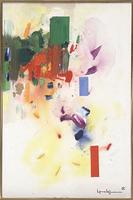
The Castle
Hans Hofmann
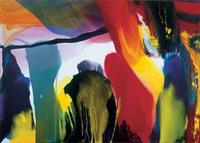
Phenomena Solstice Encounter
Paul Jenkins
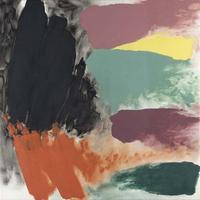
Brimrock
Friedel Dzubas
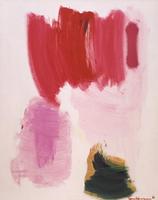
Delirious Pink
Hans Hofmann
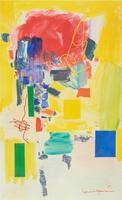
Golden Splendor
Hans Hofmann
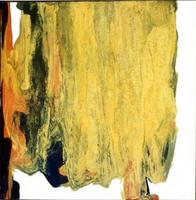
4 x 4
Jo Baer
Untitled
Ed Clark
Art Like Love Is Dedication
Hans Hofmann
Sudden
Friedel Dzubas
Horses Upside Down
Sam Gilliam
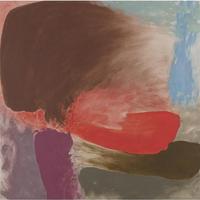
Maelstream
Friedel Dzubas
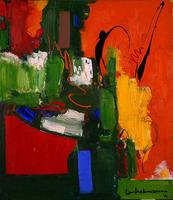
The Lark
Hans Hofmann
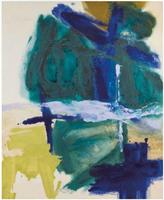
Road Cross
Friedel Dzubas
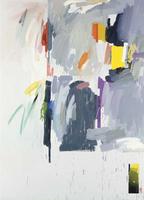
Chock Full O' Nuts
Mark Lancaster
Turning Point
Friedel Dzubas
1 January 1949
Frank Lobdell
Les hauts fleuris
Olivier Debre
Arrachement
Andre-Pierre Arnal
Untitled
Luciano Bartolini
Maria Callas II
Julian Schnabel