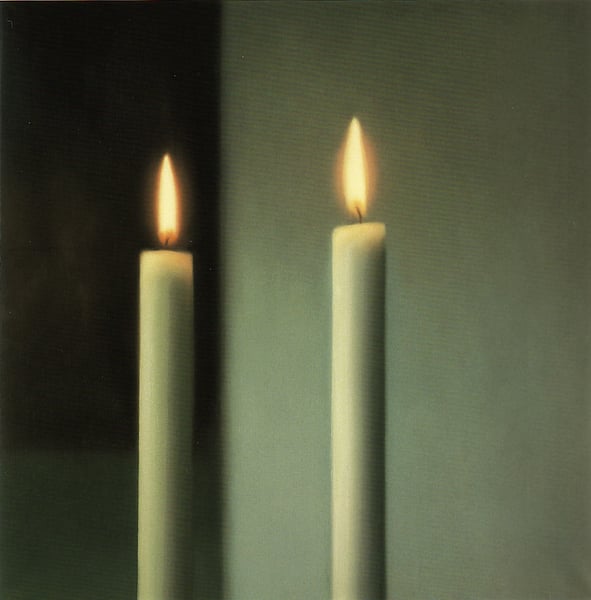
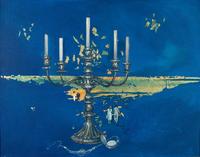
As a key work within the New European Painting movement, Gerhard Richter’s Candles demonstrates the period’s deliberate return to figurative imagery after decades of abstraction’s dominance. While the style often engages with historical and contemporary visual culture, the fact that it remains strictly figurative here signals a conscious embrace of recognizable subject matter—a provocative choice in an era when pure representation was frequently questioned. The significance lies in its refusal to abandon the figure, instead using it to explore the tension between painterly tradition and modern self-awareness. By placing the everyday motif of candles at the center, Richter aligns with the movement’s broader aim to reinvigorate painting through direct, legible forms, reaffirming the power of figuration in an art world that had long privileged the non-representational.