
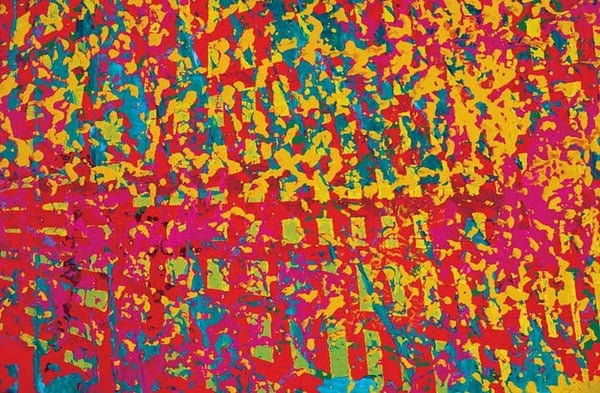
Ludorff
Analisi esperta di Ludorff di Gerhard Richter
Stile: Abstract Expressionism · Genere: abstract
Expert Art Historical Analysis: "Ludorff" by Gerhard Richter
Style: Abstract Expressionism | Genre: Abstract
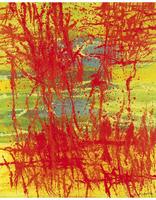
Within the framework of Abstract Expressionism, Gerhard Richter’s Ludorff occupies a distinctive and significant position. While the movement traditionally emphasized spontaneous, gestural mark-making and the raw expression of emotion—epitomized by artists like Pollock or de Kooning—Richter’s abstract works introduce a calculated, process-driven counterpoint that interrogates the very nature of painterly spontaneity.
Significance within Abstract Expressionism:
-
Methodological Tension: Richter’s technique—often involving layered paint manipulated by a squeegee—produces surfaces that appear both organic and deliberately constructed. In Ludorff, this method creates a dense, shifting field of color and texture that echoes the compositional energy of Abstract Expressionism, yet lacks the hand-wrought, impulsive trace of the artist’s ego. Instead, the work achieves abstraction through a systematic, almost mechanical layering, challenging the romantic notion of the artist’s unrestrained psyche central to the Abstract Expressionist canon.
-
Formal Complexity: The abstract genre here is pushed toward a paradoxical kind of representational illusionism. Layers of color interact to suggest depth, light, and even atmospheric space—without depicting any recognizable subject. This ambiguity is significant: it asks viewers to experience abstraction not as a rejection of the world, but as a direct encounter with the material and optical properties of painting itself. Richter’s Ludorff thereby expands Abstract Expressionism’s legacy by introducing a conceptual awareness of the medium’s limits and potentials.
-
Critical Dialogue with Tradition: By working within Abstract Expressionism’s formal vocabulary (large scale, all-over composition, vibrant color) while subverting its emotional core, Richter’s Ludorff comments on the historical progression of abstraction. It stands as a late-modernist reflection that both honors and questions the movement’s ideals—making it a key work for understanding how abstraction evolves beyond mid-century gesturalism.
In summary, Ludorff is significant not because it exemplifies Abstract Expressionism’s classic tenets, but because it recontextualizes them. Richter’s abstract approach forces a reexamination of creativity, chance, and intention—the very pillars on which Abstract Expressionism was built—securing its importance as a thoughtful, critical extension of the style.
Visivamente simili
20 opere con composizione e palette affini
Untitled
Antonio Palolo
Dynamics of Space
Tihamer Gyarmathy
Untitled
Moshe Kupferman
Correction #30
Pablo Rey
Untitled II
Gunther Forg
L'Emprisonnement
Alfred Manessier
Untitled I
Gunther Forg
Natashkouan
Marcel Barbeau
Untitled
Moshe Kupferman
Green and orange
Roger Bissière
Palimpsest
Kenneth Noland
Bravo tu as gagné
Chaldin Alex
Paisaje
eDgar gRau
Vision
DIDIER DOIGNON
Landscapes of New York, 'Green stain'
Pablo Rey
Body Painting (White on Black)
Abie Loy Kemarre
Untitled
Antonio Sanfilippo
Phoenix
Giovanni Guida
Untitled
Moshe Kupferman
Autunno
Antonio Corpora