Analisi esperta di A Window in the Vatican di John Singer Sargent
Stile: Realism · Genere: cityscape
Expert Analysis: A Window in the Vatican by John Singer Sargent
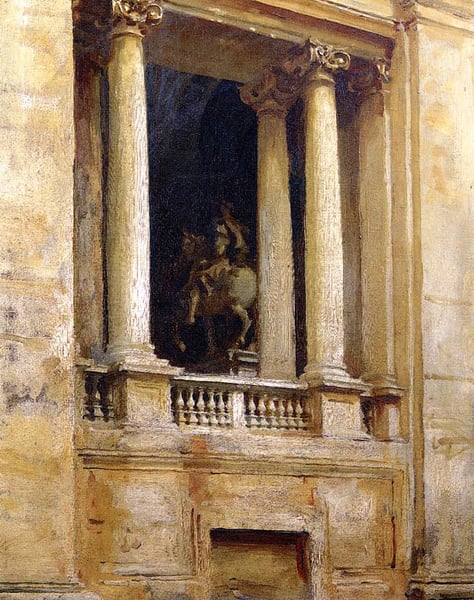
John Singer Sargent is celebrated primarily for his dazzling society portraits, yet his quieter cityscapes reveal a master of light, atmosphere, and architectural precision. A Window in the Vatican (c. 1906) stands as a compelling example of his Realist approach, capturing a moment of serene observation within one of the world’s most storied settings.
Significance within Realism:
True to the Realist tradition, Sargent avoids idealization or narrative embellishment. Instead, he presents a straightforward, almost photographic view from an interior window looking out onto Vatican grounds. The composition is deceptively simple: the stone window frame creates a dark, geometric foreground that contrasts with the luminous exterior. Light floods the courtyard, defining the texture of masonry, the shadow of a balcony, and the subtle gradations of Roman sunlight. This attention to natural illumination and materiality is the hallmark of Realism—not merely copying nature, but translating its optical effects through paint.
Sargent’s Technical Mastery:
Although best known for fluid, bravura brushwork in portraits, here Sargent adopts a more restrained, precise handling that respects the stillness of architecture. The thick stone of the window sill and the delicate tracery of the balcony are rendered with tactile immediacy. His palette is limited to earth tones, off-whites, and cool shadows, yet he achieves remarkable depth through temperature contrast—warm amber light on the sunlit walls versus cool grey-violet in the shade. This nuanced observation of light’s behavior elevates a simple view into a study of perception itself.
Placement in Sargent’s Oeuvre:
A Window in the Vatican is significant because it demonstrates Sargent’s versatility beyond portraiture. It belongs to a series of views he painted while visiting Rome, often from the windows of friends’ apartments or hotel rooms. This interior-to-exterior perspective reflects a recurring theme in his work: framing the grandeur of European architecture through intimate, accidental viewpoints. The painting also shows his affinity for the picturesque yet unposed—a quality that connects him to the broader Realist movement’s interest in everyday life, even within a setting as sacred and monumental as the Vatican.
Conclusion:
In this cityscape, Sargent proves that Realism is not merely about documentation but about capturing the ephemeral play of light and the quiet poetry of a specific place. A Window in the Vatican remains a testament to his belief that the most profound artistic truths often lie in the simplest, most candid observations—a window, a courtyard, and the changing light of a Roman afternoon.
Museum / Gallery
Visivamente simili
20 opere con composizione e palette affini
Architectural fantasy
Ferdinando Galli Bibiena
Roman Architecture
John Singer Sargent
A Study of Architecture, Florence
John Singer Sargent
Vicenza
John O'Connor
Base of a Palace
John Singer Sargent
Genoa, the University
John Singer Sargent
Capriccio architettonico
Pierre-Antoine Demachy
Set of stairs decorated with magnificent architecture
Giovanni Battista Piranesi
Portico of the Palazzo Nuovo, on the Campidoglio
Joseph-Marie Vien
A fountain in Rome
Jean-Leon Gerome
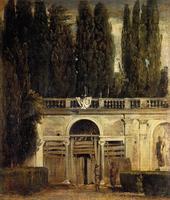
Villa Medici in Rome (Facade of the Grotto Logia)
Diego Velazquez
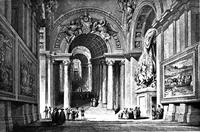
Giovanni Lorenzo Bernini's Scala Regia in the Apostolic Palace, Vatican, drawing by Leitch, engraving by E. Challis
William Leighton Leitch
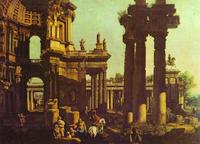
Ruins of a Temple
Bernardo Bellotto
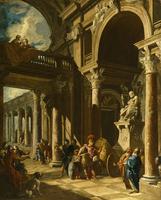
Alexander the Great Cutting the Gordian Knot
Giovanni Paolo Panini
The Steps of the Church of S. S. Domenico-e-Siste in Rome
John Singer Sargent
Ecce Homo
Giuseppe Galli Da Bibiena
Marcus Aurelius (Rome Capitol)
Pyotr Konchalovsky
Palazzo Grimani
John Singer Sargent
Atri d'un temple neoclàssic
Giuseppe Lucini
The Vestibule Of The Palazzo Pisani
Xavier Mellery