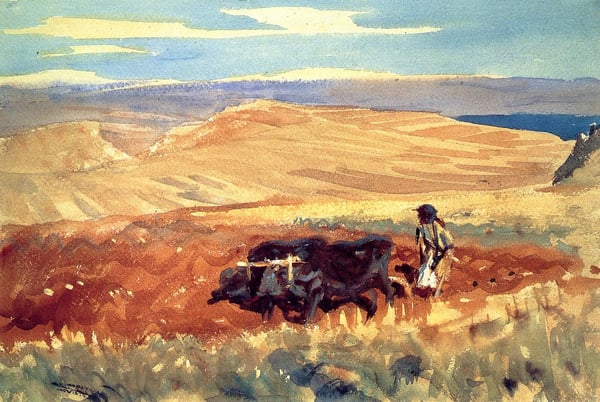
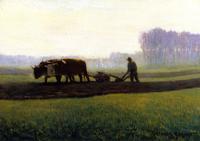
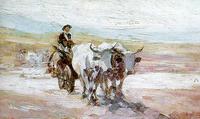
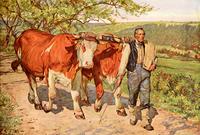
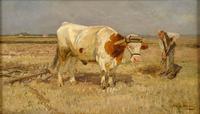
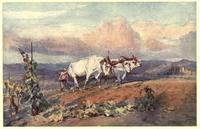
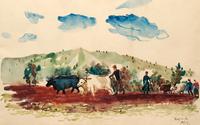
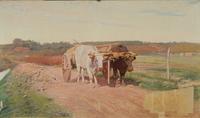
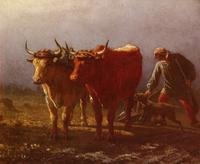
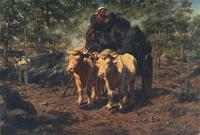
John Singer Sargent’s Hills of Galilee stands as a significant intersection of his celebrated technical prowess and the looser, light-suffused ambitions of Impressionism. Although Sargent is best known for his polished society portraits, this work—designated as a genre painting within the Impressionist style—demonstrates his versatility and his deep engagement with the movement’s core principles: capturing fleeting atmospheric effects and everyday life.
The choice of Galilee, a region steeped in biblical and historical narrative, infuses a genre scene with an undercurrent of spiritual resonance. Yet Sargent treats the subject not as a grand history painting but as a momentary glimpse of ordinary rural existence. His brushwork is likely rapid and broken, favoring the play of sunlight on hillsides and the subtle shifts of warm earth tones and hazy sky—hallmarks of Impressionist plein-air observation.
What makes Hills of Galilee significant is its testimony to Sargent’s ability to step away from studio formality and embrace a more spontaneous, intimate vision. It reveals his mastery of color harmony and light, while also positioning him within a global Impressionist practice that sought to find beauty in the quotidian landscapes of the Holy Land. The work thus serves as a bridge between Sargent’s polished realism and his later, more experimental watercolors, underscoring the breadth of his artistic identity within the Impressionist canon.