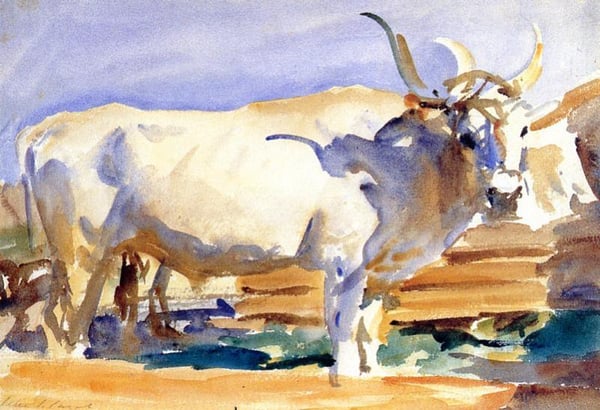
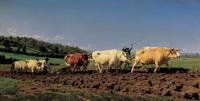
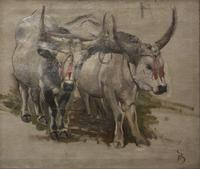
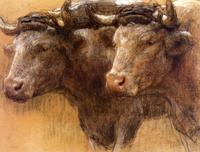
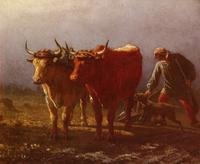
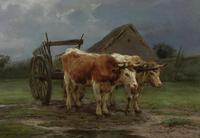
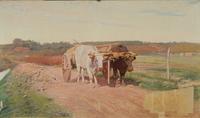
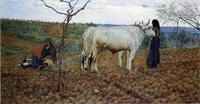
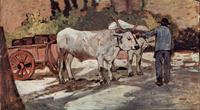
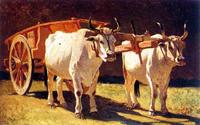
As an Impressionist animal painting, White Ox at Siena by John Singer Sargent is significant for its demonstration of core Impressionist principles applied to an unconventional subject. The work captures the fleeting effects of natural light on the white coat of the ox, using broken color and visible brushwork to convey the animal’s form through shifting luminance rather than detailed contour. Placing a pastoral, working animal within the genre of Impressionist painting expands the movement’s typical range—beyond landscapes and urban leisure scenes—to include rustic, everyday life. The Siena setting further roots the piece in a specific, sun-drenched Italian locale, emphasizing the Impressionist commitment to plein air observation and the transient moment. This combination of genre innovation and technical fidelity to light and atmosphere underscores the artwork’s contribution to the broader Impressionist project.