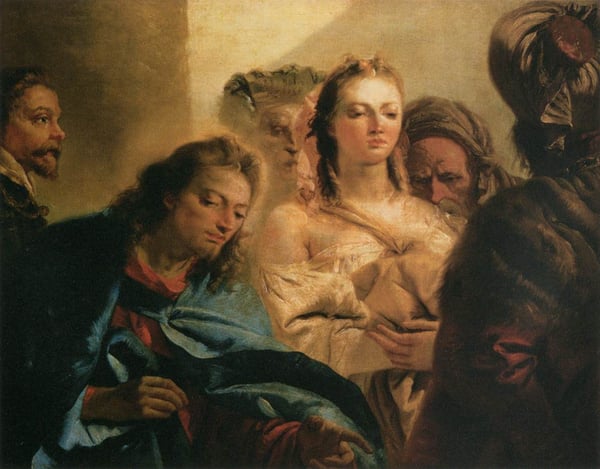
Expert Analysis of "Christ and the Adulteress" by Giovanni Domenico Tiepolo
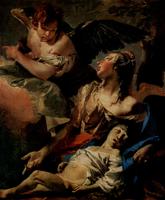
As a Rococo religious painting, this work is significant for its ability to infuse a traditionally solemn biblical narrative with the lightness, elegance, and decorative charm characteristic of the Rococo period. The Rococo style, known for its soft pastel palettes, graceful figures, and asymmetrical compositions, often favored mythological or aristocratic themes. By applying these aesthetic principles to a religious subject, Tiepolo demonstrates the style's versatility and its capacity to render sacred stories with an intimate, approachable grace rather than the theatrical drama of the Baroque. The painting’s importance lies in this fusion: it transforms a moment of moral judgment (Christ forgiving the adulteress) into a scene of refined, poised interaction, where the figures’ delicate gestures and harmonious arrangement evoke serenity and forgiveness rather than tension. This approach reflects the Rococo’s shift toward personal, emotionally subtle expressions of faith, making the biblical episode resonate with contemporary viewers through beauty and aesthetic pleasure.