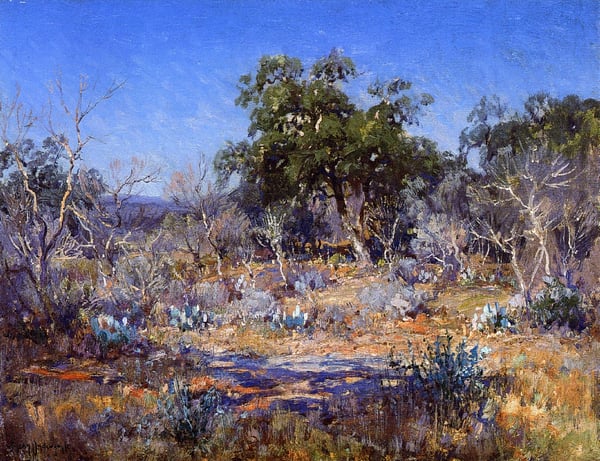
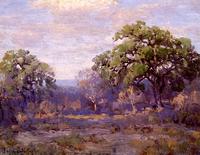
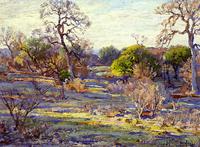
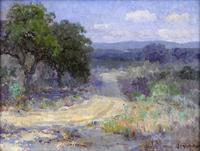
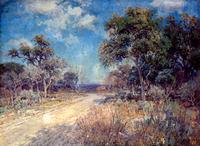
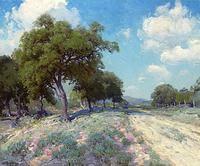
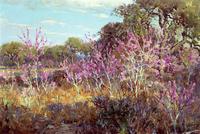
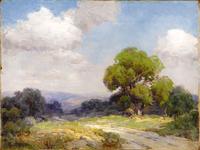
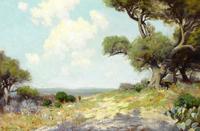
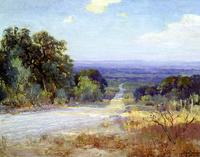
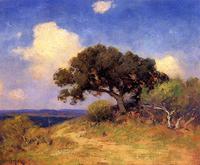
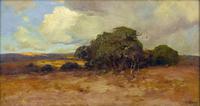
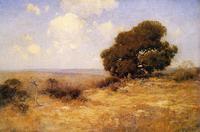
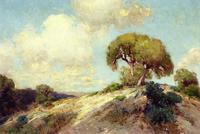
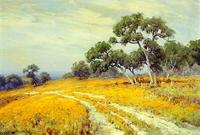
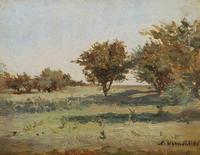
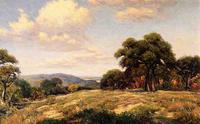
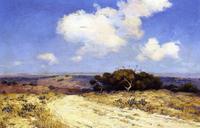
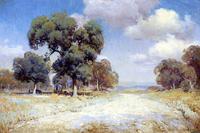
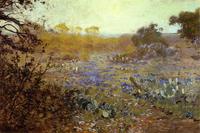
Robert Julian Onderdonk’s A January Day in the Brush Country is a quintessential example of American Impressionism, distinct for its regional focus on the Texas landscape. The painting captures a winter scene—rare in the artist’s oeuvre—where subtle, muted tones of brown, gray, and pale blue replace the vivid greens and blues associated with the Texas spring. Onderdonk uses loose, broken brushstrokes to render the dense mesquite and cactus of the brush country, allowing light to filter through the canopy and create a hazy, atmospheric effect.
The work’s significance lies in its transformation of a humble, often-overlooked subject into a poetic study of light and climate. Unlike many Impressionists who favored picturesque vistas, Onderdonk elevates the arid, scrubby terrain of South Texas, emphasizing its quiet beauty and the soft, diffused winter sunlight. This painting is a hallmark of the Texas Impressionist movement, demonstrating how European techniques were adapted to capture the unique character of the American Southwest. It stands as a masterful bridge between the plein-air traditions of the Ashcan School and the later regionalist focus, highlighting Onderdonk’s role in defining a distinctly Texan landscape aesthetic.