
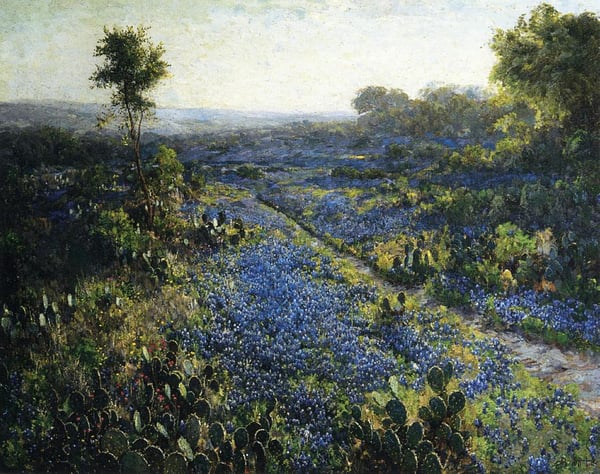
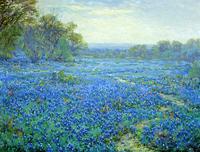
Field of Texas Bluebonnets and Prickly Pear Cacti
Expert analysis of Robert Julian Onderdonk’s Field of Texas Bluebonnets and Prickly Pear Cacti
Style: Impressionism · Genre: landscape
Expert Analysis of Field of Texas Bluebonnets and Prickly Pear Cacti by Robert Julian Onderdonk
As a work of Impressionism in the landscape genre, Robert Julian Onderdonk’s Field of Texas Bluebonnets and Prickly Pear Cacti is significant for its pioneering fusion of French Impressionist technique with a distinctly American regional subject. Onderdonk (1852–1922) is often celebrated as the “father of Texas painting,” and this piece exemplifies his role in bringing the luminous, broken-color brushwork of Impressionism to the rugged, sun-drenched terrain of the American Southwest.
Signature elements of its Impressionist style The painting captures a quintessential Texas spring scene: a sprawling field of bluebonnets (the state flower) punctuated by the angular silhouettes of prickly pear cacti. Onderdonk applies short, visible brushstrokes and a high-key palette—vivid blues, greens, and warm earth tones—to convey the shimmering light and atmospheric haze of the Texas plains. This technique allows the flowers and cacti to dissolve into patches of pure color, inviting the viewer’s eye to blend them from a distance, a hallmark of Impressionist optical mixing.
Regional and historical significance What makes this artwork especially notable is its departure from the traditional European landscape subjects favored by many American Impressionists. By choosing bluebonnets and cacti—plants emblematic of Texas’s unique ecology—Onderdonk elevates a local, often overlooked vista to the level of fine art. He demonstrates that Impressionism could transcend the gardens of Giverny or the coasts of Normandy to celebrate the wild, untamed beauty of the American frontier.
Legacy and influence Onderdonk’s commitment to painting en plein air in the Texas Hill Country helped establish a regional school of landscape painting. This work, in particular, is a landmark: it captures the ephemeral bloom of bluebonnets (a fleeting spring phenomenon) with the same sensitivity to light and season that Monet applied to haystacks or water lilies. The juxtaposition of delicate flowers against spiny cacti also creates a subtle tension between the picturesque and the harsh, underscoring the resilience of the Texas landscape.
In sum, Field of Texas Bluebonnets and Prickly Pear Cacti is significant because it successfully adapts Impressionist methods to an authentic American subject, merging European artistic innovation with a proud regional identity. It stands as a testament to Onderdonk’s role in shaping the visual identity of Texas and expanding the boundaries of American Impressionism.
Visually similar
20 works with related composition and palette
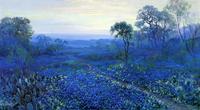
Bluebonnet Landscape with Catci, Road and Mountain Laurel
Robert Julian Onderdonk
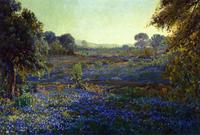
Bluebonnets at Late Afternoon, near La Grange
Robert Julian Onderdonk
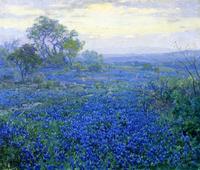
A Cloudy Day, Bluebonnets near San Antonio, Texas
Robert Julian Onderdonk
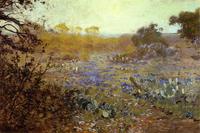
Spring Morning
Robert Julian Onderdonk
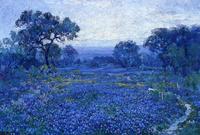
Bluebonnet Scene
Robert Julian Onderdonk
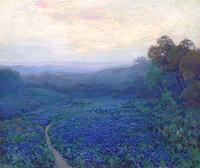
Path through a Field of Bluebonnets
Robert Julian Onderdonk
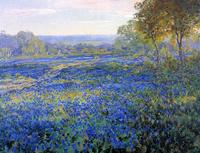
Fields of Bluebonnets
Robert Julian Onderdonk
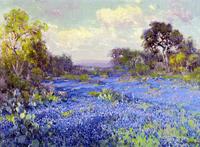
Blue Bonnets at Late Afternoon
Robert Julian Onderdonk
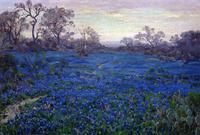
Bluebonnets at Twilight, near San Antonio
Robert Julian Onderdonk
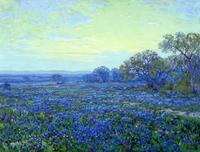
Field of Bluebonnets under Cloudy Sky
Robert Julian Onderdonk
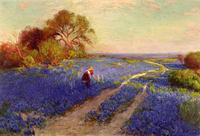
Bluebonnet Scene with a Girl
Robert Julian Onderdonk
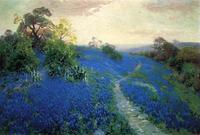
Bluebonnet Field
Robert Julian Onderdonk
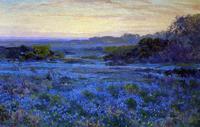
Bluebonnet Scene
Robert Julian Onderdonk
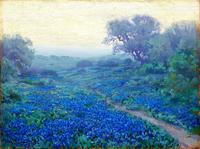
Bluebonnets at Sunrise
Robert Julian Onderdonk
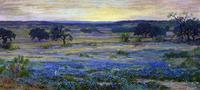
Bluebonnets at Dusk
Robert Julian Onderdonk
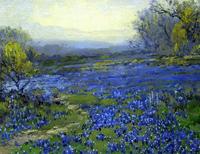
Morning in the Bluebonnets
Robert Julian Onderdonk
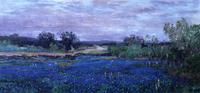
Blue Bonnets at Twilight
Robert Julian Onderdonk
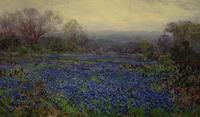
Field of Bluebonnets
Robert Julian Onderdonk
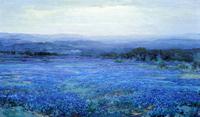
Panoramic Landscape
Robert Julian Onderdonk
Bluebonnet Scene
Robert Julian Onderdonk