Expert analysis of Robert Julian Onderdonk’s Flying Shadows
Style: Impressionism · Genre: landscape
Analysis of Flying Shadows by Robert Julian Onderdonk
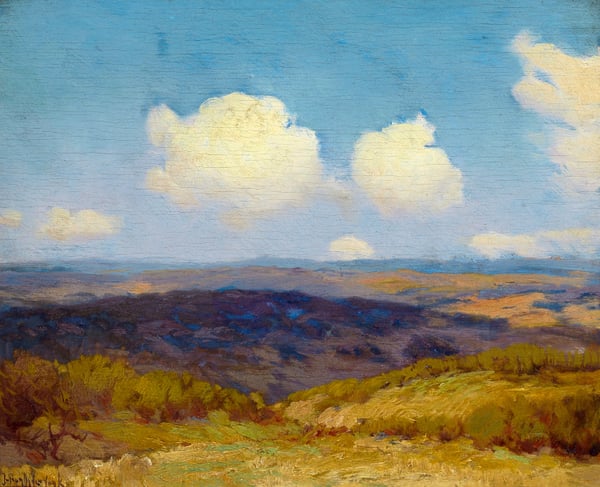
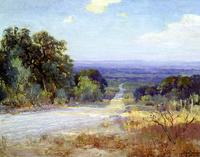
Robert Julian Onderdonk (1852–1917) is widely celebrated as the "father of Texas painting," and Flying Shadows stands as a quintessential example of American Impressionism applied to the distinctive landscapes of the American South. Executed in oil on canvas, this landscape captures a fleeting atmospheric moment—the rapid movement of clouds casting drifting patches of shadow across an open terrain.
Significance within Impressionism and Onderdonk’s Oeuvre
Onderdonk studied under William Merritt Chase in New York and absorbed the French Impressionist emphasis on plein air painting, broken color, and the recording of transient light effects. Flying Shadows epitomizes these concerns by focusing not on a static vista, but on the dynamic interplay between sunlight and shadow as clouds pass overhead. The title itself directs our attention to the ephemeral quality that defines Impressionist practice: the "flying" shadows suggest motion, wind, and the constant change of natural light.
What makes this work particularly significant is its regional adaptation of international Impressionist principles. While many American Impressionists favored coastal New England or genteel gardens, Onderdonk turned his attention to the rugged, sun-drenched landscapes of central Texas. In Flying Shadows, the interplay of warm earth tones—ochres, siennas, and muted greens—with cool blue-gray shadow patches creates a sense of depth and atmosphere unique to the Texas Hill Country. The brushwork is loose and expressive, typical of later Impressionism, allowing the viewer’s eye to optically blend the colors from a distance.
Moreover, the painting embodies the paradox of Impressionism: it aspires to objective optical recording while simultaneously conveying subjective emotional response. The rushing shadows evoke both the harshness of the Texas sun and a meditative calm, capturing a momentary weather event that speaks to the broader experience of living within an expansive, ever-changing landscape. As such, Flying Shadows is not merely a decorative landscape; it is a document of American regional identity filtered through a modern European lens, solidifying Onderdonk’s role as a pioneer who brought Impressionism to the American West.
Visually similar
20 works with related composition and palette
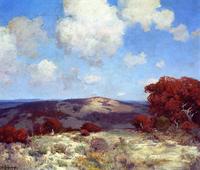
In the Hills of the Spanish Oaks
Robert Julian Onderdonk
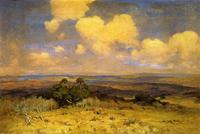
Sunlight and Shadow
Robert Julian Onderdonk
Bandera Hills
Robert Julian Onderdonk
Southwest Texas
Robert Julian Onderdonk
A Winter Morning on the Guadalupe River
Robert Julian Onderdonk
Texas Dry Country
Robert Julian Onderdonk
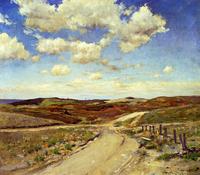
Shinnecock Hills
William Merritt Chase
Old Mark's Field, Coldharbour, Surrey
Lucien Pissarro
The Road to Warrandyte
Clara Southern
Mountainous Landscape
Camille Corot
Misty Morning
Robert Julian Onderdonk
Spring Hillside
Abbott Handerson Thayer
Kokkinaras
Nikolaos Lytras
Old Live Oak
Robert Julian Onderdonk
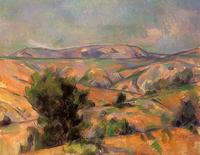
Mount Sainte-Victoire Seen from Gardanne
Paul Cezanne
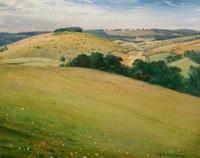
Summer in the Downs
C. R. W. Nevinson
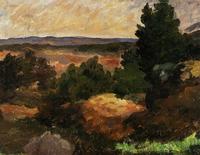
Landscape
Paul Cezanne
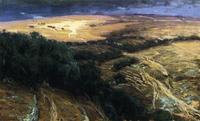
A View in Palestine
Henry Ossawa Tanner
A White Road at Late Afternoon
Robert Julian Onderdonk
Ayunkara
George Washington Lambert