Analisi esperta di Arch di Constantin Brâncuși
Stile: Expressionism · Genere: sculpture
Expert Analysis of "Arch" by Constantin Brâncuși
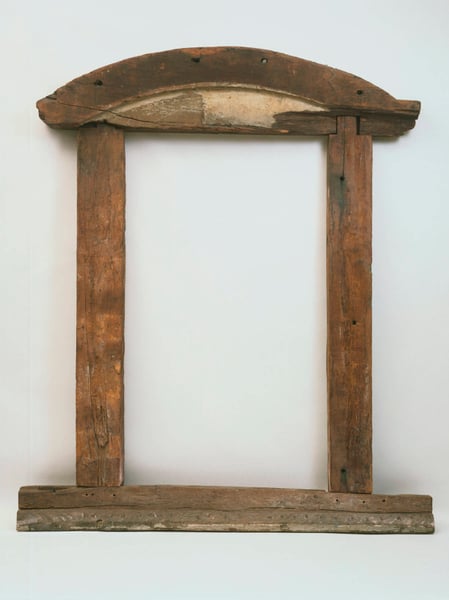
As a sculpture classified under Expressionism, Constantin Brâncuși’s "Arch" redefines the genre by stripping a universal architectural form down to its raw, emotional essence. Expressionism typically prioritizes subjective experience, distortion, and visceral impact over realistic representation—and Brâncuși achieves this through extreme simplification.
The work likely presents a single, sweeping curve or a pair of abstracted uprights meeting in a taut, poised apex. By removing all ornamental or structural details, Brâncuși focuses attention on the gesture of the arch: a shape that simultaneously suggests resilience and vulnerability, permanence and passage. The material (most likely polished bronze, stone, or wood) would be worked to emphasize texture and weight, allowing the sculpture’s surface to carry an almost tactile emotional charge.
Significance within Expressionism and Sculpture:
- Emotional Abstraction: Unlike earlier expressionist sculptures that exaggerated human features (e.g., Barlach’s anguished figures), Brâncuși’s "Arch" achieves expression through pure form. The arch becomes a universal symbol of tension, transition, or aspiration—a concentrated emotional state rather than a narrative.
- Reduction as Intensity: Brâncuși’s trademark “essence” approach aligns with expressionism’s goal of conveying inner truth. Here, the arch’s simplicity is not minimalism but a deliberate compression of feeling, making the form resonate as a psychological threshold.
- Material Presence: Expressionist sculpture often values the artist’s hand and material authenticity. In "Arch", the choice and treatment of medium (carved or cast) would heighten the sense of raw energy, with the arch’s curve seeming both inevitable and precarious.
By merging expressionism’s emotional urgency with a radically reduced vocabulary, Brâncuși’s "Arch" stands as a pivotal work that expands sculpture’s capacity to communicate non-representational, deeply felt ideas—anticipating later abstract expressionist tendencies while remaining rooted in the modernist faith in form as feeling.
Genere
Stile
Visivamente simili
20 opere con composizione e palette affini

Guilded Frame
Jan Maarten Voskuil
Panel 20. Chains of the Spirit - The Epic of American Civilization
Jose Clemente Orozco
Demonstration of the exterior and interior of the window shows the bell of the Temple of Vesta
Giovanni Battista Piranesi
Marble table found in the triclinium of the Priests, and bolt the door of the cell of the Temple of Isis (inc. in outline)
Giovanni Battista Piranesi
From an Exhibition
Fusun Onur
NOT DETECTED
Carl Andre
NOT DETECTED
Carl Andre
Demonstration of the port and its modinature the Temple of Vesta in Tivoli
Giovanni Battista Piranesi
Terracotta Sarcophagus Rim
Ancient Greek Painting and Sculpture
Louis Witton
Oleksandr Hnylyzkyj
Le temps perdu
Katsuhito Nishikawa
Two fireplaces superimposed with the support 4 in the chariot race in the circus, the inf with 2 swans that drink in a vase
Giovanni Battista Piranesi
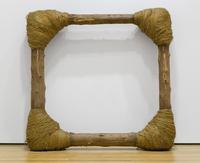
Bound Square
Jacqueline Winsor
The Roman antiquities, t. 2, Plate XXXVIII. Cutaway view of the tomb before.
Giovanni Battista Piranesi
The Roman antiquities, t. 3, Plate XXV. Details of the ornaments of the burial chambers above (inc. by Girolamo Rossi).
Giovanni Battista Piranesi
Finestra
Tano Festa
Metalloid beige-gray shored-up door way, I
Gianni Piacentino
St. Martin's Eye of the Road
Betty Parsons
Fireplace with a cameo in the frieze and border of small acorns, rich wing
Giovanni Battista Piranesi
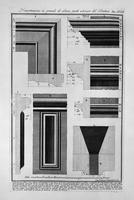
Demonstration in large parts of the exterior of the Pantheon
Giovanni Battista Piranesi