Expert analysis of Constantin Brâncuși’s The Sorceress
Style: Abstract Art · Genre: sculpture
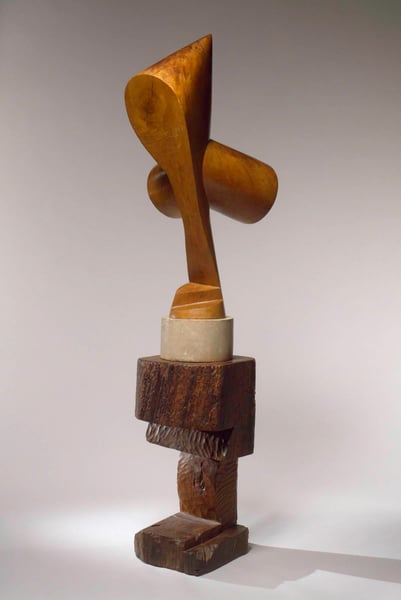
“The Sorceress” by Constantin Brâncuși is a landmark in the evolution of modern sculpture, marking a decisive shift from figurative representation toward the purified language of abstraction. Working in the early 20th century, Brâncuși stripped the human figure to its essential geometry, reducing anatomy to a series of bold, simplified volumes. The work’s significance lies in how it transforms the traditional figure into a symbolic, almost archetypal form—a totemic presence that suggests magic and mystery without descriptive detail. The rough-hewn, direct carving technique (often in wood or stone) emphasizes materiality and the artist’s hand, aligning with Brâncuși’s belief that “simplicity is not an end in art, but one arrives at simplicity in spite of oneself, in approaching the real essence of things.” In “The Sorceress,” that essence—a sense of primal energy and enchantment—is achieved through radical condensation of form, making it a pivotal precursor to fully non-objective sculpture. Its influence echoes through later abstract art, demonstrating how reduction can amplify meaning rather than diminish it.
Visually similar
20 works with related composition and palette
Growth
Jean Arp
Arabian
Olexandr Archipenko
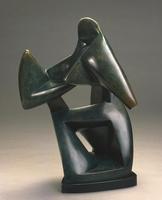
The Boxers (La Lutte)
Olexandr Archipenko
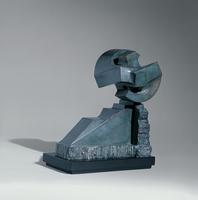
Scala solare
Gio Pomodoro
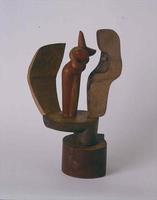
Ozon
Le Corbusier
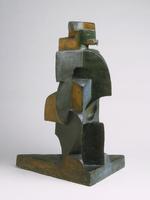
Harlequin
Juan Gris
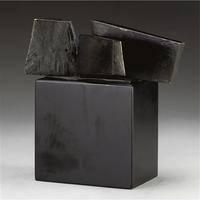
Construcción Aurera
Mathias Goeritz
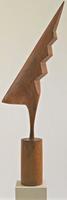
The cock
Constantin Brâncuși
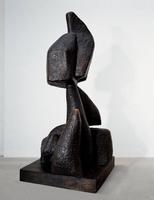
Composition
Otto Freundlich
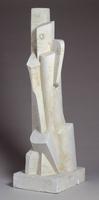
Sculpture
Jacques Lipchitz
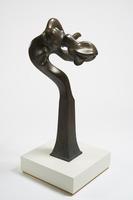
Fish Curve Hybrid
Richard Hunt
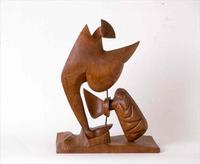
Icône
Le Corbusier
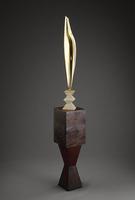
Golden Bird
Constantin Brâncuși
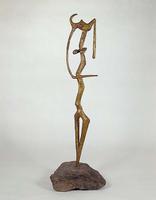
Woman Screaming
David Hare
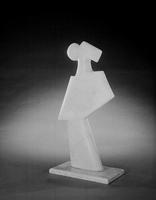
Sylvie
Etienne Hajdu
Lui
Agustin Cardenas
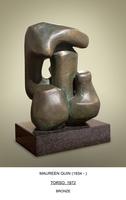
Hester Rupert Art Museum Sculptures 10
MAUREEN QUIN
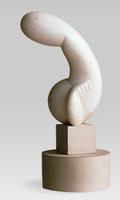
Princess X
Constantin Brâncuși
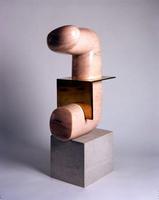
Pink Jizo
Noguchi Isamu
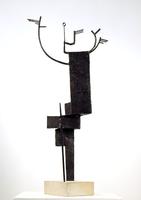
Daphne
Julio Gonzalez