Expertenanalyse zu Jean-Baptiste-Simeon Chardins Portrait of a child
Stil: Rococo · Genre: portrait
Expert Analysis: "Portrait of a child" by Jean-Baptiste-Siméon Chardin
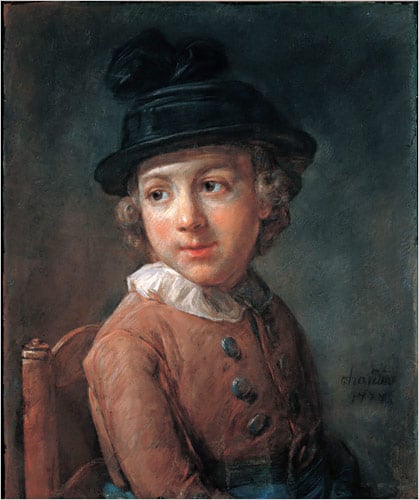
While the Rococo style is often associated with lighthearted, ornate, and aristocratic subjects—think Fragonard’s playful lovers or Boucher’s mythological frolics—Chardin’s Portrait of a child stands as a significant counterpoint within the same period. Painted in the genre of portraiture, this work exemplifies Chardin’s unique ability to infuse Rococo elegance with quiet, bourgeois sincerity.
Significance within Rococo and Portraiture:
-
Subdued Intimacy vs. Rococo Opulence: Most Rococo portraits emphasize luxurious fabrics, pastel palettes, and theatrical poses. Chardin instead focuses on the child’s inner presence, using a restrained palette of muted browns, soft whites, and gentle earth tones. The lighting is soft and natural, drawing attention to the child's contemplative expression rather than outward display. This makes the work a rare Rococo portrait that values psychological depth over decorative excess.
-
Honest Representation of Childhood: Where many 18th-century portraits of children depict them as miniature adults or as props for dynastic pride, Chardin treats this child with genuine tenderness and gravity. The child’s simple attire and sober gaze suggest a quiet dignity, avoiding the sentimental idealization common to the era. This aligns with Chardin’s broader reputation as a painter of everyday life, even within portraiture.
-
Bridging Genre and Portrait: Chardin was primarily celebrated for still lifes and genre scenes. In Portrait of a child, he applies the same observational rigor—attention to texture (the softness of skin, the plain fabric of the clothing) and subtle modeling of form—to a human subject. The result is a portrait that feels like a captured moment of stillness, more akin to his kitchen-maid paintings than to flashy Rococo court portraits.
-
Technical Mastery: Chardin’s brushwork is deliberately receded, creating smooth, almost velvety surfaces that enhance the child’s delicate features. The composition is simple: a close-up bust view against a neutral background, allowing the child’s face and hands (if visible) to become the entire narrative. This minimalist approach was ahead of its time, anticipating the later realism of the 19th century.
Conclusion:
The significance of Portrait of a child lies in how it subverts Rococo conventions from within. It retains the era’s refined sensitivity but replaces frivolity with earnest humanity. Chardin proves that Rococo portraiture could be profound, intimate, and unpretentious—a quiet masterpiece that elevates childhood to a subject worthy of serious contemplation, not mere decoration.
Museum / Gallery
Visuell ähnlich
20 Werke mit ähnlicher Komposition und Farbpalette
Portrait of a Young Girl
Gustave Courbet
Self-Portrait in a Gorget
Rembrandt
Self-portrait
Rembrandt
The Artist's Brother
Louise Elisabeth Vigee Le Brun
Portrait of a Page Boy
Giovanni Domenico Tiepolo
Portrait of Prince Frederick of Great Britain
Jean-Étienne Liotard
Portrait of a Boy
Gian Lorenzo Bernini
Fundița roz
George Demetrescu Mirea
Self-portrait
Jean-Honore Fragonard
Portrait of a Young Girl from Salins
Gustave Courbet
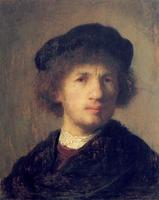
Self-portrait
Rembrandt
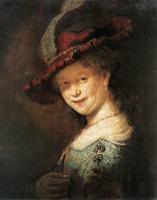
Portrait of the Young Saskia
Rembrandt
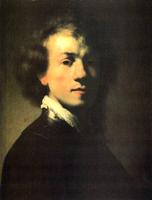
Self-portrait
Rembrandt
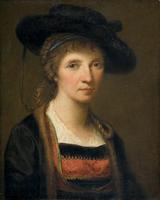
Self-portrait
Angelica Kauffman
Self-portrait as a young boy
Giovanni Boldini
Heidi
Henry Mosler
Portrait of a fashionable young lady
Rosalba Carriera
Portrait of a young lady
Jacob Jordaens
Charlotte Wolter als ‘Maria Stuart’
Josef Matthias Aigner
Portrait of Minerva Anguissola
Sofonisba Anguissola