Analisi esperta di Rabbit and Copper Pot di Jean-Baptiste-Simeon Chardin
Stile: Rococo · Genere: still life
Expert Analysis: "Rabbit and Copper Pot" by Jean-Baptiste-Siméon Chardin
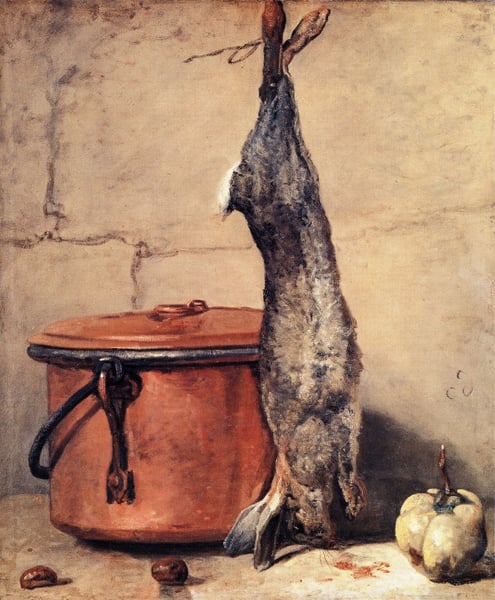
Within the Rococo period—often characterized by ornate, playful, and aristocratic subject matter—Chardin’s still lifes stand as a quiet, radical counterpoint. Rabbit and Copper Pot exemplifies his ability to transform humble kitchen objects into meditations on light, texture, and presence.
Significance in Style and Period
1. Defying Rococo Conventions
While Rococo painters like Boucher and Fragonard focused on mythological frivolity and pastel sensuality, Chardin turned his attention to the ordinary: a dead rabbit, a copper pot, a simple cloth. His works are devoid of allegory or narrative; instead, they invite slow, contemplative looking. This shift from decorative excess to earnest realism marks him as a precursor to the later Realist movement and even to modern still-life traditions.
2. Mastery of Texture and Light
Chardin’s handling of materials is extraordinary. The copper pot is rendered with a warm, burnished glow—its reflective surface catching soft, ambient light—while the rabbit’s fur is painted with a tactile, almost velvety precision. He builds form through subtle gradations of tone rather than sharp outlines, a technique that gives his subjects a palpable, weighty presence. The composition’s restrained palette (ochres, browns, whites) enhances the sense of quiet dignity.
3. Elevation of the Mundane
In the academic hierarchy of genres, still life was considered the lowest. Chardin, however, imbued his kitchen table with the same seriousness reserved for history painting. The rabbit is not merely game; its limp body and the careful arrangement of the pot and cloth suggest a moment frozen in time—a silent, secular vanitas that contemplates the cycle of life and sustenance. This philosophical undercurrent, rooted in the Dutch still-life tradition, gives the work an enduring gravitas.
4. Influence on Later Art
Chardin’s influence extends well beyond the 18th century. His commitment to direct observation and his subtle handling of light and shadow later inspired artists as diverse as Édouard Manet, Paul Cézanne, and Giorgio Morandi. Rabbit and Copper Pot is a key example of how Chardin recalibrated the possibilities of still life, proving that the most ordinary subjects could become vehicles for profound aesthetic and emotional experience.
In summary, this painting is significant not as typical Rococo decoration, but as a masterclass in quiet realism, luminous technique, and the redemptive power of the everyday—a work that quietly challenges the artistic hierarchies of its time.
Museum / Gallery
Visivamente simili
20 opere con composizione e palette affini
Still Life with Two Rabbits
Jean-Baptiste-Simeon Chardin
Wild Rabbit with Game Bag and Powder Flask
Jean-Baptiste-Simeon Chardin
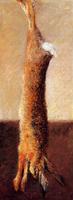
Hare
Gustave Caillebotte
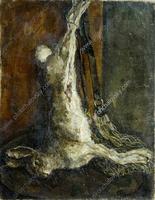
Hare
Pyotr Konchalovsky
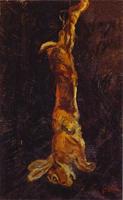
Hanging Hare
Chaim Soutine
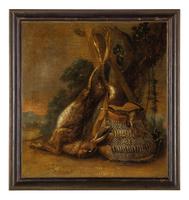
Cacciagione
Gryef
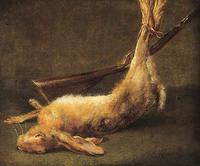
Dead Hare
James Ward
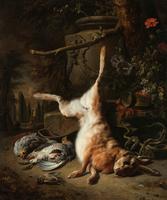
Still Life with a Hare and other Game
Jan Weenix
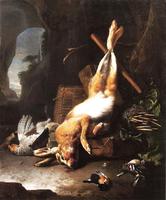
Still life with the hunting trophy
Melchior d'Hondecoeter
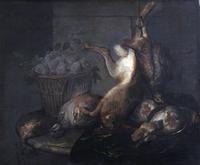
Still Life with Dead Game
Alexandre-Francois Desportes
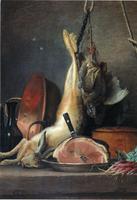
Still Life with Rabbit
Anne Vallayer-Coster
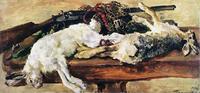
Still Life. Two rabbits.
Pyotr Konchalovsky
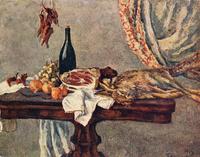
Still life with rabbit
Pyotr Konchalovsky
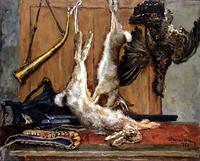
Still Life. Hares and grouse.
Pyotr Konchalovsky
Mother rabbit with her babies
Bernard te Gempt
Still Life with Rabbits and Fruit
Jacob Samuel Beck
The Silver Tureen
Jean-Baptiste-Simeon Chardin
White Rabbit, Standing
Jan Mankes
Leprosario
Nicola Samorì
Dead Hare
Jan Weenix