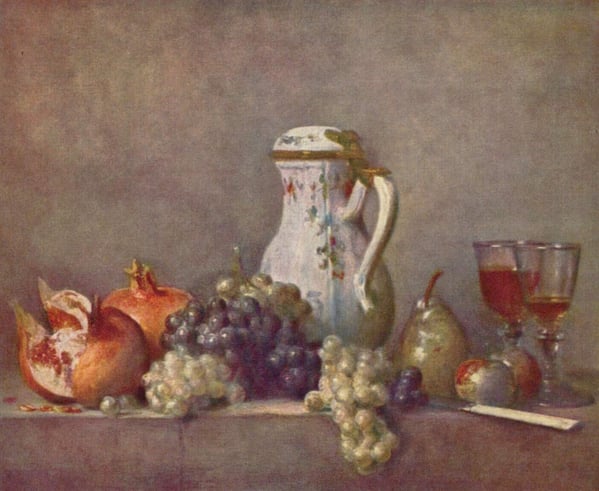
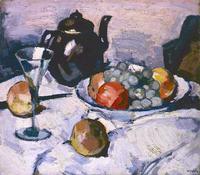
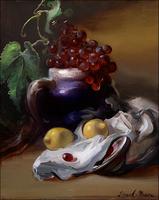
Jean-Baptiste-Simeon Chardin’s Still Life with Porcelain Teapot is a masterful example of Rococo still life, yet it stands apart from the period’s typical frivolity by emphasizing quiet dignity and meticulous naturalism. The composition revolves around a simple porcelain teapot, whose glossy, reflective surface is rendered with extraordinary subtlety—a hallmark of Chardin’s ability to capture texture and light. Unlike the ornate, playful scenes often associated with Rococo, this work achieves significance through its restrained palette, balanced arrangement, and the artist’s focus on the poetry of everyday objects. Chardin elevates the humble still life to a vehicle for contemplation, demonstrating how a single domestic object can reveal the beauty of form, material, and atmosphere. The painting thus represents a pivotal moment within Rococo, where decorative elegance gives way to a more profound and sincere observation of the material world.