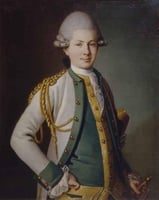
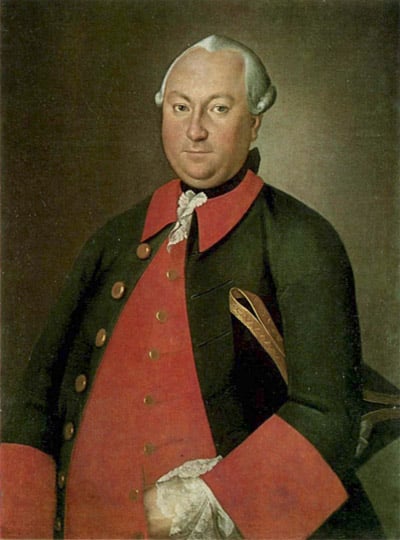
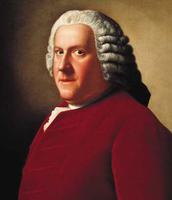
Portrait of Tishin
Экспертный разбор работы «Portrait of Tishin» художника Carl-Ludwig Johann Christineck
Стиль: Rococo · Жанр: portrait
Based on the provided facts, here is an expert analysis of Carl-Ludwig Johann Christineck’s Portrait of Tishin, focusing on its significance within the Rococo style and portrait genre.
Analysis of Portrait of Tishin by Carl-Ludwig Johann Christineck
As a Rococo portrait, Portrait of Tishin is significant for its embodiment of the style’s core values—elegance, intimacy, and decorative charm—transplanted from Western Europe into the distinct cultural context of 18th-century Russia. Carl-Ludwig Johann Christineck, a German-born painter who worked extensively at the Russian court, specialized in capturing the refined grace of the nobility, and this portrait exemplifies that role.
In the Rococo tradition, portraiture moved away from the grandiose formality of the Baroque toward a more personal, playful, and often sentimental depiction of the sitter. A work like Portrait of Tishin would typically feature a soft, pastel-hued palette, delicate brushwork, and an air of effortless refinement. The sitter—likely a member of the Russian aristocracy (the surname “Tishin” suggests a noble or landowning family)—would be presented in luxurious attire, perhaps with a landscape or drapery backdrop that enhances the sense of pastoral leisure. The composition would emphasize grace and sophistication over stern authority, with the sitter’s pose and expression conveying warmth or quiet self-possession.
The significance of this work lies in its historical and stylistic bridging: Christineck adapted the Rococo idiom—then dominant in France and Germany—to the tastes of the Russian elite during the reign of Catherine the Great. This portrait thus serves as a document of cultural exchange, showing how Western aesthetic ideals were localized to reflect Russian identity. Moreover, Christineck’s portraiture is notable for its psychological nuance; unlike many Rococo portraits that prioritize decorative surface over character, his works often reveal a subtle individuality, making Portrait of Tishin not merely a fashionable likeness but a window into the personality and status of its subject within the intricate social fabric of Enlightenment-era Russia.
Museum / Gallery
Визуально похожие
20 работ с близкой композицией и палитрой
Portrait of Major of Army Corps
Carl-Ludwig Johann Christineck
Heinrich Friedrich Wilhelm von Ploets
Carl-Ludwig Johann Christineck
Mr. Coke of Brookhill
Thomas Gainsborough
Portrait of Robert Shafto, called 'Bonnie Bobbie Shafto'
Joshua Reynolds
Gregory Towsend
John Singleton Copley
Portrait of an Unknown Man (possibly General Hugh Warburton, 1695–1771)
Henry Pickering
Portrait of Jose Antonio de Hoa
José Francisco Xavier de Salazar y Mendoza
George Ashby
Joshua Reynolds
Jean-Baptiste Brequin de Demenge
Joseph Ducreux
Abraham Rawlinson (1738–1803), MP, of Ellel Hall, near Lancaster
George Romney
Portrait von Carl Wilhelm Müller, Advokat und Bürgermeister von Leipzig
Anton Graff
Portrait of John Wilkinson, The Staffordshire Iron Master, wearing a grey coat and waist
Lemuel Francis Abbott
Louis Philippe Rigaud De Vaudreuil
Claude Arnulphy
Ivan Glebov (Oscherin)
Dmitry Levitzky
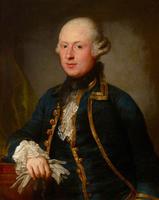
Thomas Charles Bigge (1739–1794)
Anton von Maron
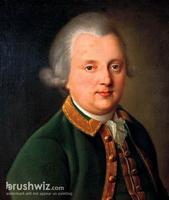
Portrait Of Peter Vladimirovich Sheremeteva
Ivan Argunov
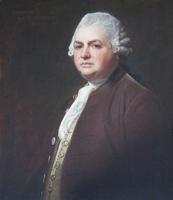
Peregrine Cust (1723–1785), MP
George Romney
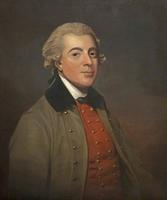
James Martin (1738–1810), MP for Tewkesbury (1776, 1780, 1784, 1790, 1796, 1802 & 1806)
George Romney
William Bentinck, 1st Graf Bentinck
Jean-Étienne Liotard
William Sharp
Charles Turner