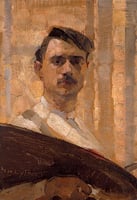
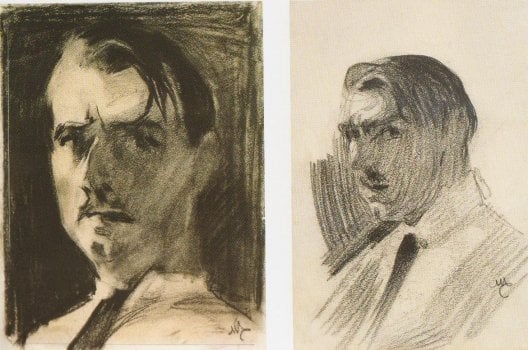
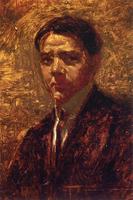
Self Portraits
Expertenanalyse zu Nikolaos Lytrass Self Portraits
Stil: Expressionism · Genre: self-portrait
Analysis of "Self Portraits" by Nikolaos Lytras
As an expressionist self-portrait, this work embodies the core tenets of the movement—prioritizing raw emotional experience over naturalistic representation. Lytras, a leading figure in Greek Expressionism, uses the genre of self-portraiture not for mere likeness but as a vehicle for psychological introspection. The significance of the piece lies in its intense, subjective distortion: bold, often jarring colors and energetic, gestural brushwork transform the artist’s face into a landscape of inner turmoil or existential reflection. By filtering his own identity through the lens of Expressionism, Lytras breaks from traditional portraiture’s objectivity, instead offering a deeply personal, almost confrontational glimpse into the artist’s psyche. This approach aligns with the broader Expressionist goal of conveying the human condition through heightened, often dissonant visual language, making the work a compelling example of how self-portraiture can become a site for emotional and spiritual exploration within early 20th-century modernism.
Visuell ähnlich
20 Werke mit ähnlicher Komposition und Farbpalette
Portrait of a young man
George Bouzianis
Bekim Fehmiu
Gazmend Freitag
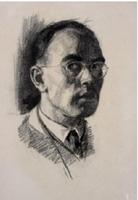
Self Portrait
Hryhorii Havrylenko
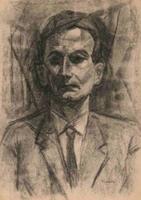
Portrait of a Man
Kmetty János
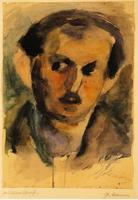
Portrait of a man
George Bouzianis
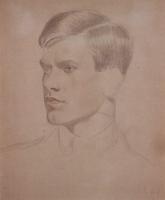
Portrait of K.B. Kustodiev
Boris Kustodiev
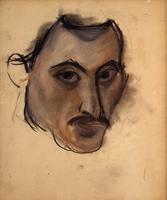
Untitled (Self-Portrait)
Arshile Gorky
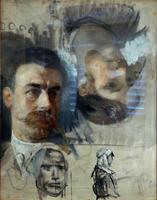
Studies of heads and more
Francesco Paolo Michetti
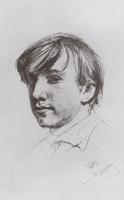
Self-Portrait
Valentin Serov
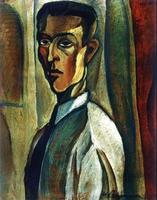
Self-Portrait
Victor Brauner
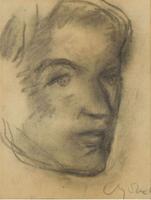
Női Arc
Bela Czobel
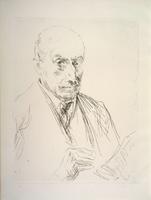
Self-Portrait
Max Liebermann
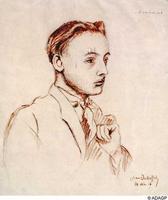
Portrait of Armand Salacrou
Jean Dubuffet
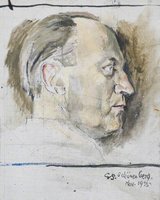
Paul Sacher
Graham Sutherland
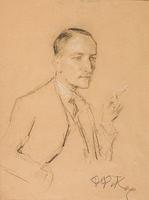
Man smoking
Thalia Flora-Karavia
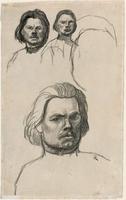
Studies of Portrait of Maxim Gorki
Theophile Steinlen
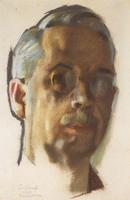
Self-Portrait
Konstantin Somov
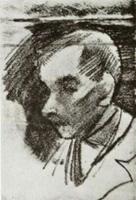
Head of a Man
Vincent van Gogh
Self Portrait
Robert Julian Onderdonk
Egry József , Önarckép
Egry József